10. December, 2025delish0
Slitting and rewinding machines are indispensable key equipment in papermaking, printing, packaging, film and other industries, and their performance stability directly affects product quality and production efficiency. However, in practice, operators often encounter various technical problems and mechanical failures. This article will sort out the common problems of slitting and rewinding machines, and provide corresponding solutions and maintenance tips to help users improve equipment utilization and product yield.
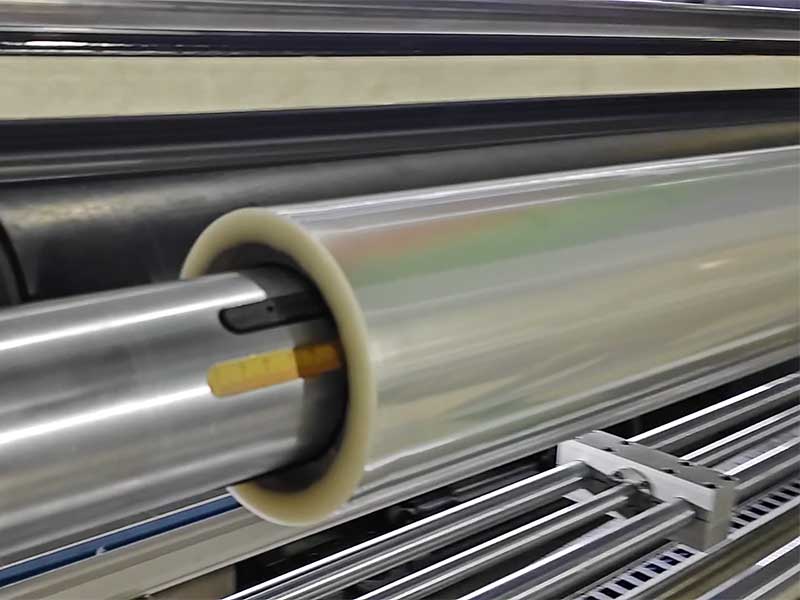
1. Common problems and solutions of slitting rewinding machines
1. Uneven winding and wrinkling problems
• Problem manifestations: the end face of the coil is not neat, and there is a "bell mouth" or "bamboo shoot shape"; The membrane surface produces longitudinal or transverse wrinkles
• Possible causes:
◦ Uneven unwinding tension
◦ The correction system fails or the sensitivity is insufficient
◦ Uneven pressure of the roller or wear of the roll surface
◦ Changes in ambient temperature and humidity cause material expansion and contraction
•Solution:
◦ Check and calibrate the tension control system to ensure consistent unwinding tension
◦ Clean the guidance sensor and adjust the correction sensitivity parameters
◦ Check the parallelism of the pressure roller, and replace it in time when the wear is serious
◦ Control the temperature and humidity of the workshop within a reasonable range (normal temperature 22±2°C, humidity 50%±5%)
2. Slitting knife marks and burr problems
• Problematic manifestations: burrs, chips, or wavy knife marks on the slitting edges
• Possible causes:
◦ Blade passivation or incorrect mounting angle
◦ Improper adjustment of tool holder clearance
◦ The material properties do not match the blade type
◦ The operating speed is not coordinated with the blade speed
•Solution:
◦ Check the blade sharpness regularly and establish a blade replacement periodic table
◦ Adjust the blade clearance according to the material thickness (usually 10-15% of the material thickness)
◦ Choose special blades for different materials (e.g. flat knives for film, round knives for paper)
◦ Optimized the ratio parameters of the slitting speed to the rotation speed of the tool shaft
3. Abnormal vibration and noise of the equipment
• Problem manifestation: The machine vibrates significantly during operation, producing abnormal noise
• Possible causes:
◦ Bearings are worn or insufficiently lubricated
◦ Worn or poorly aligned transmission components
◦ Roller dynamic balance imbalance
◦ Loose foundation fasteners
•Solution:
◦ Establish a regular lubrication schedule with the specified lubricant model
◦ Use the laser aligner to check the alignment of the transmission system
◦ Dynamic balance testing and correction are carried out once a year
◦ Check the fastening status of anchor bolts and key connections every week
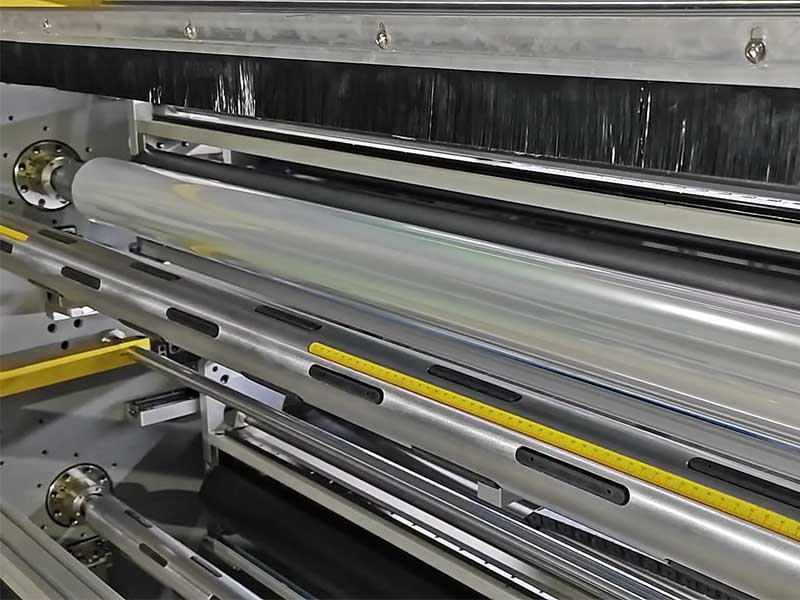
2. Systematic maintenance skills
1. Daily maintenance points
• Check before power-on: confirm the air source pressure (usually 0.6-0.8MPa) and the power supply voltage is stable; Check the emergency stop button function
• In-operation monitoring: observe whether the instrument parameters are within the normal range; Watch for unusual sounds or vibrations
• Cleaning after shutdown: thoroughly clean the dust accumulated in the tool groove and guide rail; Clean the mirror surface of the photoelectric sensor; Remove roller surface residue
2. Periodic maintenance schedule
• Weekly maintenance:
◦ Check the air system for leaks
◦ Clean the guiding guide and add special lubricating oil
◦ Check whether all safety guards are in good condition
• Monthly Maintenance:
◦ Calibrate tension and pressure sensors
◦ Check the tension and wear of the transmission belt
◦ Clean the electrical control cabinet filter
• Quarterly maintenance:
◦ Check the oil quality of the hydraulic system and replace it if necessary
◦ Test the backup battery of the control system
◦ Fully check whether the electrical connection points are loose
• Annual maintenance:
◦ Replace worn bearings and seals
◦ Calibrate the accuracy of the control system comprehensively
◦ Inspect and replace aging tubing and cables
3. Special guidelines for the maintenance of key components
• Slitting knife system: establish a record of blade use, adopt the principle of "grinding first and then replace"; Store with rust oil and wrap separately
• Correction system: avoid direct light from the sensor; Clean the sensor head with alcohol monthly; Test your responsiveness regularly
• Tension control system: keep the tension detection roller clean; avoid lateral force; Calibrate regularly with standard weights
• Electrical control system: keep the control cabinet well ventilated; Regularly backing up parameters; Use a regulated power supply
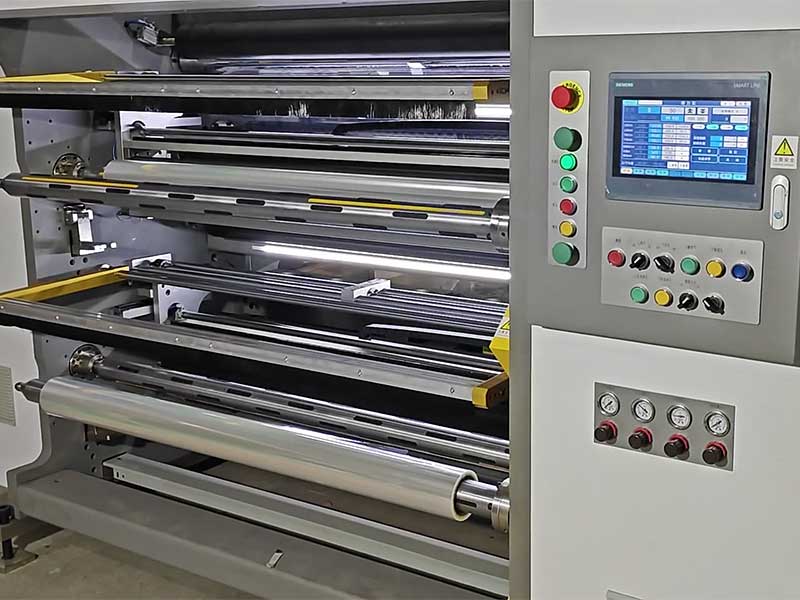
3. Preventive maintenance and fault prediction
Modern slitting rewinder maintenance has shifted from post-maintenance to preventive maintenance. The following measures are recommended:
1. Establish equipment health files: record each fault phenomenon, cause and treatment method to form a knowledge base
2. Introduce condition monitoring technology: Detect potential faults in advance through vibration analysis, infrared thermal imaging, and other means
3. Formulate spare parts management strategies: Reasonably reserve key spare parts (such as sensors, controllers, special bearings, etc.) according to equipment failure statistics.
4. Regular operator training: Ensure that operators are familiar with equipment principles and basic fault judgment methods
4. Precautions for safe operation and maintenance
1. All maintenance work must be carried out after power and gas is cut off and warning signs are hung
2. Special tools must be used when changing blades, and cut-resistant gloves must be worn
3. Electrical maintenance must be performed by a licensed electrician
4. Maintenance of high-temperature components should be carried out after complete cooling
5. Hydraulic system needs to be completely relieved before maintenance
epilogue
The stable operation of the slitting rewinder is the basis for producing high-quality coil products. Through systematic problem analysis, scientific solutions and standardized maintenance, it can not only significantly reduce the failure rate of equipment and extend the service life, but also improve product quality consistency and reduce production costs. It is recommended that enterprises establish a perfect equipment management system, and organically combine daily maintenance, regular maintenance and preventive maintenance, so that the slitting and rewinding machine always maintains the best working condition and creates continuous value for the enterprise.
In actual operation, the specific situation of each equipment may be different, and operators should continuously optimize the maintenance plan based on equipment manuals and practical experience. When encountering complex problems, contact the equipment manufacturer or professional technicians in time to avoid secondary damage caused by improper handling.
 English
 Deutsch
 Français
 Español
 Português
 日本語
日本語 русский
 한국어
한국어 عربي
عربي ภาษาไทย
 Tiếng Việt
 Italiano
 Fully Automatic TTR Slitter RSDS8 Plus
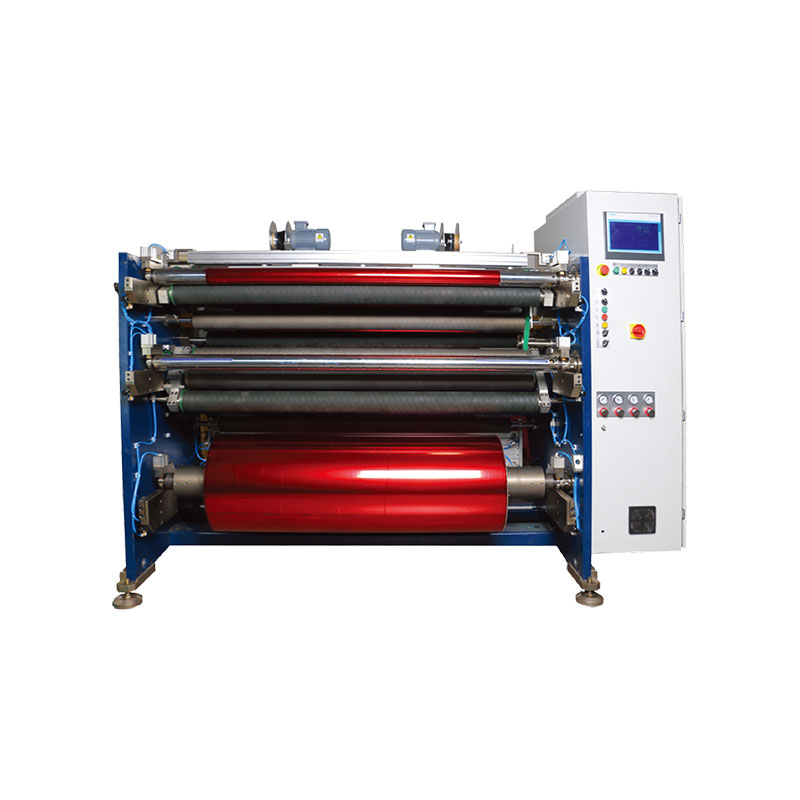 Hot Stamping Foil Slitter 1600mm
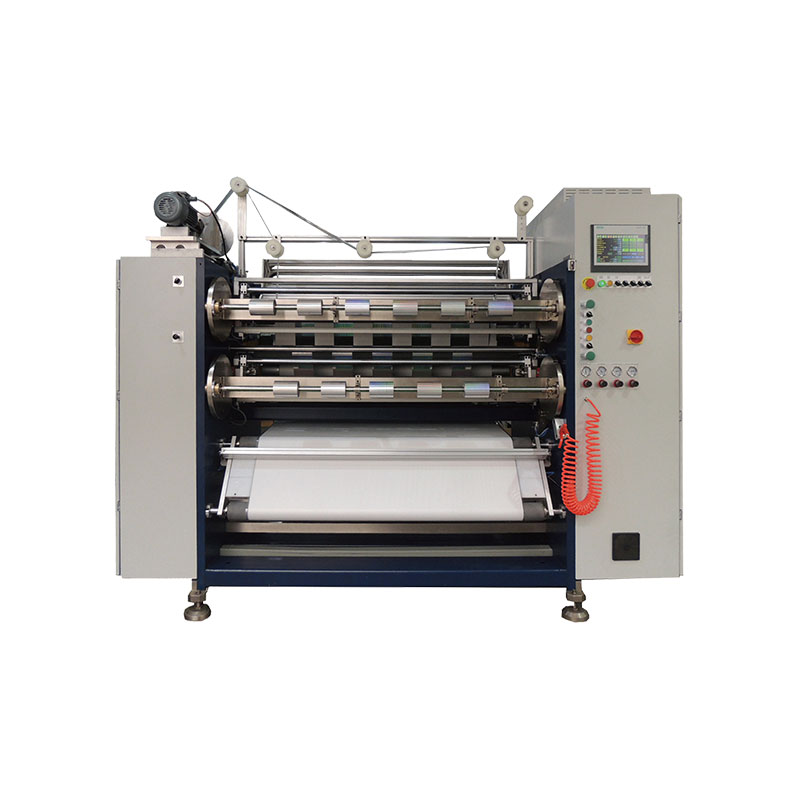 Hot Stamping Foil Slitter (4 Shafts)
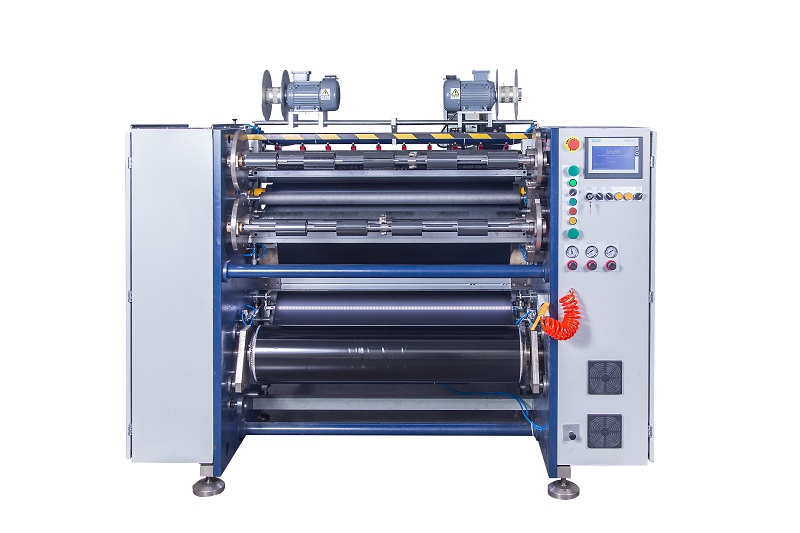 Semi-Auto TTR Slitter RSDS2 Plus
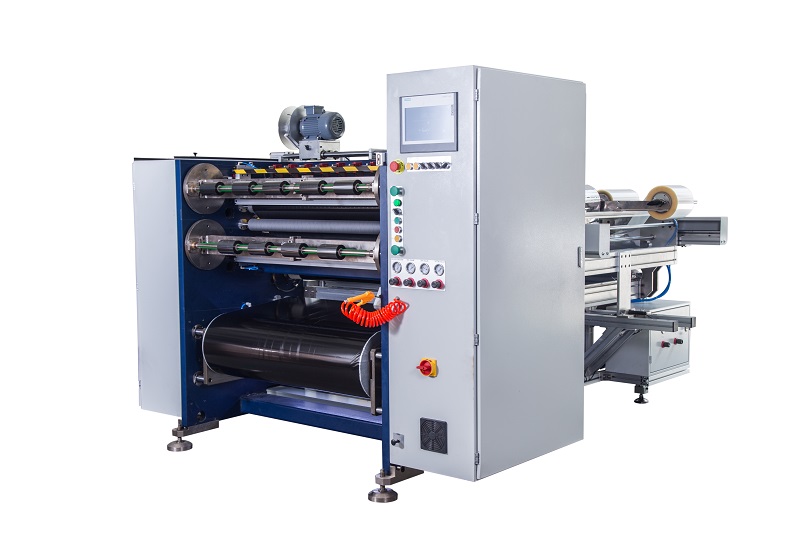 Semi Automatic TTR Slitter RSDS5 Plus
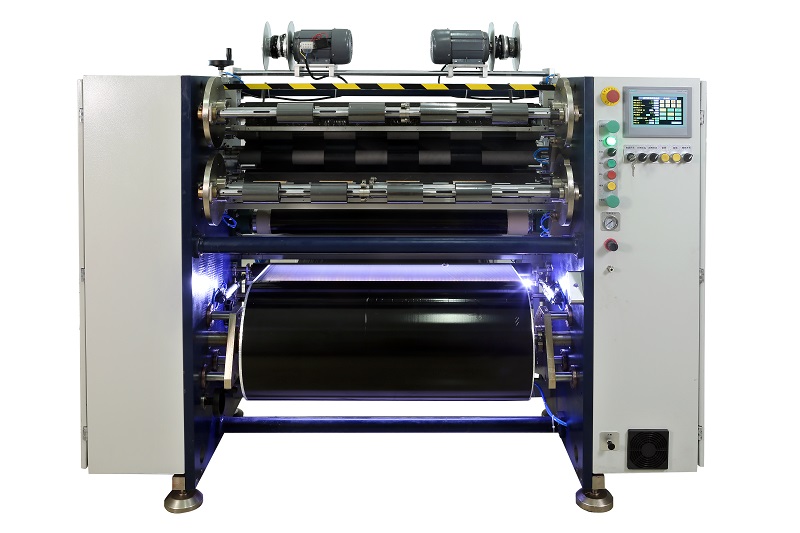 Manual TTR Slitter RSDS2
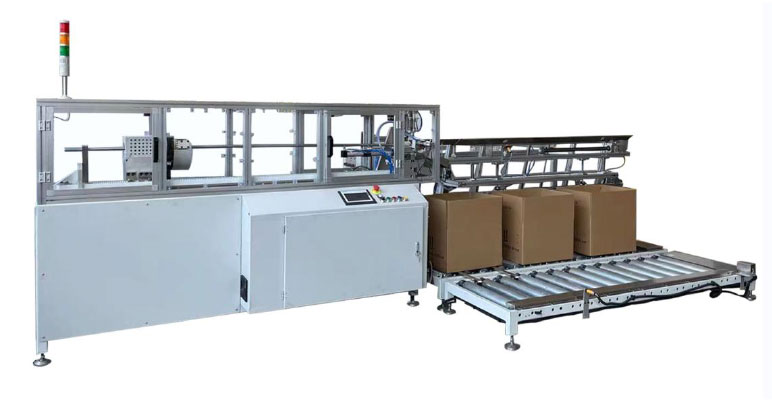 Auto Paper Core Cutter
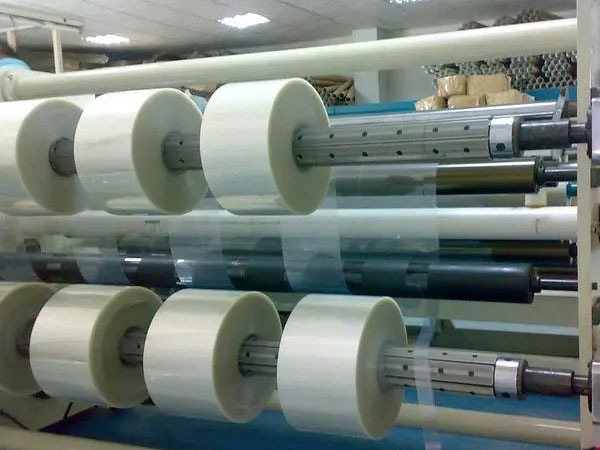 Film Slitting Machine



 +86 135 9951 7291
 support@delishgroup.com
 +86 135 9951 7291