15. April, 2026delish0
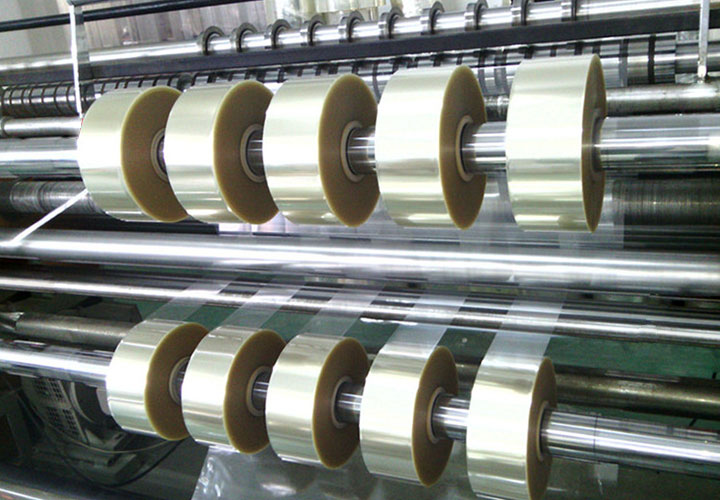
In the production and processing of PET films, slitting is a key process. However, warped edges (or curled edges, edges are warped) are one of the most common and headache quality defects. Warping not only affects the appearance of the product, but also leads to problems such as deviation, bubbles, and stuttering in the subsequent printing, compounding or coating processes, resulting in a large number of waste products.
A large number of practices have shown that more than 90% of the root causes of warping are related to improper tension control. This paper will deeply analyze the causes of PET film slitting warping and systematically explain how to solve this stubborn problem by adjusting the tension control parameters.
1. Mechanism analysis of the warping problem
PET film has the characteristics of high elastic modulus, good stiffness and tension sensitivity. When slitting, the film is subjected to complex stresses in both the longitudinal (MD direction) and the transverse (TD direction).
The direct mechanical reasons for warping can be summarized as:
1. Excessive longitudinal tension: The film is overstretched, leading to plastic deformation or stress concentration in the edge area. When the tension is released, the edges retract unevenly, forming a wavy lift.
2. Uneven tension distribution: The local tension fluctuations at the slitting blade, or the inconsistent tension at each point of the winding shaft, resulting in a large difference between the edge of the film coil and the internal force, and the edge is extruded or dented.
3. Improper pressure of the rewinding roller: the pressure of the roller is too small to flatten the edges; Excessive pressure can squeeze the edges and cause warping.
4. Poor flattening roller effect: It cannot effectively eliminate film wrinkles or sagging before entering the slitting area, resulting in poor initial state of the slitting edge.
2. The core parameters of tension control and their functions
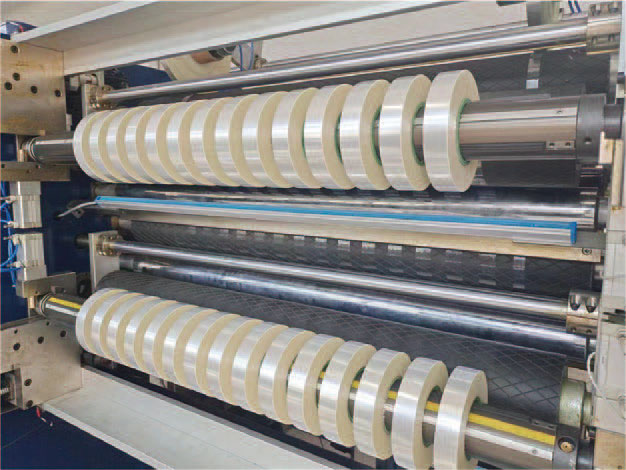
To address warping, the following key parameters need to be precisely tuned:
| Parameter categories | Specific parameters | Effect on warping |
| Unwinding tension | Initial tension value, taper coefficient | Determine the tension benchmark of the whole machine. If it is too large, the edge will stretch, and if it is too small, it will be deviated. |
| Traction tension | Speed ratio of the front and rear traction rollers in the slitting area | Control the tightness of the film at the slitting point. Improper ratio can directly lead to distortion of the cutting edges. |
| Winding tension | Winding tension curve (linear/taper), starting tension, ending tension | It most directly affects the stress distribution inside the film coil. The cone is too small, tight inside and loose outside, causing the edges to rise; If the cone is too large, the inner looseness and external tightness will lead to collapse. |
| Roller parameters | pressure value, roller hardness, angle to rewinding shaft | The pressure of the pressure roller is insufficient, and the edge lifting cannot be eliminated; If the pressure is too high, the edges will be squeezed and warped. |
| Acceleration compensation | Dynamic adjustment coefficient of tension during acceleration and deceleration | The instantaneous tension change of acceleration and deceleration is the high incidence of warping. |
3. Practical steps for tension parameter tuning ("four-step method")
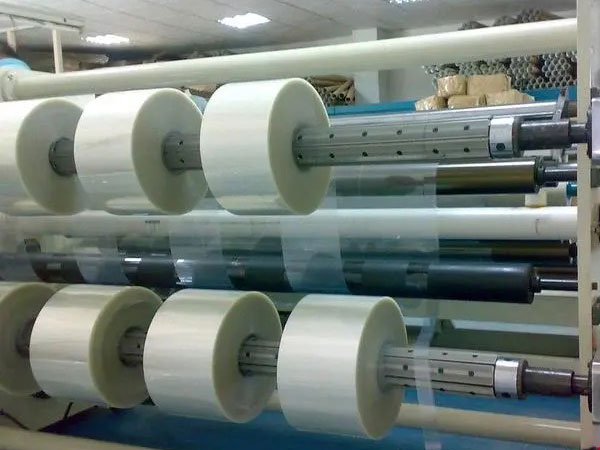
The following methods are based on common slitting machines (equipped with vector frequency conversion or servo tension control systems) and are recommended to be done sequentially.
Step 1: Establish Baseline Tension (Static Tuning)
1. Calculate the recommended tension: Calculate the cross-sectional area (thickness × width) of the PET film × unit tension coefficient (usually 8~12 N/mm² for PET). For example: for a 50 μm thick and 500 mm wide film, the recommended tension ≈ 0.05 mm × 500 mm × 10 N/mm² = 250 N.
2. Set the taper coefficient: the initial recommended value is 60%~80% (i.e., the winding diameter is from the smallest to the largest, and the tension is linearly reduced to 60%~80% of the starting tension). PET film is harder and can be taper larger to avoid the inner layer being squeezed.
3. Try cutting and observing: Try cutting a section with the recommended value to check if the edges are straight.
Step 2: Dynamic correction (for warping symptoms)
| Warped edge performance | Possible causes | parameter adjustment direction |
| The edges are obviously raised upwards, and the sides of the entire film roll are flared | Too small winding tension cone (too much outer tension) | Reduce the taper coefficient (e.g. from 80% to 60%), or reduce the absolute value of the end tension |
| The edges are wavy and warped, accompanied by transverse stripes on the membrane surface | The overall tension is too great | At the same time, reduce the unwinding tension and the rewinding starting tension (5~10% steps each time) |
| Only the edge of the slitting knife edge is raised and the inside is flat | Excessive local tension (not sharp blade or poor slitting angle) | Check the blade while slightly reducing the speed ratio (differential tension) between the traction roller and the rewinding shaft |
| The ends of the film roll are raised and the middle is flat | The pressure of the roller is uneven or the rewinding shaft is not level | Adjust the pressure balance at both ends of the roller and check the levelness of the winding shaft |
| Warping occurs instantly when starting or stopping | Insufficient acceleration compensation | Increase the amount of tension compensation for acceleration/deceleration (usually 10~20% of the set tension) |
Step 3: Fine adjustment of roller parameters
1. Pressure value: based on the principle of "just flattening the edge of the film without leaving indentations". Normally, the recommended pressure of the roller line for PET film is 1.5~3.0 kg/cm.
2. Roller hardness: For thick film (>75μm), use a slightly softer (Shore A 60~70 degrees) roller; For films (< 25μm), with a hard pressure roller (Shore A 80~90 degrees) with very low pressure.
3. Angle: The pressure roller should be directed towards the center of the rewinding shaft with an offset of no more than 5°.
Step 4: Validation and fine-tuning
• Prepare a set of samples under different tension parameters and label the parameter group number.
• Observe the warping situation after 12~24 hours (stress release complete).
• Select the group with the best edge flatness as the standard process parameter for this batch of film.
4. Other auxiliary measures (when the tension adjustment effect is insufficient)
1. Use edge rollers (edge rollers): Add a pair of small-diameter, light-contact rollers behind the slitting blade to directly press down on the freshly cut edge.
2. Optimize the slitting blade: use a razor instead of a shear (for thin PET) or ensure that the overlap and lateral pressure of the upper and lower circular knives are accurate (±0.05mm).
3. Increase static elimination:P ET is prone to static electricity, and electrostatic adsorption will cause irregular adsorption and uplifting of the edges. Install the static elimination rod and connect the ground wire.
4. Ambient temperature and humidity control:P ET has low hygroscopicity, but extreme dryness (< 30% RH) is prone to static electricity; High temperatures (>35°C) will soften the film and reduce tension by 20%.
5. Typical case sharing
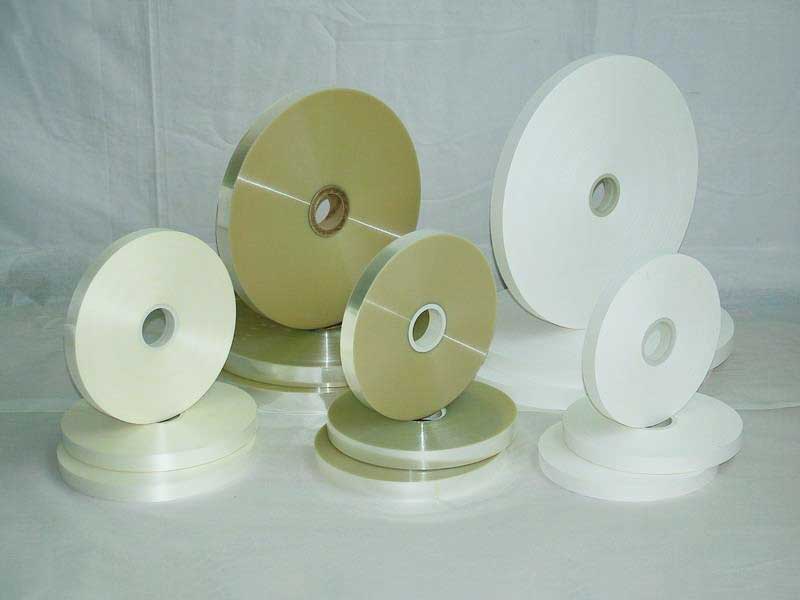
Problem: An enterprise slits 50μm transparent PET film at a speed of 200m/min, and the edge of the film roll is raised in a "ruffle" shape, and the scrap rate reaches 15%.
Tuning process:
1. Original parameters: unwinding tension 300N, winding starting tension 280N, taper 50%.
2. The first step adjustment: according to the calculation (250N), reduce the unwinding tension to 260N, the winding starting tension to 240N, and increase the taper to 70%. The warping edge is improved but still exists.
3. Step 2: Check the pressure roller and find that the pressure is 4.5 kg/cm (too high). Reduce to 2.8 kg/cm, and the edge is significantly improved.
4. Step 3: There is still a short warping edge during acceleration and deceleration, and the acceleration compensation is increased to 15%. Problem solving.
5. The final scrap rate is reduced to less than 3%.
6. Summary
To solve the problem of slitting and warping of PET film, fine tuning of tension control parameters is the most effective and fundamental means. Operators need to abandon the misconception that "the greater the tension, the tighter the winding, the better" and follow the principle of "small enough, uniform, and appropriate taper".
It is recommended to establish a process parameter database to record the optimal combination of tension parameters for films of different specifications (thickness, width) and batches (different manufacturers have different elastic modulus of PET raw materials). At the same time, regular calibration of tension sensors, cleaning guide rollers, and checking the wear of pressure rollers are the basis for maintaining the effectiveness of parameters.
Through scientific tension adjustment, it can not only completely solve the warping edge, but also improve the storage stability of the film coil and the pass rate of downstream processes, so as to achieve a win-win situation of quality and efficiency.
 English
 Deutsch
 Français
 Español
 Português
 日本語
日本語 русский
 한국어
한국어 عربي
عربي ภาษาไทย
 Tiếng Việt
 Italiano
 Fully Automatic TTR Slitter RSDS8 Plus
 Hot Stamping Foil Slitter 1600mm
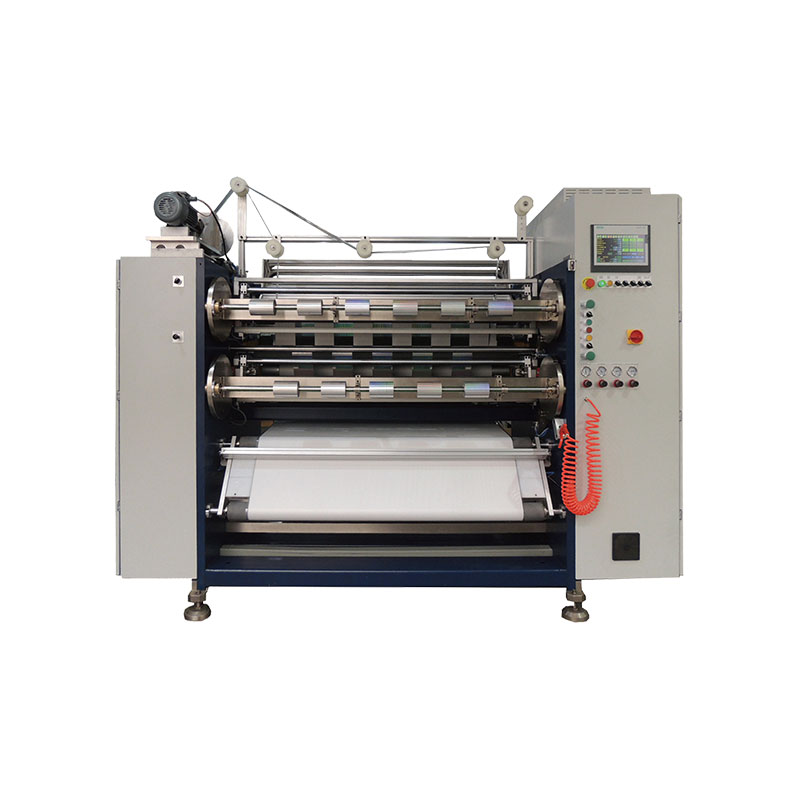 Hot Stamping Foil Slitter (4 Shafts)
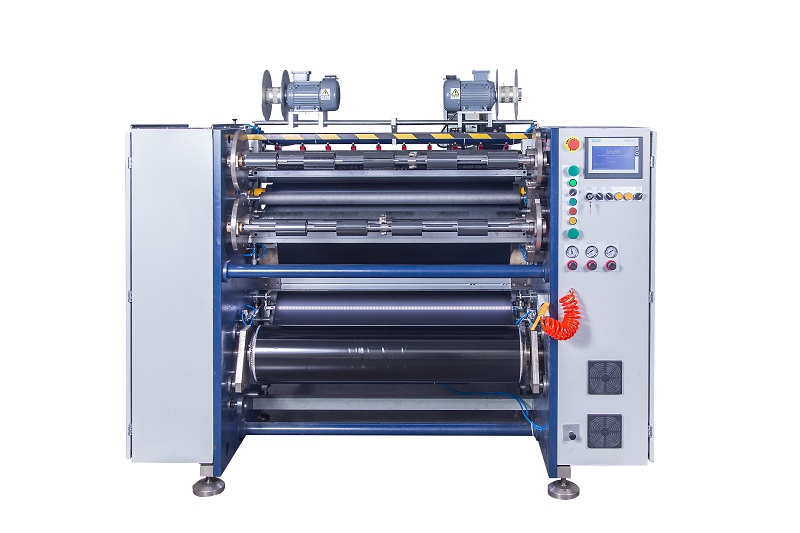 Semi-Auto TTR Slitter RSDS2 Plus
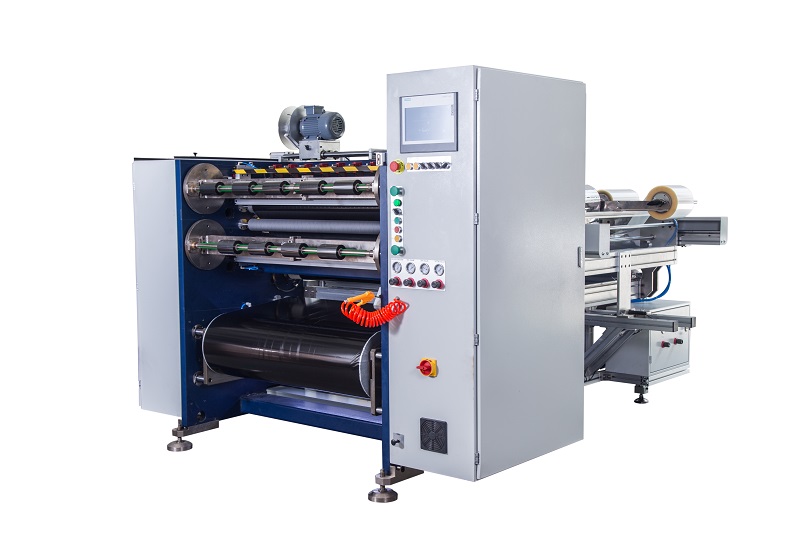 Semi Automatic TTR Slitter RSDS5 Plus
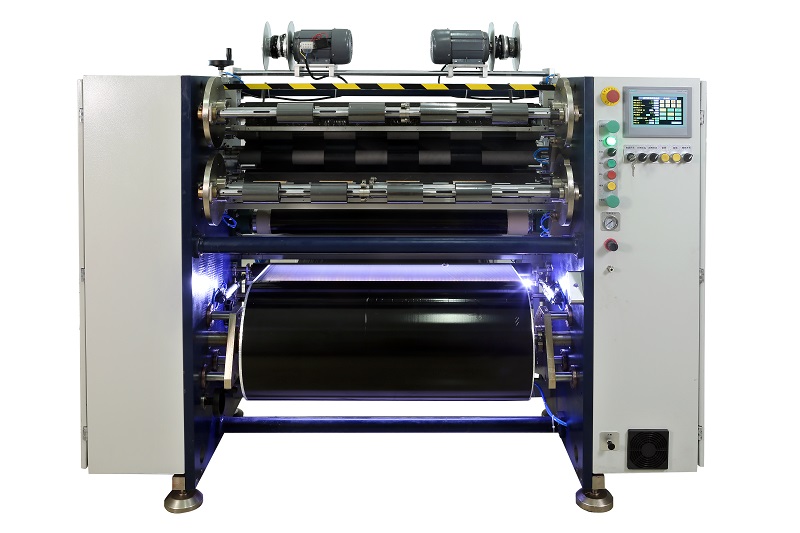 Manual TTR Slitter RSDS2
 Auto Paper Core Cutter
 Film Slitting Machine



 +86 135 9951 7291
 support@delishgroup.com
 +86 135 9951 7291