21. April, 2026delish0
In the production and processing of solar film, the slitting machine rewinding link is often the "invisible bottleneck" of the entire production line - the equipment does not stop, but the rewinding is stopped for a few minutes, and the cumulative loss of effective production time per day may be as high as 1-2 hours. If your slitting machine takes more than 3 minutes to change the roll at a time, then this article is for you.
The following shares a set of practical methods that have been verified by multiple factories and can improve the rewinding efficiency by 30%, without the need for equipment modification, and focus on process and method optimization.
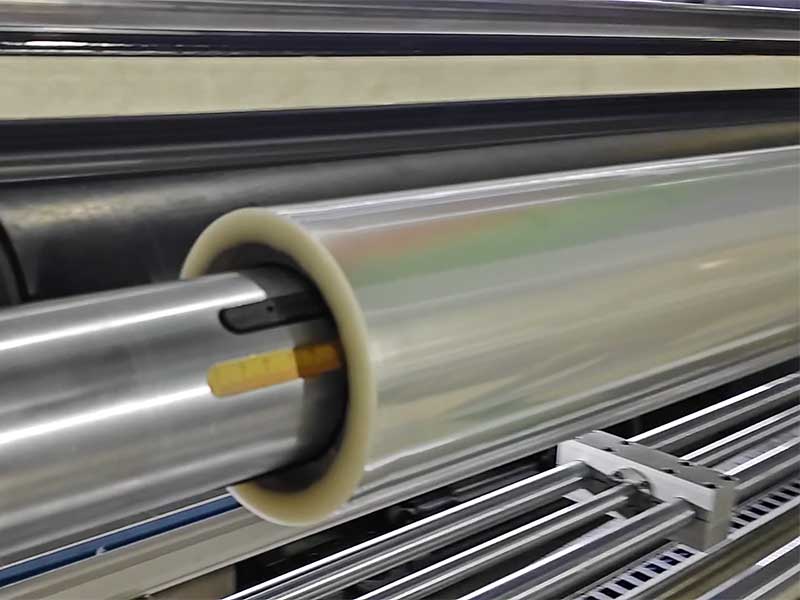
1. Diagnosis of the current situation: Where is your slow change of papers?
First of all, there are three typical problems in most inefficient roll changes:
1. The roll preparation is not in place: the new film roll is carried only when the previous roll is about to run out, and forklifts and trucks have to wait for others
2. Long seam time: When the old and new membrane joints are aligned, they are repeatedly pulled and adjusted, and it takes more than 40 seconds for a single time
3. Tape pasting at will: If the tape is not firm, it will break when the machine is turned on, and it will be forced to stop the second time to connect the film
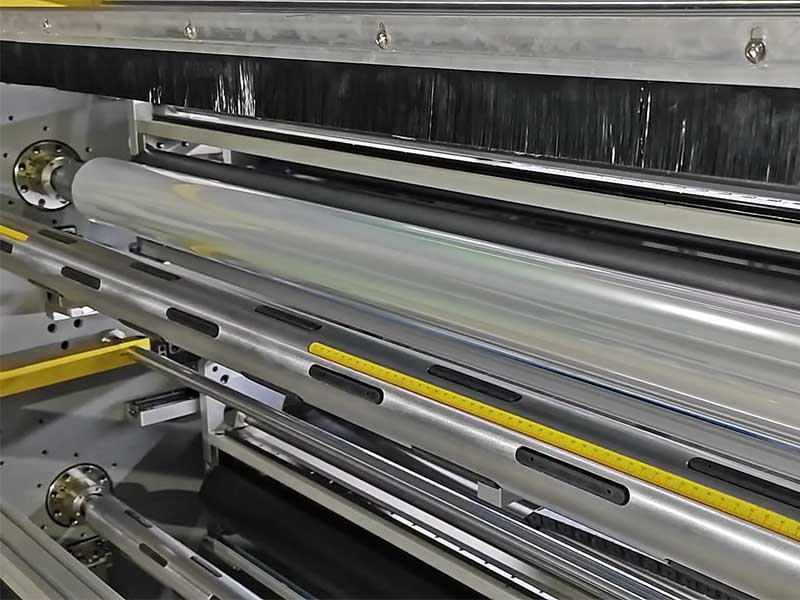
2. The core operation method of improving efficiency by 30%
1. Double roll preset method (save 30-40 seconds/time)
A preparation station is set up next to the unwinding side of the slitting machine. When one roll of film is running, the operator uses the gap of the automatic operation of the equipment to lift the next roll of film to the preparation station in advance, and completes:
• The film roll is centered and positioned
• Surface dust wipes
• Tape, scissors, and utility knives are placed in a convenient location
Key point: When the remaining diameter of the previous roll is 20-30 cm (about 2-3 minutes margin), the operator can start preparing the next roll.
2. "Three-second edge-aligning" film pairing method (saving 25-35 seconds/time)
The traditional method is to pull the film with both hands and align it with the left and right, and often overhead and then pull back. How to improve:
• Ruler assistance: two steel rulers or laser markings are fixed on both sides of the winding shaft of the slitting machine, and the edges of the old and new films are uniformly aligned with the same scale
• One-handed film pressing: press the end of the old film with the left hand without moving, and push the edge of the new film head directly to the ruler position with the right hand, and put it in place at one time
After proficiency, take no more than 3 seconds from picking up the new film head to aligning the edges.
3. Double tape stepped connection method (reduce film breakage downtime)
Don't just use a single piece of transverse tape. Recommended Actions:
• The head and tail of the old and new membranes overlap by 5-8 cm
• Tape on each side of the overlap area (top tape covers the seam, bottom tape reinforces in reverse)
• Add a small piece of tape to each edge on each side to prevent warping
This method can withstand the instantaneous tension of the slitting machine when starting, and the success rate of the measured joint is increased from 85% to more than 98%, avoiding the second stop of the film connection.
4. Start dual actions at the same time (save 15 seconds/time)
There are several actions in the roll change operation that can be done in parallel instead of serial:
• After the new film is pasted and fixed, one person (or the same person) performs it at the same time: put down the pressure roller + start the blowing waste + press the meter to reset
• Develop muscle memory of "pressing the button with the left hand and pulling the waste film with the right hand"
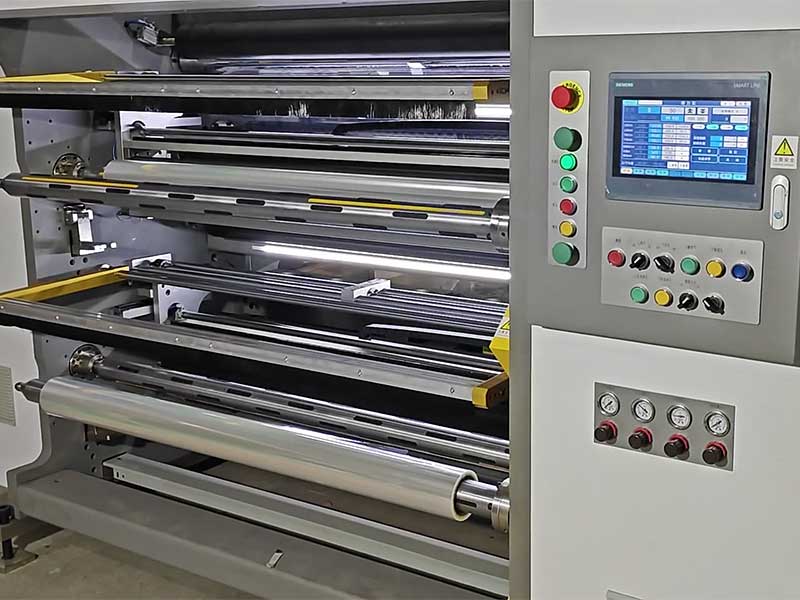
3. On-site management supporting measures
Simple teaching methods are not enough, but also need to solidify behavior:
• Make a "30-second rewind change inspection card": paste it next to the operation panel of the slitting machine, list 6 key steps, and tick each completed one
• Daily roll change timing: Use the mobile phone stopwatch to randomly check the duration of 3 roll changes, publicize the best results, and form a healthy competition
• Tape seat fixed placement: use a magnetic seat or hook to fix the tape within 0.5 meters directly in front of the operating position, so as to prevent the workshop from looking for tape
4. Measured effect
After two weeks of implementing the above operation method, the average roll change time of a solar film processing plant dropped from the original 3 minutes and 10 seconds to 2 minutes and 12 seconds, saving 58 seconds in a single time. Based on 25 roll changes per day, there are 24 more minutes of effective production time per day, which increases the efficiency by about 31%. And the number of downtimes due to bad joints has been reduced by nearly 70%.
5. Write at the end
Slow roll change is not a problem with the equipment, but with the rhythm. The core idea of the above method is to move the "work done after the shutdown" to "do it while the equipment is running" as much as possible, and compress the "time to find the tool back and forth" to zero. You don't need to spend a penny on new parts, but in exchange for an extra half an hour to an hour of net output per day.
You can try it tomorrow when you go to work: draw the prep desk first, and then use the stopwatch to test the paper change - you will find that there is much more room for improvement than you think.
 English
 Deutsch
 Français
 Español
 Português
 日本語
日本語 русский
 한국어
한국어 عربي
عربي ภาษาไทย
 Tiếng Việt
 Italiano
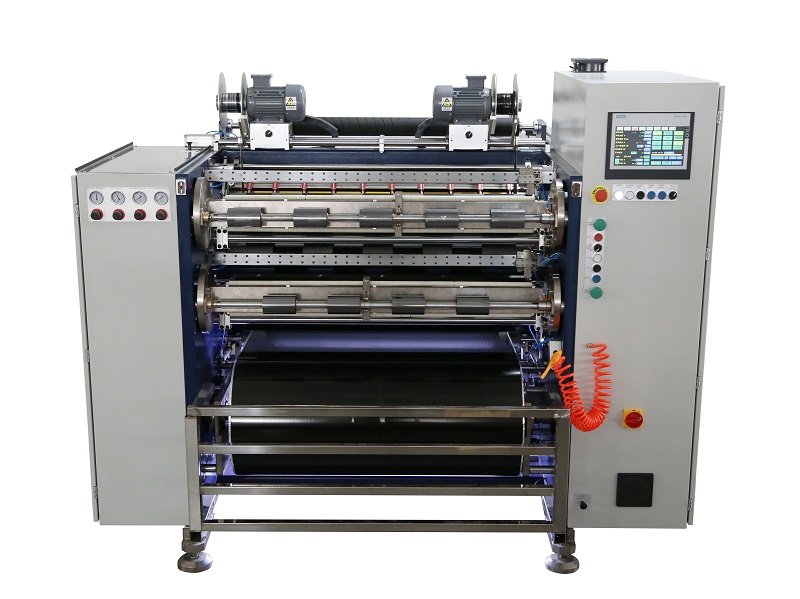 Fully Automatic TTR Slitter RSDS8 Plus
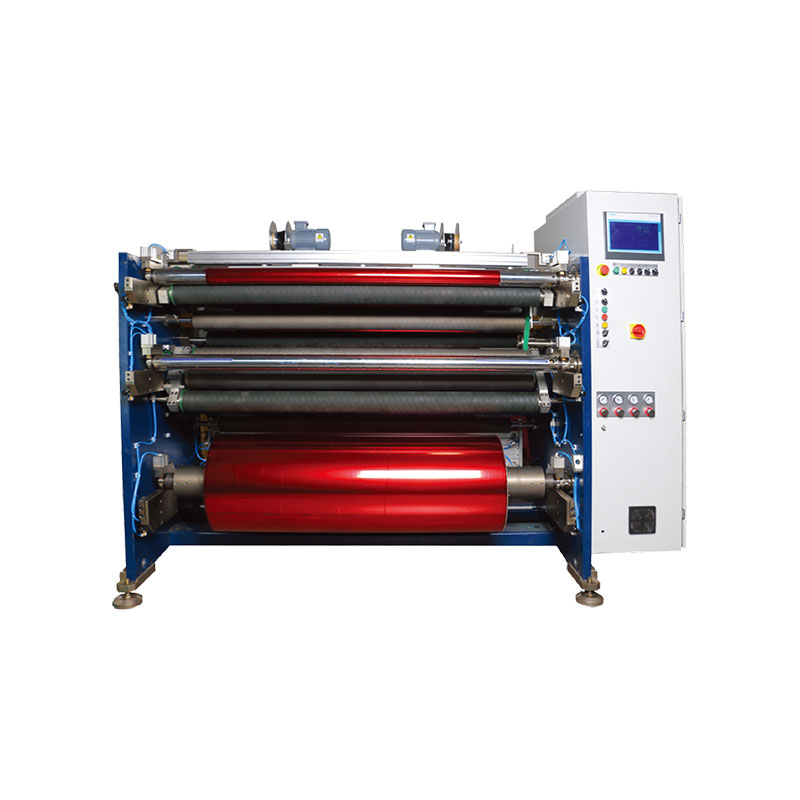 Hot Stamping Foil Slitter 1600mm
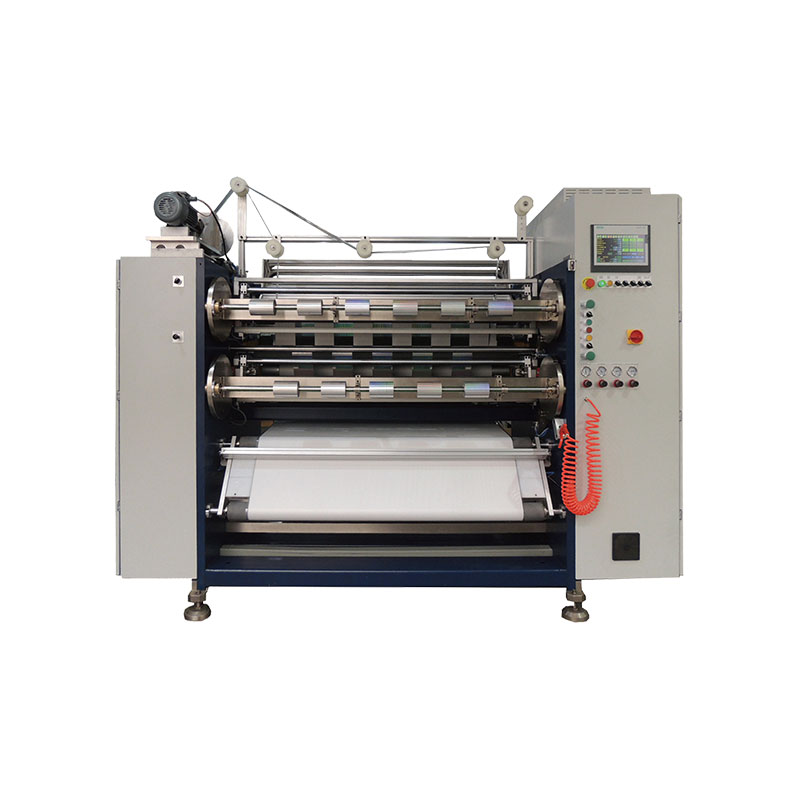 Hot Stamping Foil Slitter (4 Shafts)
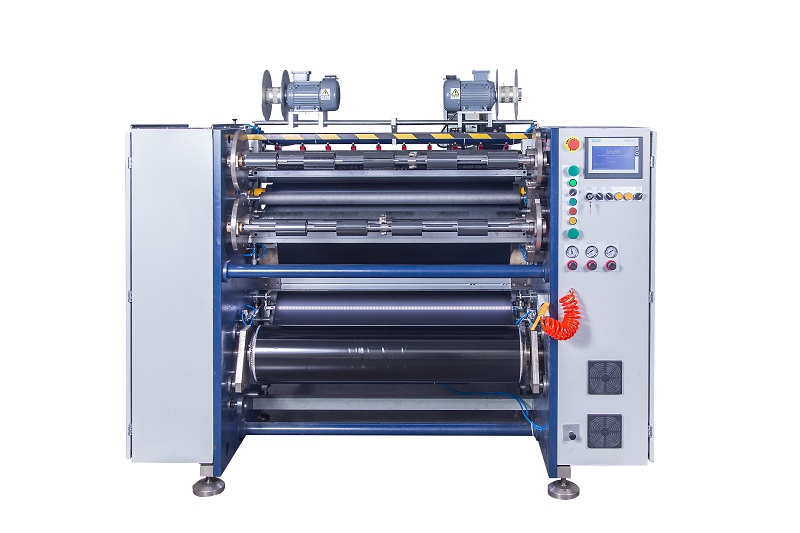 Semi-Auto TTR Slitter RSDS2 Plus
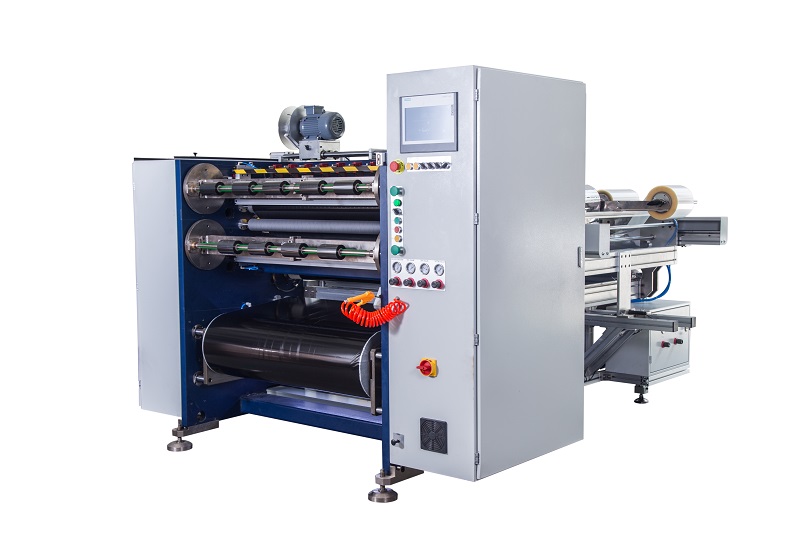 Semi Automatic TTR Slitter RSDS5 Plus
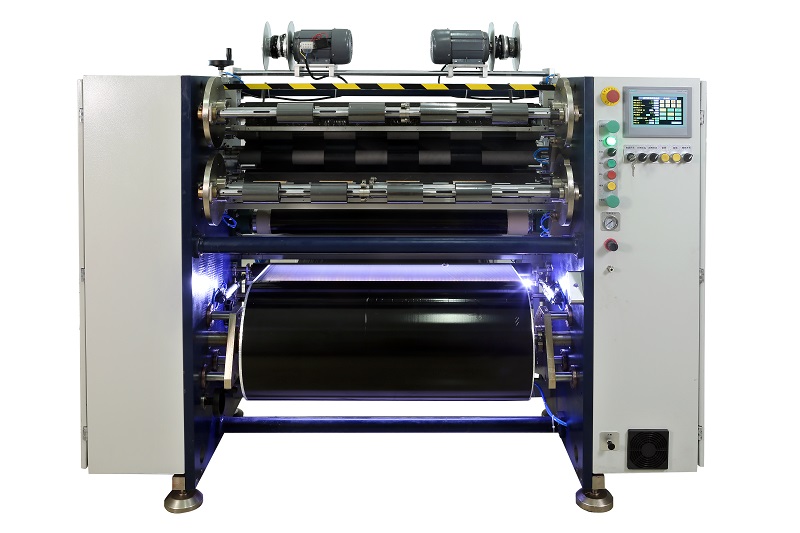 Manual TTR Slitter RSDS2
 Auto Paper Core Cutter
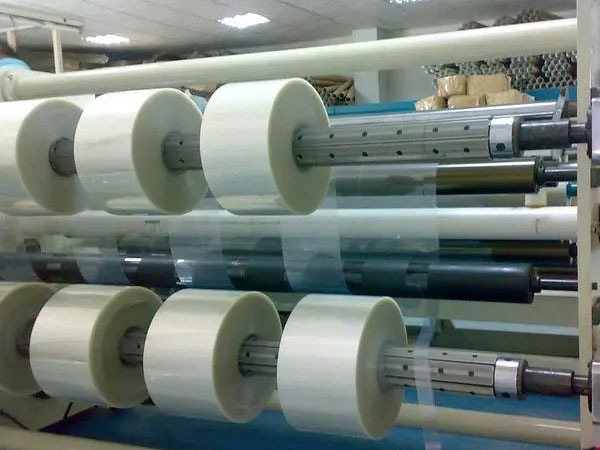 Film Slitting Machine



 +86 135 9951 7291
 support@delishgroup.com
 +86 135 9951 7291