15. June, 2026delish0
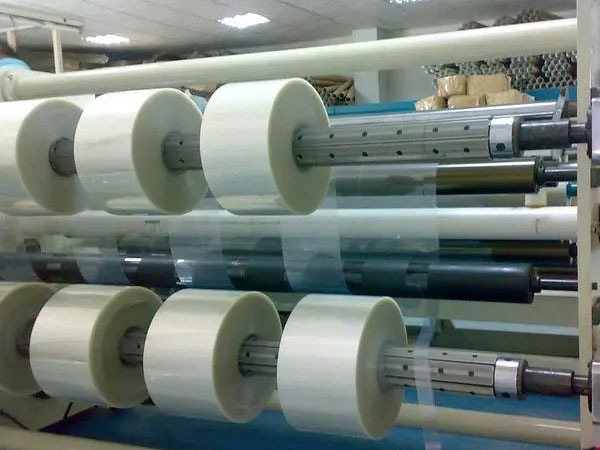
In the adhesive products industry, the single-sided glue slitting machine is the core equipment for converting large roll masterbatch into commercial finished small rolls. It operates at high speed for long periods, and due to the unique "stickiness" and "stretchability" of single sided adhesive, equipment failures are often more frequent and more severe than those of ordinary slitting machines. Uneven winding, edge burrs, and abnormal operating noises are the three major problems troubling frontline operators.
This article will address these three major pain points, combine the latest process technologies, and provide a systematic "diagnosis + troubleshooting" solution to help operators quickly locate problems and resume production.
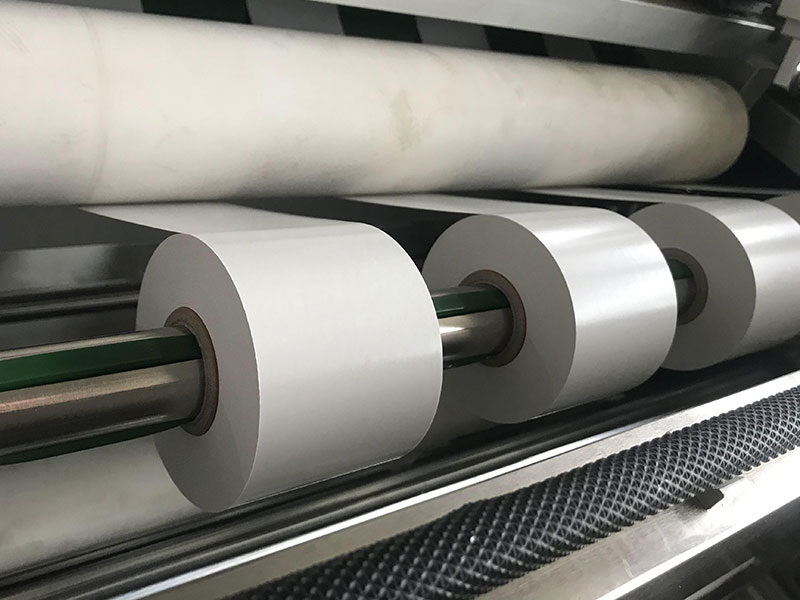
1. Core Fault 1: Uneven winding (end face star-shaped or staggered layer)
Uneven winding end faces are the most common cause of scrap in slitting workshops. It usually appears as a "telescope" (one side protruding) or a "star wheel" (wavy).
Rapid diagnostic approach:
Don't suspect the machine's main shaft is crooked; 80% of uneven winding problems lie in the two most easily overlooked aspects: "roll press" and "tension."
1. Uneven pressure on the rollers
• Phenomenon: One end of the membrane is tight, the other is loose, and the loose side overflows.
• Quick removal:
◦ Surface inspection: Is there adhesive adhered to the roller surface or any wear pits? If so, immediately clean or polish with alcohol.
◦ Check balance: Check whether the pressure on cylinders or springs at both ends of the pressure roller is consistent. A simple and straightforward method: after stopping the machine, manually pull both ends to feel if the resistance is the same.
◦ Parallelism: Observe whether the pressure roller and the winding shaft are parallel. If not parallel, adjust the bearing housing to keep the error within 0.1mm/m.
2. Tension control failure
• Phenomenon: The core is too tight (core bursts) or the body is loose and slippery.
• Quick removal:
◦ Taper setting: Modern slitting machines must use "taper tension." That is, as the coil diameter increases, the winding tension gradually decreases. If the tension is constant throughout, the inner layer of tape will be squeezed and deformed, resulting in misaligned layers.
◦ Sensor inspection: Check whether the tension sensor (floating roller) is stuck or drifting at zero point. If the tension value on the touchscreen fluctuates sharply, it is usually due to sensor failure or loose wiring.
3. Wound core quality
• Phenomenon: The starting few meters of each roll are off-balance.
• Quick elimination: Check whether the paper or plastic core is excessively rounded or if the end face is not vertical. Inferior roll cores are the root cause of misalignment of the starting layer and should be replaced immediately.
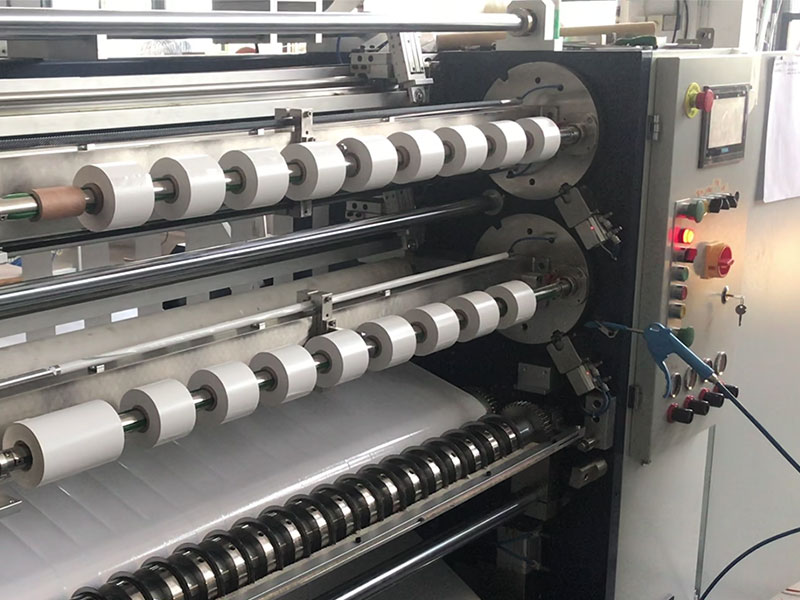
2. Core Fault 2: Burrs and burrs at slitting edges
White powder, serrated edges, or glue stringing on the cut edges directly lead to product degradation.
Rapid diagnostic approach:
"Not sharp" and "sticky knives" are the two main culprits. Don't rush to replace the whole knife; try a bit of lubrication first.
1. Blade passivation and buildup of adhesive scale
• Phenomenon: The cut edges turn white and have a stringy feel.
• Quick Elimination (Miracle Fix):
◦ Alcohol for knife lubrication: The biggest problem for single sided adhesive is sticking to the knife. Prepare an infusion set or oil dispenser, placing a small amount of alcohol above the knife holder (3-5 drops per minute). Alcohol can dissolve adhesive buildup on the blade surface and also provide cooling, which is widely recognized in the industry as a "low-cost miracle technique" for eliminating burrs.
◦ Knife press adjustment: Knife pressing should be based on "just cutting through the substrate, leaving only light marks on the release paper." Excessive pressure will only push the glue onto the blade, which is counterproductive.
2. Gaps and vibrations
• Phenomenon: The cut edges are serrated with periodic notches.
• Quick removal:
◦ Clearance check: Is the gap between the circular blade and the bottom cutter (bottom roller) uniform? Usually, it should be controlled at 0.01-0.03mm (about the thickness of one A4 sheet of paper). If the gap is too large, the material is "torn" rather than "cut" off.
◦ Bearing inspection: Check whether the knife shaft bearing is worn. If there is radial runout, even a new tool will not cut properly.
3. Core Fault Three: Abnormal vibration and abnormal noises
Devices that make "clacking" sounds or vibrate violently not only affect accuracy but may also cause safety accidents.
Rapid diagnostic approach:
Identify the position by listening to the sound. First, stop and rotate each roller in stages to identify the source of the noise.
• Low-frequency "buzzing" sound: usually a loose or worn drive belt. Press the belt by hand, check tension, or observe if the belt surface is smooth like a mirror (slipping or burning). Adjust the motor base or replace the belt.
• High-frequency "sharp" sound: usually due to low oil or damage to the bearing. Especially for winding shafts and blade shaft bearings. Touch the bearing housing by hand; if the temperature is abnormally high (above 60°C), stop the machine immediately and replace the bearing.
• Periodic "clicking": Check whether hard rubber blocks or foreign objects are attached to the roller surfaces, or if the roller body has failed in dynamic balance. Clean the roller surface or rebalance it.
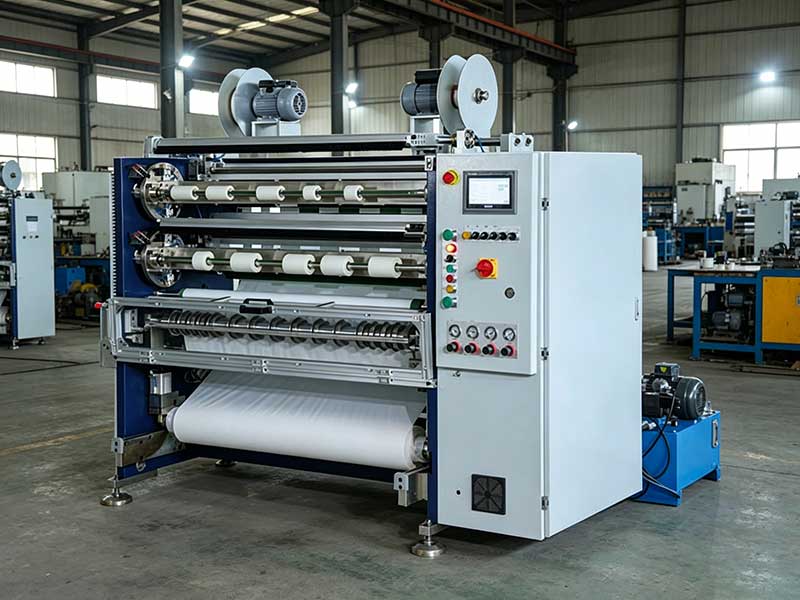
4. Advanced debugging: Targeting materials with different viscosities
If your equipment has resolved mechanical issues but still can't cut properly, the problem may lie in "process matching." Different adhesive tapes require different debugging logics:
| Material type | Common faults | Rapid response |
| Low adhesion (protective film/masking paper) | Slipping, misalignment, and uneven ends | Increase the tension of the unwinding to prevent slipping; For winding, use low tension + large taper ratio; Guide rollers require a low coefficient of friction |
| Medium adhesive (carton sealing tape) | Overflowing glue and whitening edges | Alcohol moistening or air cooling must be enabled; It is recommended to use coated blades (anti-stick) |
| High viscosity (foam/VHB) | Severe knife entanglement and release paper piercing | Low-speed operation (≤50m/min); Knife overlap is controlled to an extremely low (0.2mm); anti-stick coating is applied to the bottom roller |
5. Daily quick maintenance checklist
Rather than mending the fold after the sheep are lost, daily prevention is better. Establishing the following "Ten Seconds Before Work" habit can reduce sudden failures by 50%:
1. Checking for glue scale (daily): Feel whether the guide roller, press roller, or blade feel sticky to the touch. Leftover rubber is the invisible killer of veering off.
2. Listen to sound (daily): Run idle for 30 seconds after turning on and listen for any abnormal noises.
3. Check the blade edge (when changing materials): Visually observe whether there are "white lines" (passivation marks) on the blade edge; if so, immediately replace or slightly sharpen the blade.
4. Blow-Dryer Cabinet (weekly): The electrical control cabinet requires forced heat dissipation. Dust is cleaned weekly with an air gun to prevent inaccurate counting caused by high temperatures or dust interference.
Summary:
When handling single sided adhesive slitting machine malfunctions, follow a logic of progressing from simple to complex: clean first, then adjust pressure, replace the blade, and finally check the electrical system. Most seemingly complex issues like uneven winding and burrs can be quickly resolved by cleaning residual glue, adjusting roller balance, and applying a small amount of alcohol to lubricate the blade—the 'three key moves'.
 English
 Deutsch
 Français
 Español
 Português
 日本語
日本語 русский
 한국어
한국어 عربي
عربي ภาษาไทย
 Tiếng Việt
 Italiano
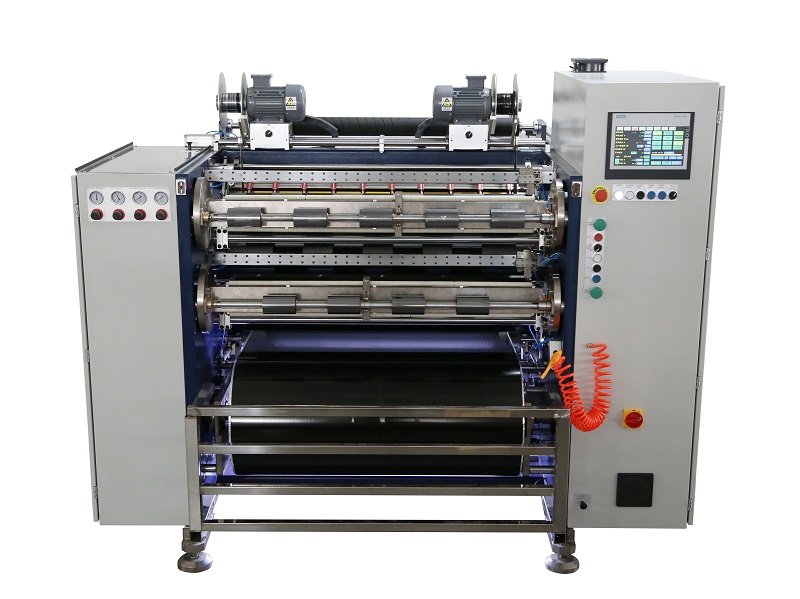 Fully Automatic TTR Slitter RSDS8 Plus
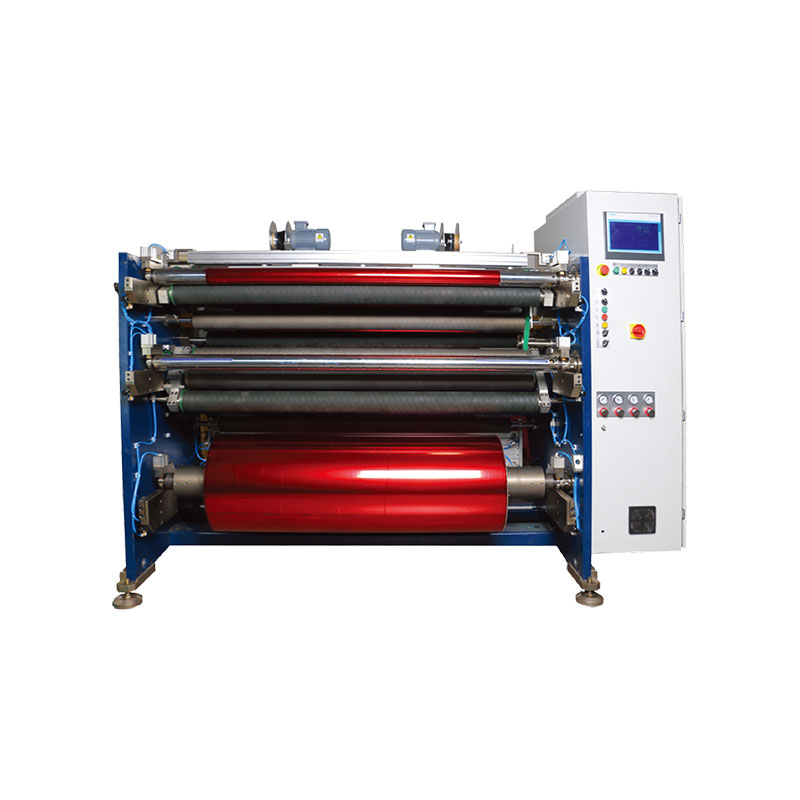 Hot Stamping Foil Slitter 1600mm
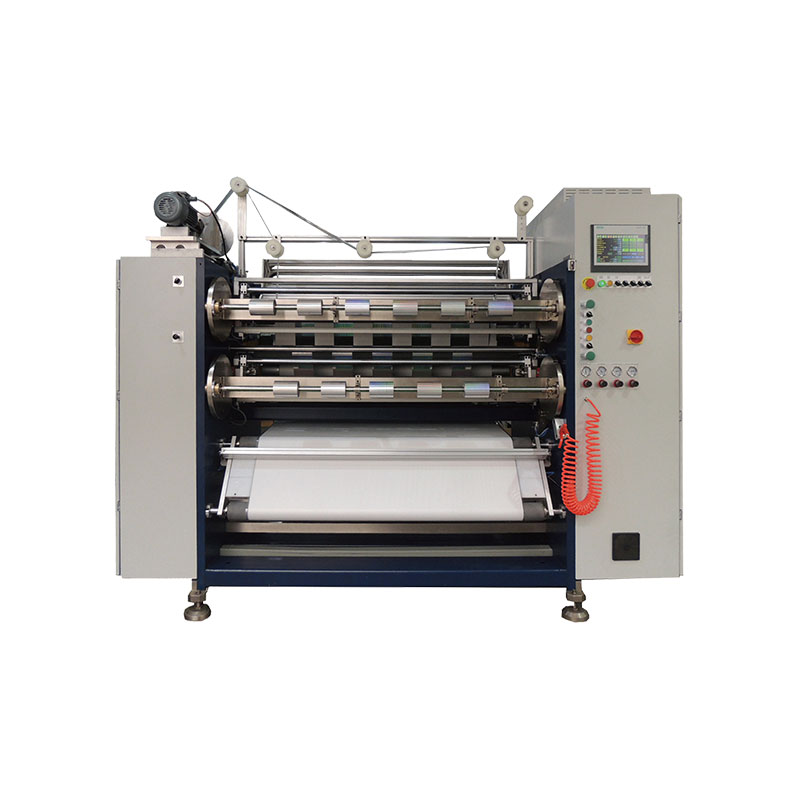 Hot Stamping Foil Slitter (4 Shafts)
 Semi-Auto TTR Slitter RSDS2 Plus
 Semi Automatic TTR Slitter RSDS5 Plus
 Manual TTR Slitter RSDS2
 Auto Paper Core Cutter
 Film Slitting Machine



 +86 135 9951 7291
 support@delishgroup.com
 +86 135 9951 7291