02. July, 2026delish0
Behind applications such as barcode printing, logistics labels, and medical labels, there is a roll of inconspicuous yet crucial consumable—thermal transfer ribbons. It consists of an ultra-thin polyester film (PET) substrate, a hot-melt ink layer, and a heat-resistant backcoat, often only a few microns thick. Converting the wide ribbon master roll into finished small rolls that meet printer specifications is precisely the core mission of the thermal transfer ribbon slitting machine. This seemingly simple "strip rewinding" process is actually an ultimate test of precision, tension, and cleanliness.
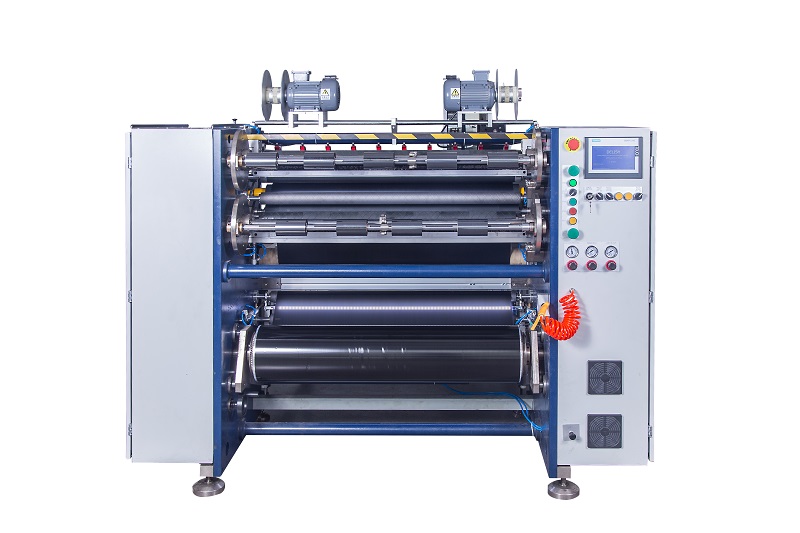
Precision slitting: the three core systems operate together
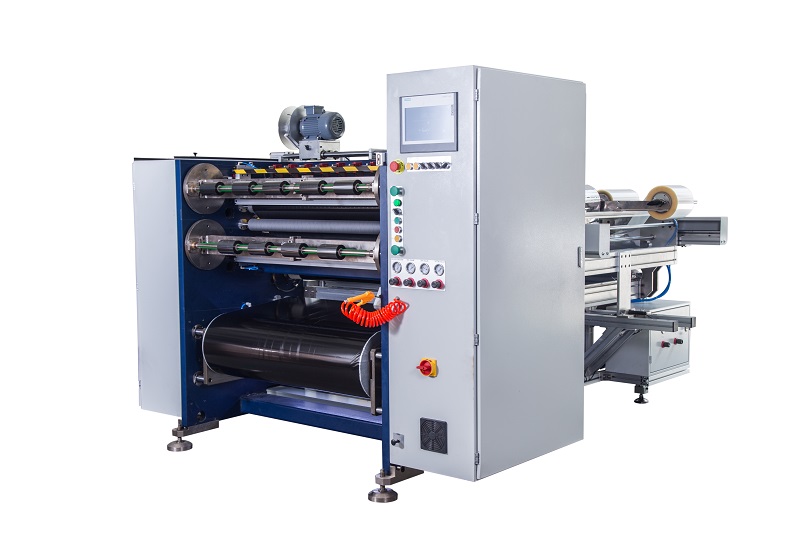
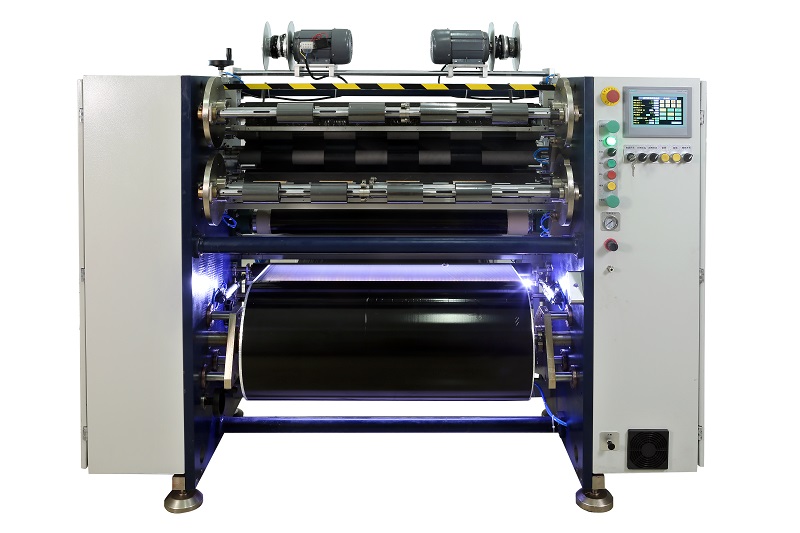
Modern ribbon slitting machines have evolved into precision equipment integrating mechanical, automatic control, and sensor technologies. Its workflow begins with the installation of the master coil and ends with the unloading of the finished coil, with a precise control system running throughout.
Tension control is the soul of the entire slitting process. The tension of unwinding and rewinding ribbon master rolls must be precisely managed: excessive tension can stretch or even break the PET substrate, causing the ink layer to deform and fall off; If the tension is too low, the roll becomes loose, causing uneven ends or 'chrysanthemum rolls,' which can easily cause wrinkles and misalignment during printing. To achieve this, the equipment uses a closed-loop tension control system linking magnetic particle brakes and servo motors, dynamically adjusting in real time to keep tension fluctuations within an extremely small range.
The Correction System (EPC) is a "navigator" that ensures the cutting line is as straight as a ruler. It uses photoelectric or CCD sensors to detect the ribbon edge position in real time. Once misalignment is detected, it quickly activates the correction mechanism to adjust the horizontal position of the mother roll, ensuring slitting accuracy at the ±0.1mm level.
The slitting unit is the "scalpel" that performs the cut. Common high-precision circular cutters use cemented carbide or diamond-coated blades to cut ribbons vertically at extremely high speeds, achieving smooth, burr-free cuts. Some advanced tool group designs can even clamp the ribbon while cutting, preventing material displacement from affecting subsequent quality.
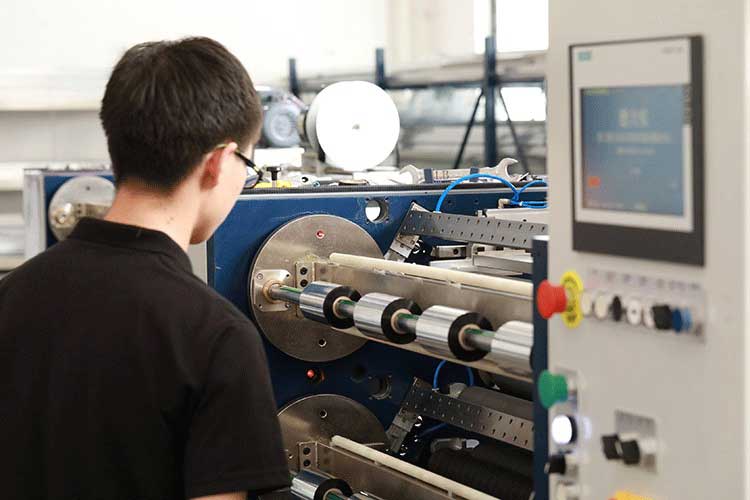
The Game Between Process Variables and Quality: The Art of Balancing Speed, Tension, and Environment
Ribbon slitting is not always faster than the fastest. Research shows that the relationship between slitting speed and finished product rate is not linear, but rather an optimal economic interval.
If the slitting speed is too low (e.g., below 200 m/min), the tension system response may be nonlinear, leading to reduced end face uniformity. When the speed is too high (e.g., exceeding 450m/min), the problem increases sharply: mechanical vibration causes the blade to collide frequently with the substrate, forming "serrated edges"; The heat generated by high-speed friction may melt low-melting-point wax-based inks, contaminating the blade; Ultra-thin PET substrates may undergo "necking" or even fracture under sudden tension spikes. Experimental data show that at a speed gradient of 150m/min to 550m/min, the finished product rate can drop from 97.2% to 88.0%, while the medium-speed range between 250-350m/min is often the "golden zone" with the highest yield rate.
Tension control strategies also require refinement. Advanced equipment uses "variable taper tension control," meaning that as the winding diameter increases, the winding tension automatically decreases to avoid excessive pressure on the inner and outer layers that could cause core layer deformation.
Additionally, a dust-free environment is another line of defense for high-quality carbon ribbons. Ribbon easily absorbs dust, causing white spots or defects in printing. Therefore, the slitting process usually takes place in a cleanroom, equipped with a dust removal and electrostatic elimination system combining ion air rods and vacuum adsorption to eliminate static electricity generated by high-speed friction, preventing dust absorption or static breakdown.

From Segmentation to Delivery: Value Extension through Automation and Customization
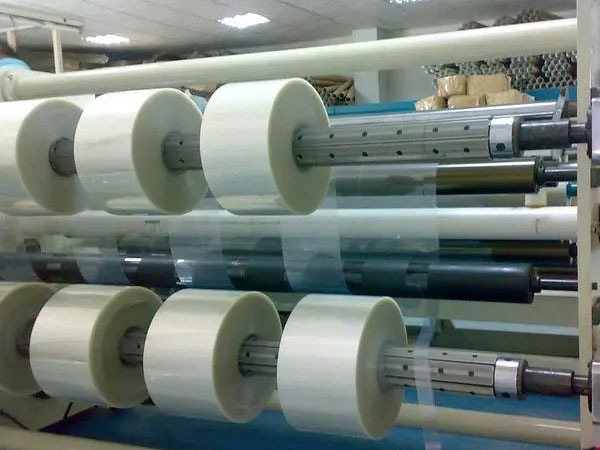
Faced with the dazzling array of printer models and diverse application scenarios on the market, customized slitting has become the core value of ribbon slitting machines. It is not just a simple cutting process but a key step in transforming universal rolls into specific solutions: whether customers need to match ribbons with 1-inch or 0.5-inch roll cores or require widths ranging from 20mm to 110mm, the slitting machine can flexibly achieve this by adjusting the cutter spacing, changing the air expansion shaft, and setting the winding length.
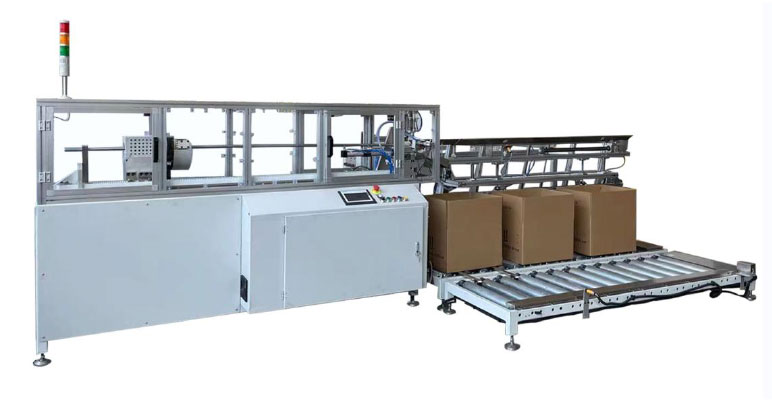
Modern integrated slitting machines go a step further, linking slitting, online inspection, and packaging processes. By integrating a CCD vision system, the equipment can detect defects at a speed of 150 frames per second and automatically mark them. Optimizing the entire process from slitting to packaging improves production efficiency, significantly reduces material waste, and ultimately delivers finished rolls with neat ends and tightly packaged.
Conclusion
As a key link connecting standardized busbar production with personalized end-user applications, the technical level of the ribbon slitting machine directly determines the final quality of ribbon products. It integrates the essence of precision machinery manufacturing, dynamic automatic control, and materials technology, seeking the optimal balance between speed and precision, efficiency and yield. With the deepening of intelligent manufacturing and Industry 4.0 concepts, slitting machines are evolving toward greater intelligence, flexibility, and cleanliness, continuously empowering the refined development of the barcode and marking industry.
 English
 Deutsch
 Français
 Español
 Português
 日本語
日本語 русский
 한국어
한국어 عربي
عربي ภาษาไทย
 Tiếng Việt
 Italiano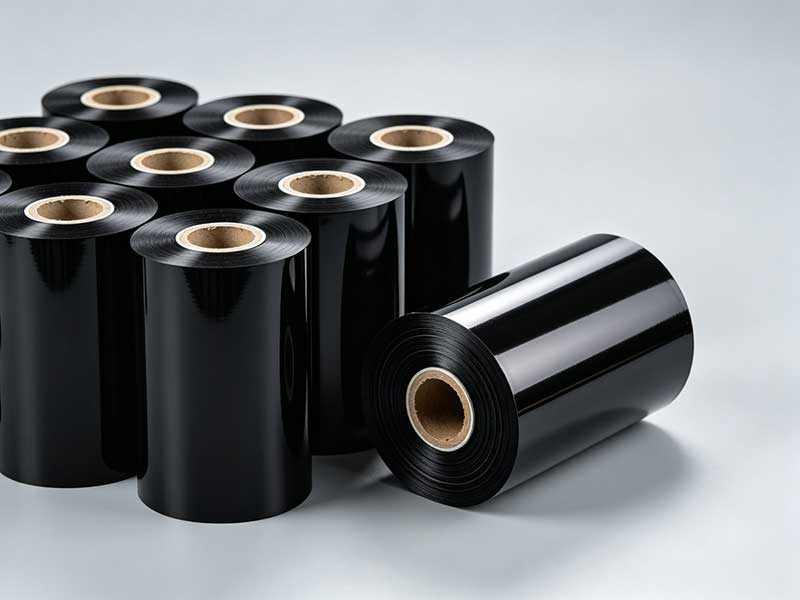
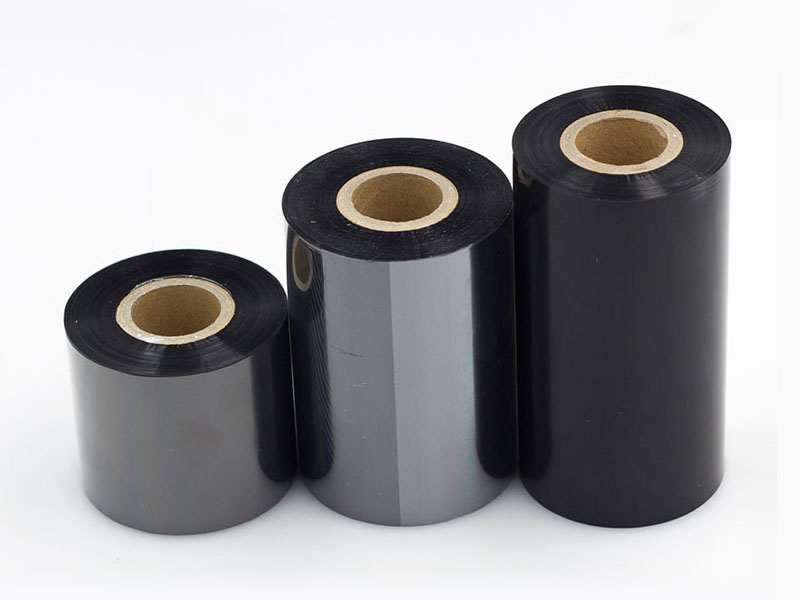
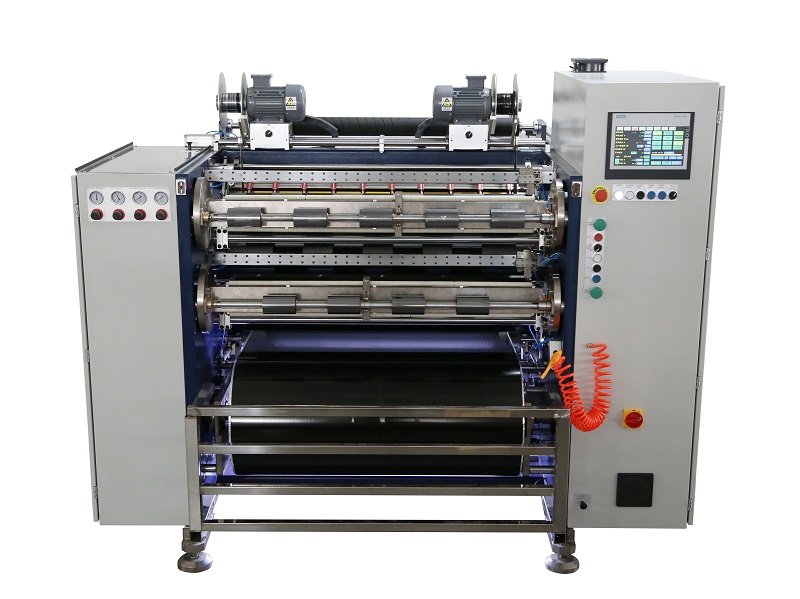 Fully Automatic TTR Slitter RSDS8 Plus
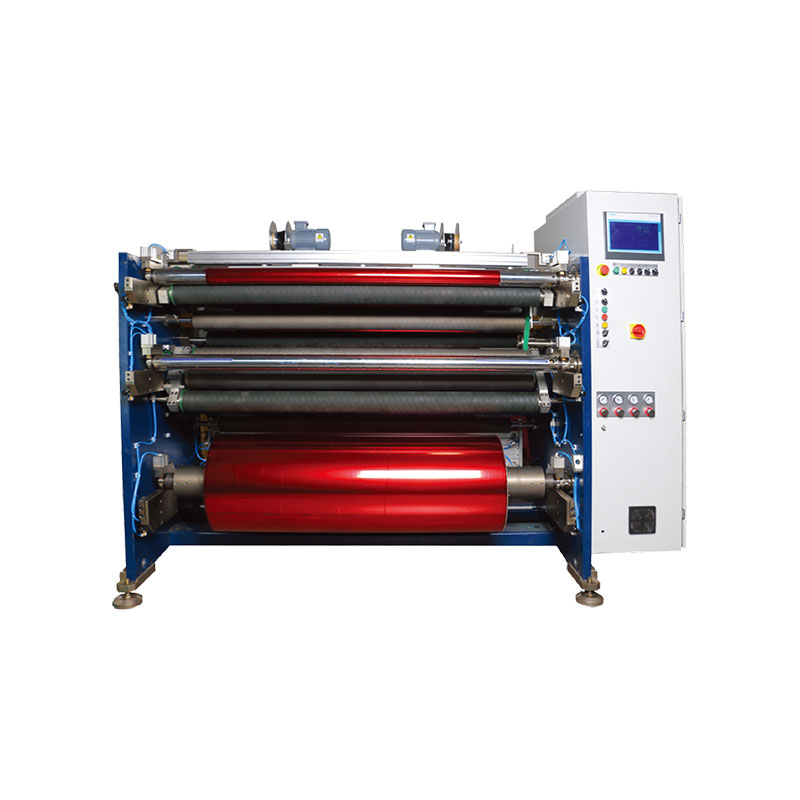 Hot Stamping Foil Slitter 1600mm
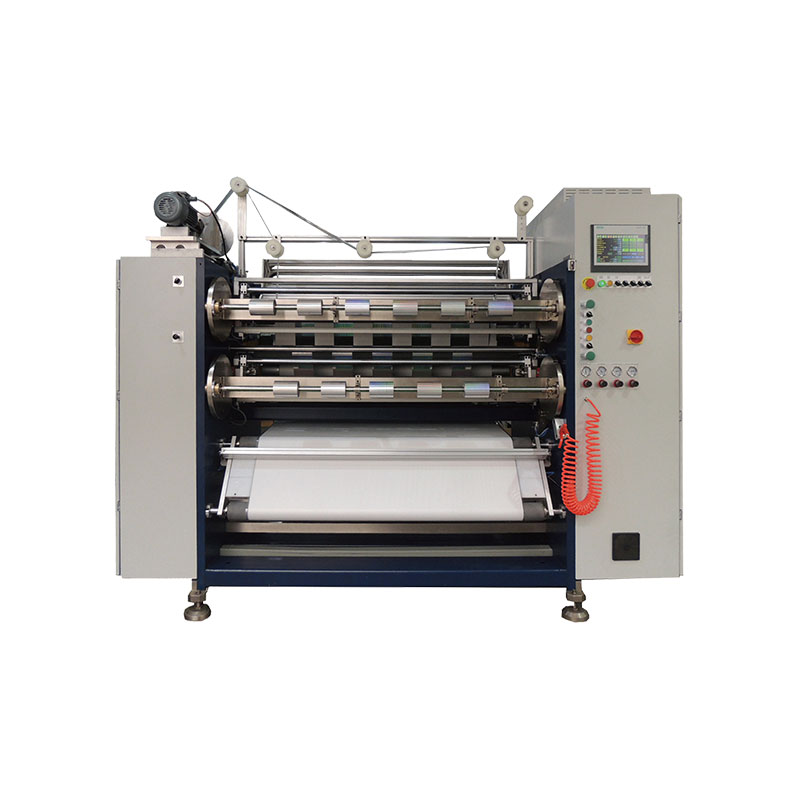 Hot Stamping Foil Slitter (4 Shafts)
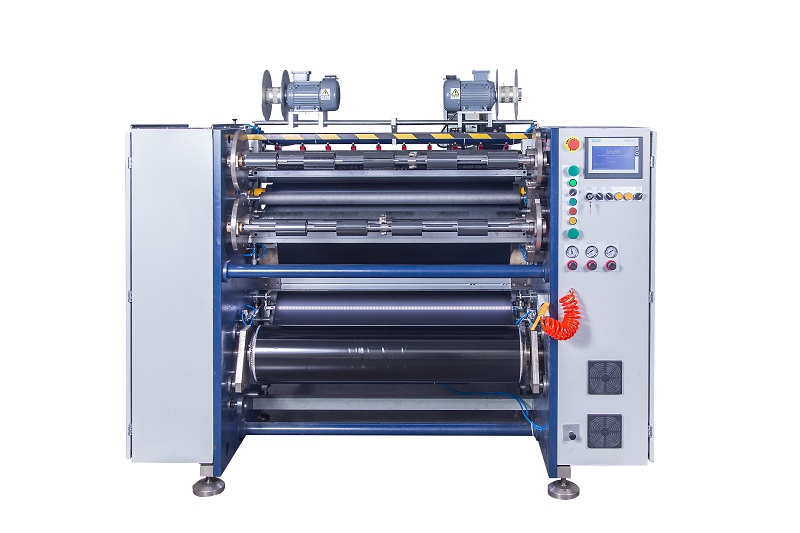 Semi-Auto TTR Slitter RSDS2 Plus
 Semi Automatic TTR Slitter RSDS5 Plus
 Manual TTR Slitter RSDS2
 Auto Paper Core Cutter
 Film Slitting Machine



 +86 135 9951 7291
 support@delishgroup.com
 +86 135 9951 7291