08. July, 2026delish0
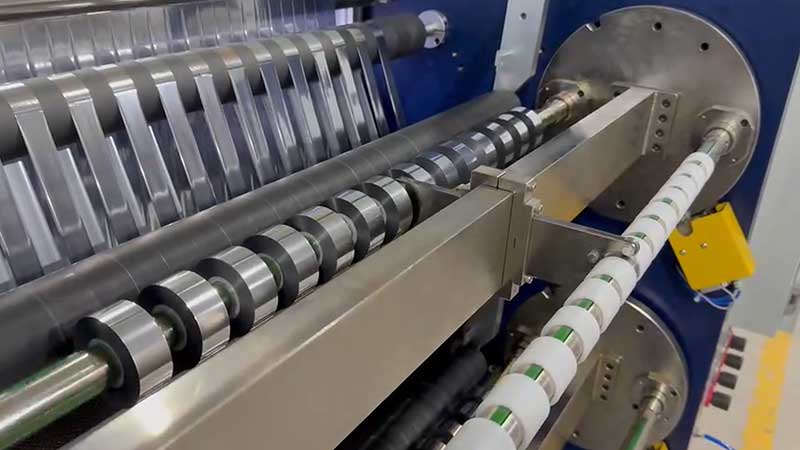
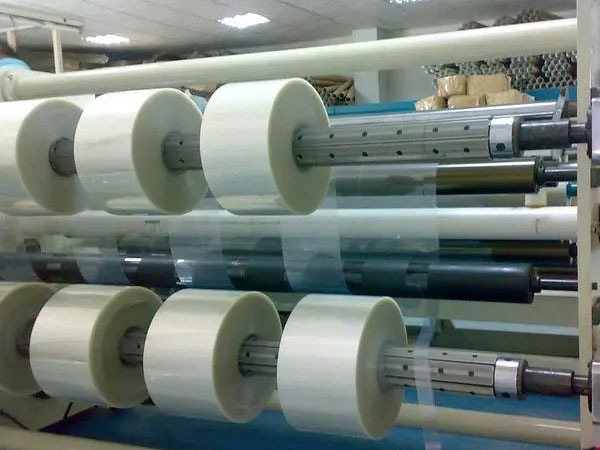
Walking into any modern packaging and printing workshop, you will see this scene: on one end, a wide foil foil master roll slowly rotates; on the other, a high-speed hot stamping machine moves at hundreds of meters per minute, precisely printing the dazzling metallic luster onto the packaging paper. Connecting these two scenes is precisely the often overlooked yet crucial role — the hot stamping foil slitting machine. Its core mission is to solve a seemingly simple yet highly challenging problem: how to turn a "large roll" into a "small plate," and ensure that this rhythm of transformation perfectly matches the "heartbeat" of the hot stamping machine.
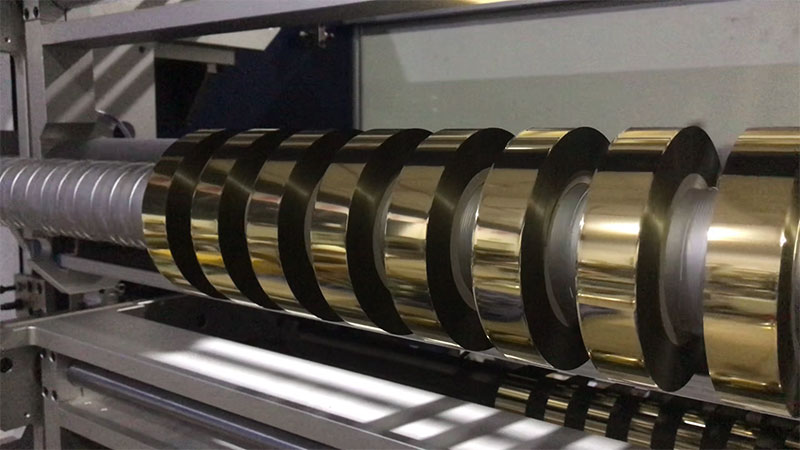
Rhythm Misalignment: "Bottlenecks" in the Production Chain
In the past, many factories suffered losses in this area. Traditional manual or semi-automatic slitting methods are slow and lack precision, like a wide river suddenly narrowing into a small stream. When high-speed hot stamping machines are "waiting to be fed" at 200 meters per minute, the slitting process can only provide foil rolls of uneven quality and rough edges. As a result, hot stamping machines frequently stopped and materials broke during stretching, disrupting production schedules and causing massive waste of expensive hot stamping foil.
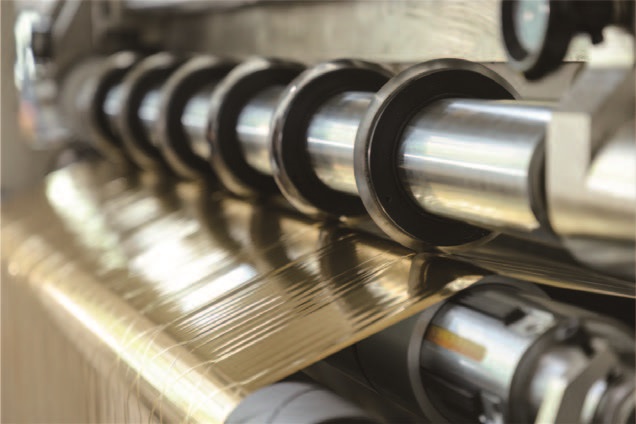
The problem lies in three key mismatches:
1. Speed mismatch: The slitting speed is much lower than the consumption rate of hot stamping machines, resulting in a shortage of demand.
2. Accuracy mismatch: Foil rolls with inaccurate slitting width or edges burrs are prone to misalignment or broken strips when placed on the hot stamping machine, forcing them to slow down.
3. Switching mismatch: When facing small batches and multiple product orders, traditional slitting machines take too long to change specifications, making it difficult to meet the needs of rapid response.
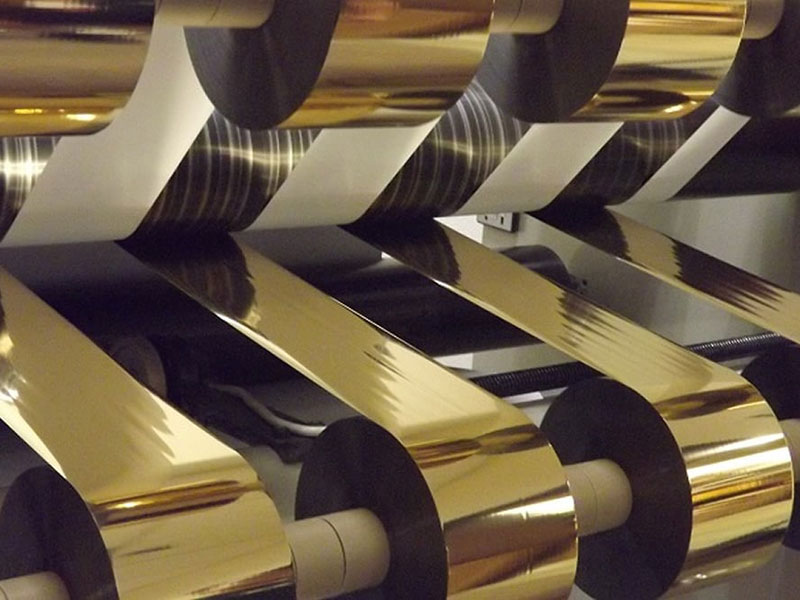
The "rhythm master" approach of decoding slitting machines
Modern high-performance hot stamping foil slitting machines are designed to address these pain points. Through a series of precise techniques, it allows the cutting "prelude" to perfectly follow the "main melody" of the hot stamping machine.
First Act: Responding to "High-Speed" with "Speed"
Modern slitting machines are driven by high-precision servo motors, easily reaching slitting speeds of 200-350 meters per minute, fully capable of matching or even surpassing the pace of high-speed hot stamping machines. More importantly, the integrated slitting and rewinding design achieves "zero downtime rewinding": when one roll of foil is slit, the equipment automatically switches to another set of reels, and the new roll's paper tubes are already pre-installed, making the switching time in between almost negligible. This completely eliminates the "pause" that interrupts production rhythm due to roll changes.
Second Auction: Safeguarding "High-Speed Hot Stamping" with "Micron-Level Precision"
Slitting accuracy is the lifeline that determines the quality of hot stamping. An advanced closed-loop tension control system independently controls tension in three stages—unwinding, slitting, and rewinding—and provides real-time feedback via floating roller sensors, ensuring that the hot stamping foil neither stretches nor deforms or wrinkles during slitting. Combined with photoelectric correction (EPC) and even more advanced CCD visual positioning correction systems, the slitting width error can be stably controlled within ±0.1mm or even ±0.05mm.
The direct effect is that the cut foil roll has smooth, flat edges and no burrs. On high-speed hot stamping machines, such foil rolls flow smoothly and never "drop the chain." The hot stamping pattern is precisely aligned, with no exposed whiteness or misalignment, fundamentally ensuring the yield of finished products. There are cases showing that after adopting high-precision slitting machines, material loss rates can drop from over 5% to below 1%, and the material savings alone can yield considerable benefits.
Third Round: Using "Intelligent Flexibility" to Respond to "Variable Orders"
In today's market, orders are becoming increasingly "fragmented": today you need to cut 15mm narrow strips, tomorrow you might need 50mm wide. Modern slitting machines use modular intelligent cutter holder designs and PLC intelligent control systems to preset plans on the touchscreen, enabling "one-click order change." Order changeover and commissioning time has been reduced from over 30 minutes to within 3-5 minutes. This flexibility allows companies to stock only wide headwinds and cut them as needed, quickly responding to customer needs while significantly reducing inventory pressure and capital occupation.
Beyond Slitting: From "Cost Center" to "Efficiency Engine"
When the slitting machine perfectly matches the rhythm of the hot stamping machine, it is no longer the end of the production process but an efficiency accelerator and quality gatekeeper throughout the entire value chain. It not only solves the physical transition from large rolls to small rolls, but also, through precise, high-speed, and intelligent processing, fully utilizes expensive hot stamping materials and fully unlocks the potential of downstream stamping processes.
Choosing a slitting machine that can "match" your hot stamping machine essentially involves investing in smooth production processes, excellent product quality, and quick response to market changes. This may be the key reason why modern printing and packaging companies maintain a competitive edge.
 English
 Deutsch
 Français
 Español
 Português
 日本語
日本語 русский
 한국어
한국어 عربي
عربي ภาษาไทย
 Tiếng Việt
 Italiano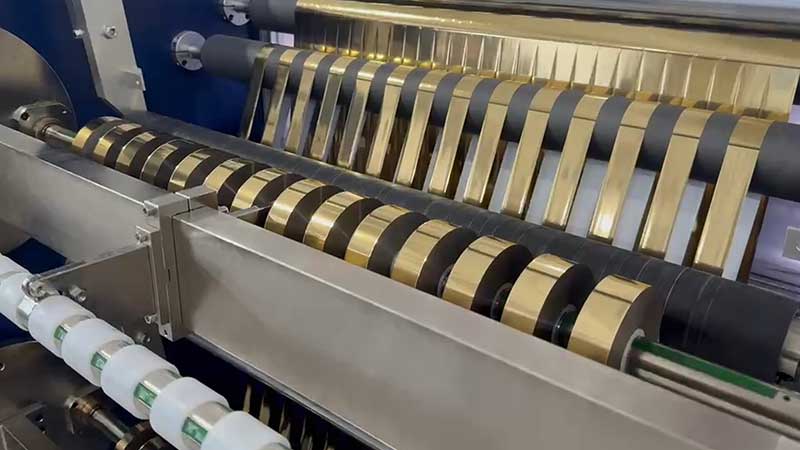
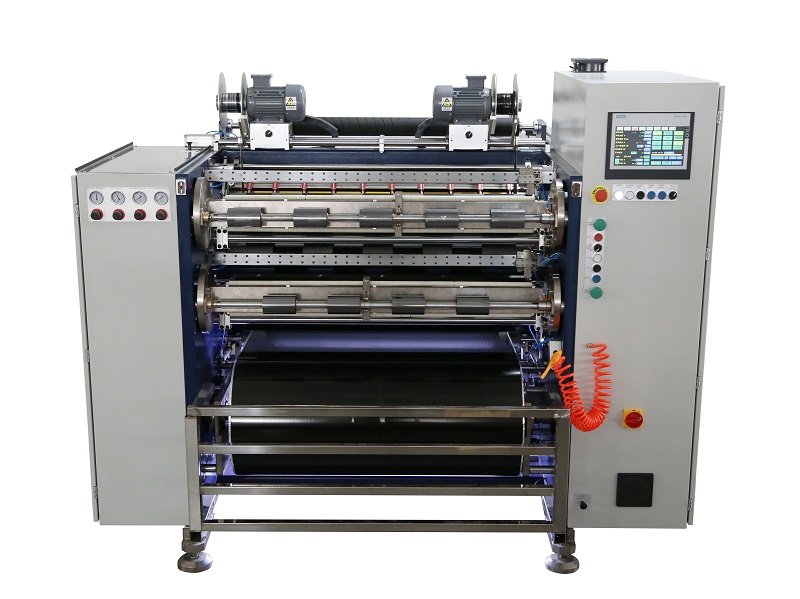 Fully Automatic TTR Slitter RSDS8 Plus
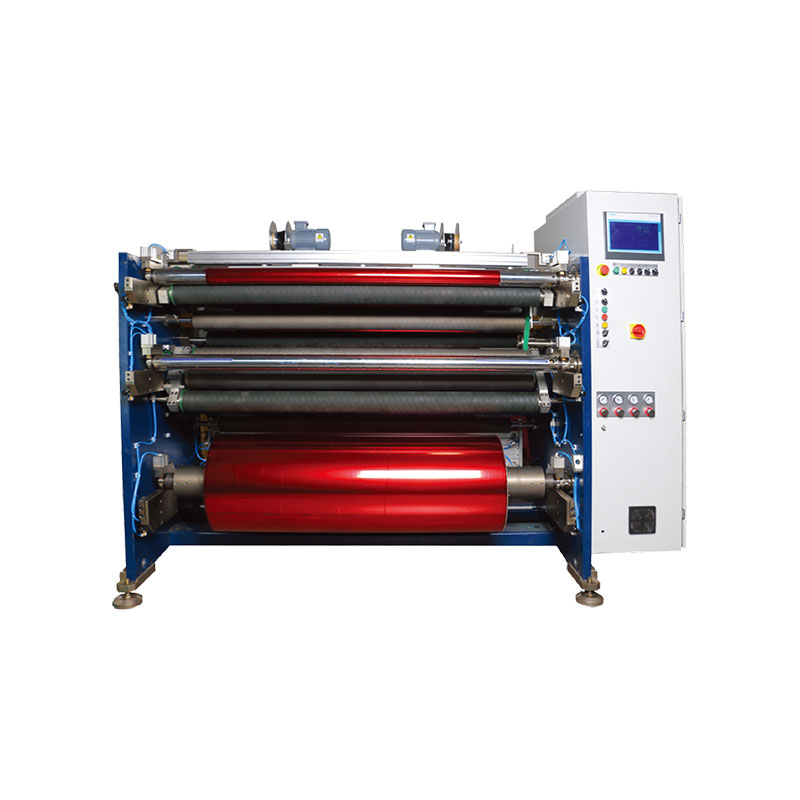 Hot Stamping Foil Slitter 1600mm
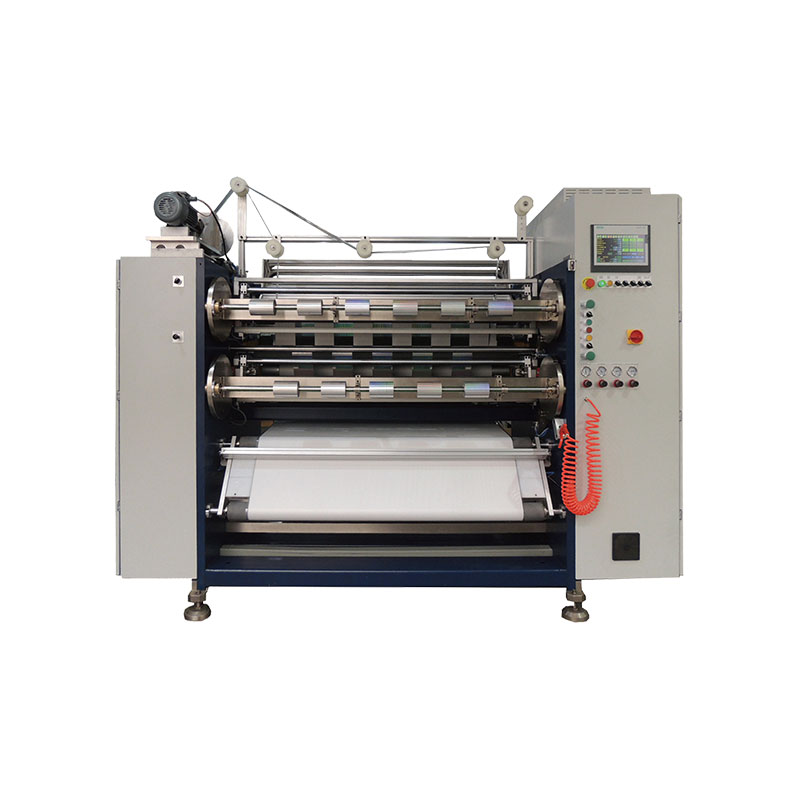 Hot Stamping Foil Slitter (4 Shafts)
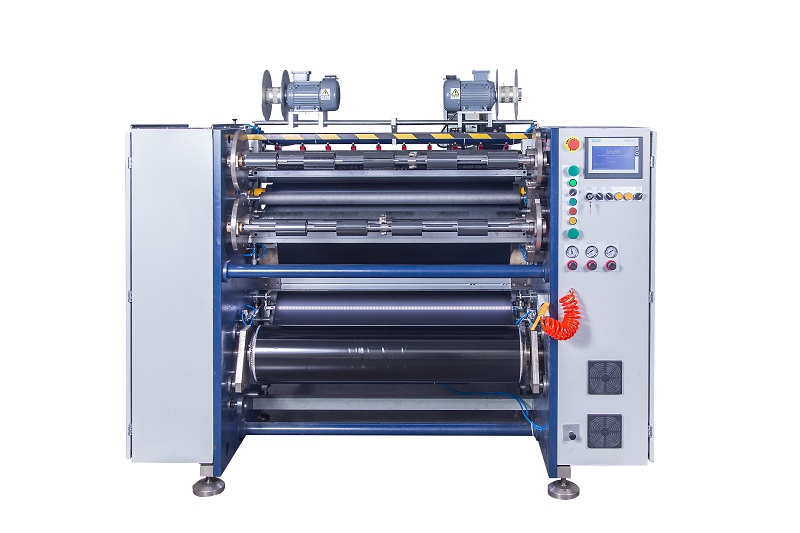 Semi-Auto TTR Slitter RSDS2 Plus
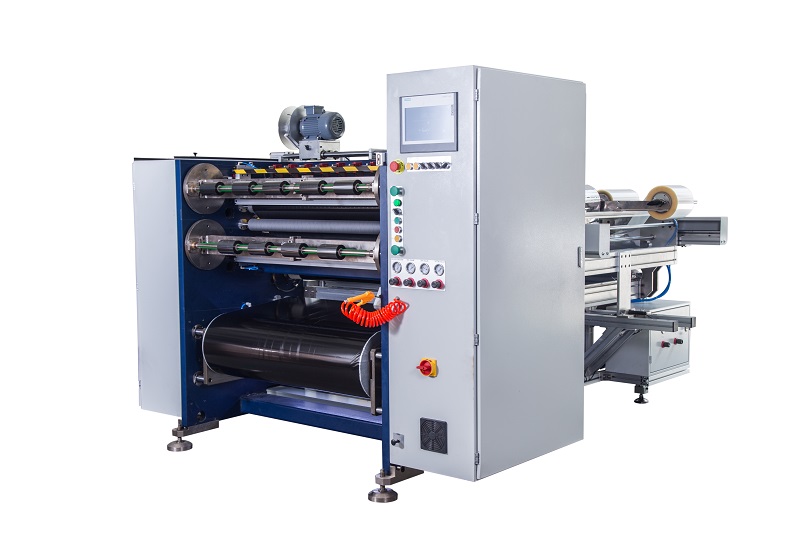 Semi Automatic TTR Slitter RSDS5 Plus
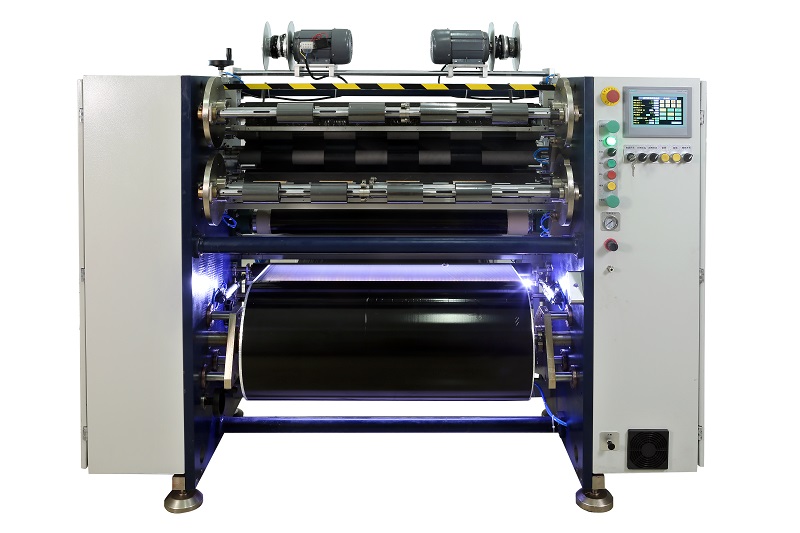 Manual TTR Slitter RSDS2
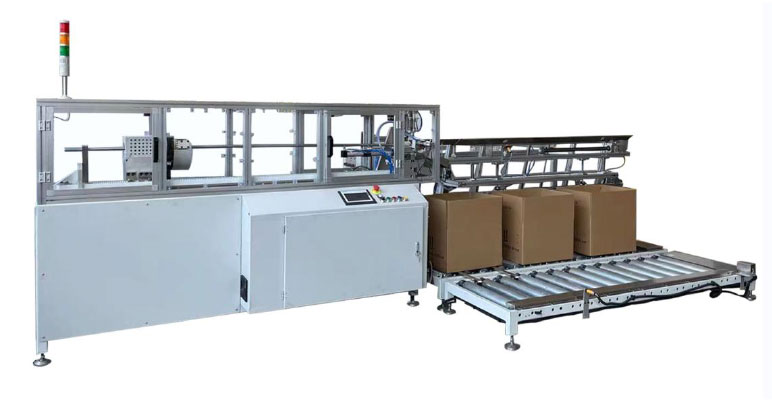 Auto Paper Core Cutter
 Film Slitting Machine



 +86 135 9951 7291
 support@delishgroup.com
 +86 135 9951 7291