11. July, 2026delish0
Choosing a ribbon slitting machine may seem like selecting equipment, but in reality, it is a crucial decision for production efficiency, product quality, and profit margins in the coming years. If you choose correctly, it is a "money-making machine" with stable output; If you choose the wrong one, it may become a "cost black hole" filled with frequent failures and accumulated scrap. This article starts from three core dimensions: speed, accuracy, and cost, helping you clarify your choice logic.
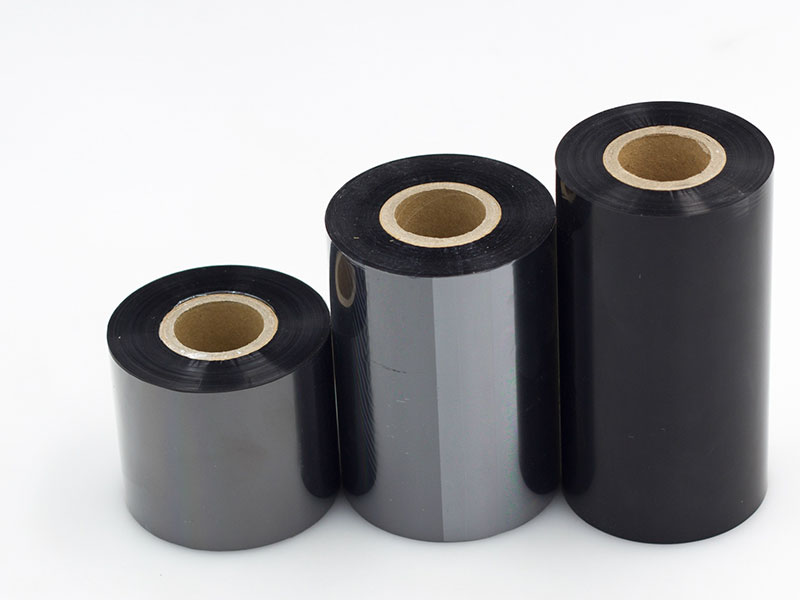
1. Speed: The "ceiling" for efficiency, but higher is not always better
Speed directly determines production capacity, but blindly pursuing top speed often leads to traps.
How to read the speed parameters
Mainstream equipment has a wide speed range: economy models typically reach 100-300 meters per minute, while high-speed equipment can reach 400-500 meters per minute. Entry-level products from manufacturers like Northwest Machinery reach speeds of 80-100 meters per minute, suitable for scenarios with low capacity requirements.
Key understanding: Maximum speed does not equal effective capacity. A device rated at 500 meters per minute may produce less actual output than a machine running stably at 350 meters per minute if it frequently slows down or stops due to tension fluctuations or deviation issues.
Your order structure determines your speed requirements
Here's a little test to help you judge:
| Your situation | Speed strategy |
| Large batches with few specifications, daily output exceeds 100,000 meters | Priority is given to high-speed models with speeds of 300-500 meters per minute to scale and dilute costs |
| Small batches, multiple specifications, frequent order changes | Speed is not the top priority; **changeover efficiency** is more important, so focus on the "one-click order change" capability |
| Just starting out or not saturated with orders | Medium-speed models (200-300 meters per minute) offer better cost performance and avoid excessive capital occupation |
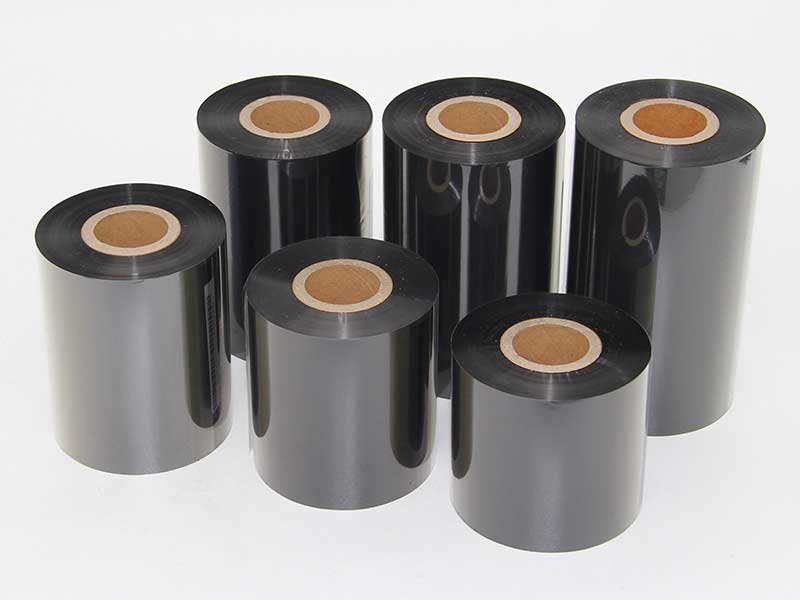
2. Precision: The lifeline of quality, uncompromising
For thin film materials like carbon ribbons, which are only 4-7 microns thick, precision is the most uncompromising hard metric among all parameters.
Accuracy standards: Let the numbers speak
• Standard commercial labels: ± 0.3mm is sufficient
• Precision electronic and medical labels: Requires ± 0.1mm or even ± 0.05mm
Action Advice: Do not trust parameter tables too easily. Bring your own ribbon master roll and conduct a trial cut on site, personally inspecting the slitting edges for burrs and the neatness of the end faces.
The three key hardware components that determine precision
1. Tension Control System—The "Soul" of the Equipment
If tension is unstable, nothing can be discussed. The ribbons are extremely thin and coated with heat transfer coatings; if the tension is too tight, they can stretch, deform, or even break; if too loose, they cause loose winding and uneven end faces.
Key points for selection: Confirm whether the equipment has fully automatic closed-loop tension control, which can monitor and adjust tension in real time during unwinding, traction, and rewinding stages. High-end equipment should also have taper tension control functions—automatically reducing tension as the diameter increases, preventing compression and adhesion of the inner ribbon.
2. Correction System—The "Guardian" of Precision
Without a deviation correction system, high-speed slicing would be a disaster. CCD photoelectric correction is suitable for transparent and semi-transparent materials, while ultrasonic correction is suitable for opaque materials.
On-site Test: During the test run, gently push the running material to see if the correction system can quickly return to alignment.
3. Slip shaft—the key to solving the "vegetable core" problem
For small-batch, multi-specification production modes, slip shafts are a must-have. It can independently control torque for each winding unit, effectively solving issues of "loose inside tight outside" or uneven end faces during coiling, ensuring stable and reliable quality for every roll.
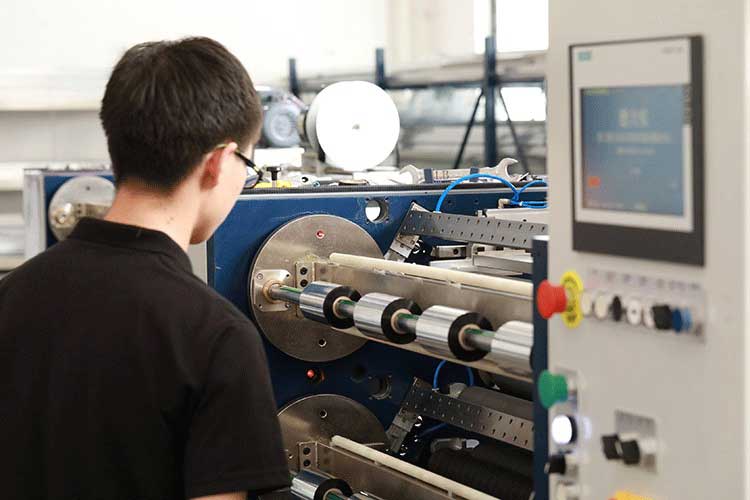
3. Cost: Calculate the total bill, don't just look at the quotation
Ribbon slitting machine prices range from several thousand yuan to several hundred thousand yuan: economical models cost about 10,000 to 30,000 yuan, mid-range models 30,000 to 100,000 yuan, and high-end professional models can exceed 100,000 yuan.
The real cost formula
Total cost of ownership = Purchase price + Operating cost + Maintenance cost + Losses caused by downtime/scrap
A device that costs 20% less but has twice the failure rate may cost you 50% more over two years.
Cost Breakdown Sheet
| Types of costs | Reference proportions | Optimizations that can be made during model selection |
| Initial procurement | One-time investment | Matches actual needs, so you don't have to pay for features you don't need |
| Energy consumption | Ongoing spending | Compare power parameters of different models (e.g., 7KW vs 13KW) |
| Blade consumables | Replace regularly | Choose blade materials with strong versatility and long lifespan |
| Maintenance manuals | Ongoing spending | Highly automated equipment can reduce the number of operators |
| Downtime losses | Hidden costs | Assess after-sales response speed: 4-hour response and 24-hour on-site service are basic requirements |

4. Selection Decision Framework: Four-Step Method
Considering the above three dimensions, here is an actionable selection process:
Step 1: Clarify the list of requirements
• What ribbons (wax-based/mixed/resin-based) are mainly processed?
• Width range, thickness range?
• What is the daily output requirement?
• Order structure (large-batch standardization vs. small-batch multi-specification)?
Step 2: Narrow down candidate brands
Request detailed parameter lists from 3-5 suppliers, focusing on tension control methods, correction accuracy, rewinding shaft configuration (with slip shaft), and degree of automation.
Step 3: On-site machine test verification
Test cut with your own materials and check the slitted samples. This is a step that cannot be skipped.
Step 4: Negotiate the terms of service
Include the warranty period, response time, and spare parts supply in the contract.
Conclusion
Selecting a ribbon slitting machine is essentially a strategic match based on your own business characteristics, rather than simply comparing prices. The cheapest isn't always the most economical, and the most expensive isn't always the most suitable. The key is to find the device that strikes the best balance between speed, precision, and cost—one that meets your current needs while also leaving room for business development over the next 1-3 years.
 English
 Deutsch
 Français
 Español
 Português
 日本語
日本語 русский
 한국어
한국어 عربي
عربي ภาษาไทย
 Tiếng Việt
 Italiano
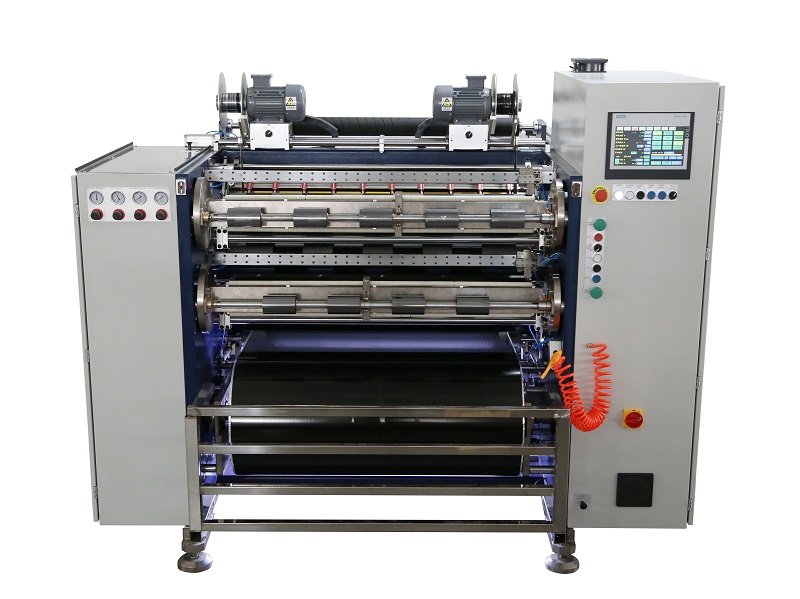 Fully Automatic TTR Slitter RSDS8 Plus
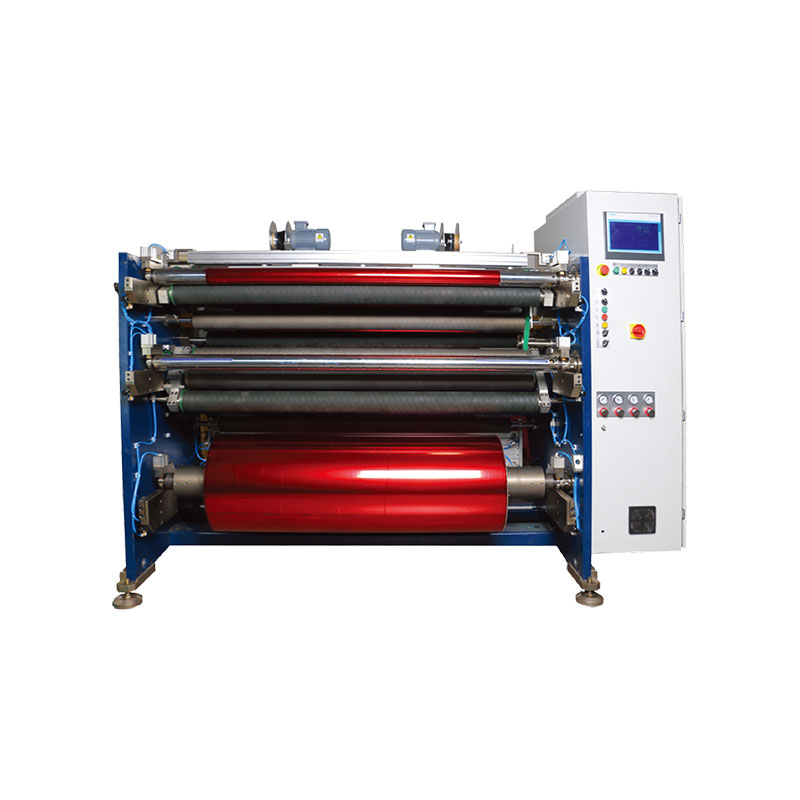 Hot Stamping Foil Slitter 1600mm
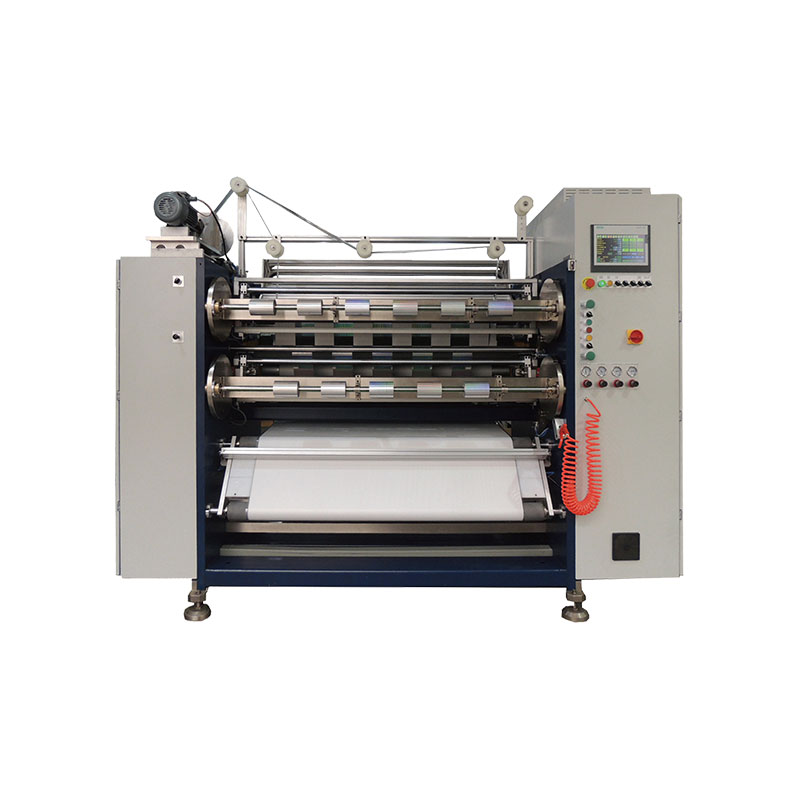 Hot Stamping Foil Slitter (4 Shafts)
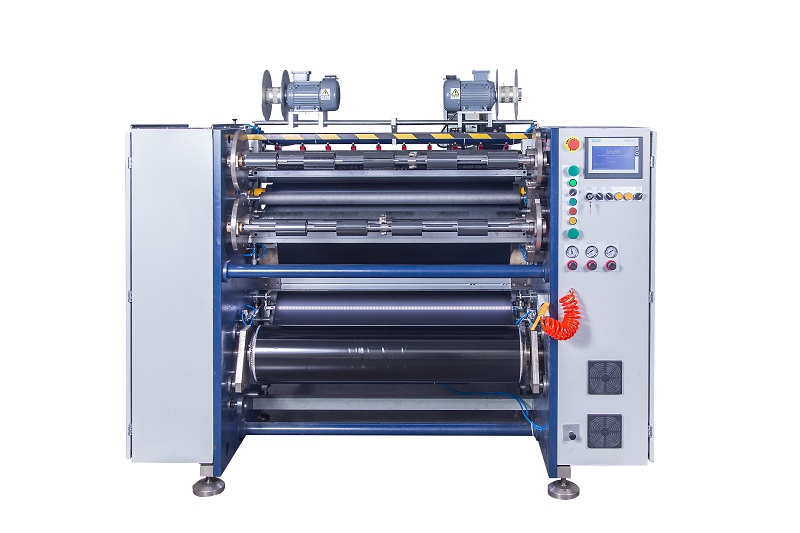 Semi-Auto TTR Slitter RSDS2 Plus
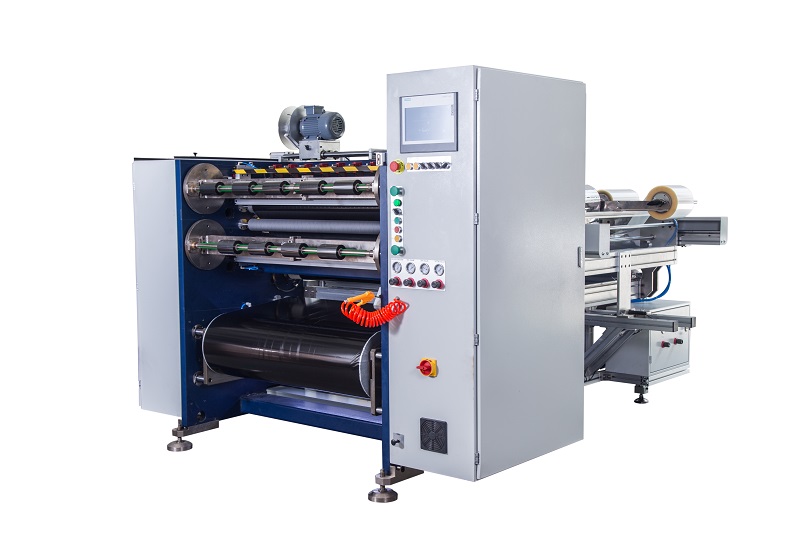 Semi Automatic TTR Slitter RSDS5 Plus
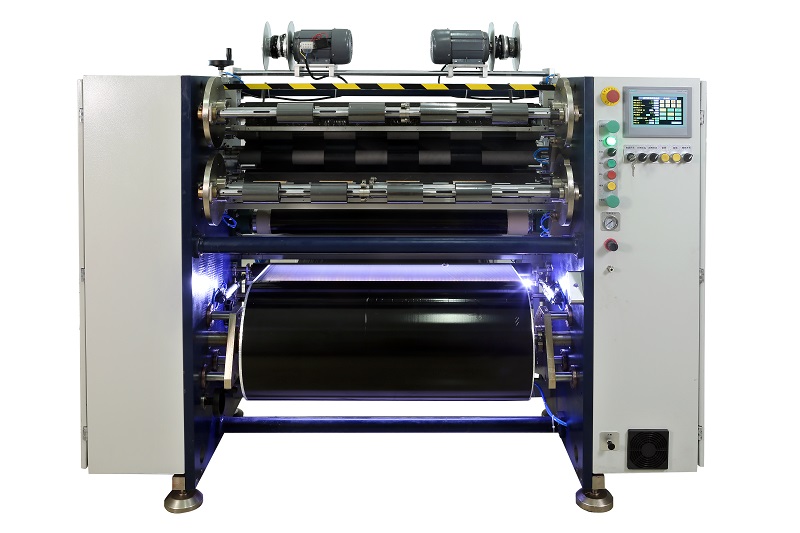 Manual TTR Slitter RSDS2
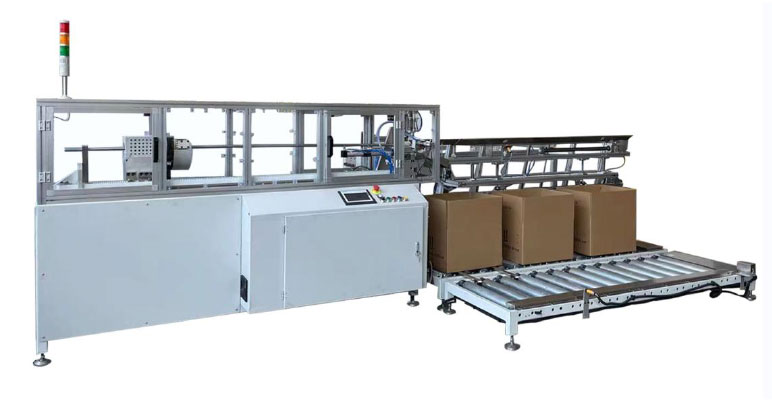 Auto Paper Core Cutter
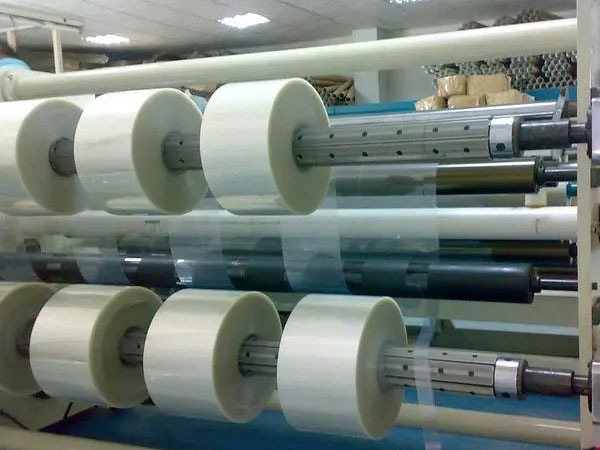 Film Slitting Machine



 +86 135 9951 7291
 support@delishgroup.com
 +86 135 9951 7291