22. July, 2026delish0
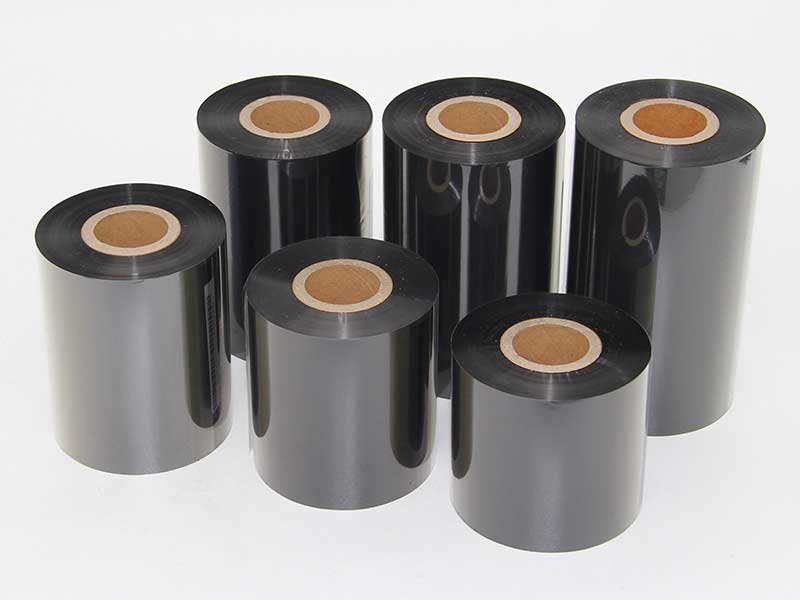
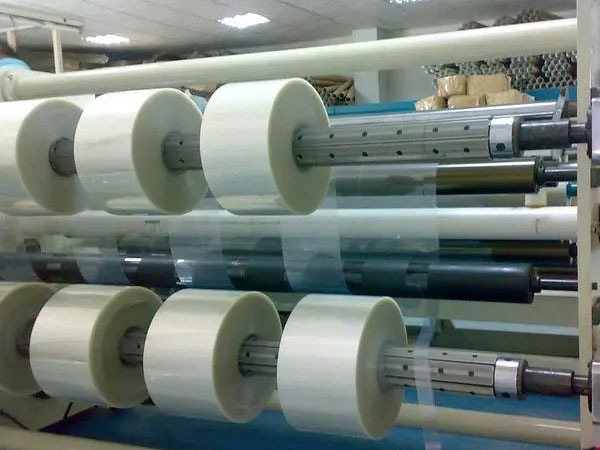
Unstable tension is one of the most common failures in ribbon slitting. The ribbon is made by coating an ultra-thin PET base film with ink, making it extremely sensitive to changes in tension—if too large, it will stretch or even break; if too small, it will be loosely rolled and the end face uneven. Fortunately, most tension instability issues follow the diagnosis logic of "mechanical before electric, no-load before load," which can be located and resolved within 30 minutes.
1. First assess symptoms and narrow down the screening scope
Even when it comes to 'unstable tension,' different manifestations point to completely different fault points. Observe the phenomenon before you start to avoid detours:
| Typical performance | The most likely cause is direction |
| Periodic jitter during operation (once every 1-2 seconds) | Bearing damage or eccentricity of mechanical components |
| The fluctuation cycle is very long (every few seconds). | Error in the diameter calculation |
| Obvious fluctuations in start/stop moments | Improper setting of acceleration and deceleration times or insufficient pre-tension |
| The winding end face is trumpeted or tower-shaped | Excessive winding tension, uneven pressure on the rollers, or improper taper coefficient |
| Unwinding is normal, but winding is unstable | Wear of the rewinding shaft friction plates or aging of the magnetic powder clutch |
| Rewinding is normal, but unstable rewinding | Magnetic powder aging in the unwinding brake or unstable brake air pressure |
Mnemonic: First, check if the guide roller is turning; second, check if the friction plates are worn down; Third, check if the air pressure is stable; fourth, check if the PID is soft; Fifth, whether the inspection lines are open, and whether the sixth question has been changed in materials.
2. Mechanical Inspection: The easiest to overlook and most common
More than 60% of tension fluctuations come from mechanical components; troubleshooting should start with hardware rather than rushing to adjust parameters.
1. Guide roller flexibility and parallelism
Manually turn all guide rollers to ensure smooth rotation and no abnormal noises. Bearing sticking causes the material to slide and rub at this point, resulting in sudden changes in tension. At the same time, check the parallelism between the guide rollers—non-parallelism can cause lateral component forces on the ribbon, resulting in uneven tension on both sides, and the error should be controlled within 0.05mm/m.
2. Gas expansion shaft pressure and sealing
Air leakage in the air expansion shaft or wear of the expansion block can cause the core to slip and tension to become uncontrolled. Check whether the air pressure is stable at 0.5-0.6MPa; replace the sealing ring or bulge at any leak area. It is recommended to install a pressure stabilizing valve on the gas line to ensure stable air supply.
3. Transmission components and friction plates
Check whether the coupling screws are loose and whether the belt is aged or loose. For older models using magnetic powder clutches/brakes, remove and inspect the wear of the friction pads—severe wear or magnetic powder clumping can cause torque to fluctuate between high and low.
4. Pressure uniformity of the rollers
If the cylinder pressure on both sides of multiple pressure rollers (laminating rollers, rewinding rollers) on the slitting machine is uneven, it will directly cause uneven tension. Use a pressure gauge to measure the pressure on both sides one by one, then adjust the pressure regulator valve to ensure consistent readings. If the pressure roller and the winding shaft are not parallel, each rotation generates axial thrust, causing the end face to protrude on one side—the clearance difference between the two ends should be ≤ 0.05mm/m.
3. Inspection of air circuits and feedback systems
1. Gas source stability
Check the air supply trio (pressure regulator, oil mist, filter) and observe whether the pressure gauge needle vibrates. It is recommended to maintain air source pressure between 0.4-0.6MPa, and the pointer should not shake. Rub soapy water on the joints and cylinder piston rods to check for air leaks; if bubbles are found, replace the seals.
2. Floating Rollers (Dancing Rollers)
The floating roller should be able to swing freely up and down without jamming. If the swing roller frequently "breathes" and oscillates (high-frequency shaking) during operation, it may be due to excessive PID gain or cylinder pressure fluctuations; If the roller swing remains at the highest position (loose) for a long time, it indicates that winding is too slow or unwinding is too fast; Conversely, it is the opposite.
3. Tension sensor calibration
If toner accumulates on the sensor surface, it can cause signal distortion. The calibration method is: suspend the spindle (without passing through the tape) and perform "zero point calibration" on the controller; Then apply a known tensile force (e.g., 10N) to the spring scale, perform "fullness calibration," repeat 2-3 times, and confirm the reading error ± within 0.5N.
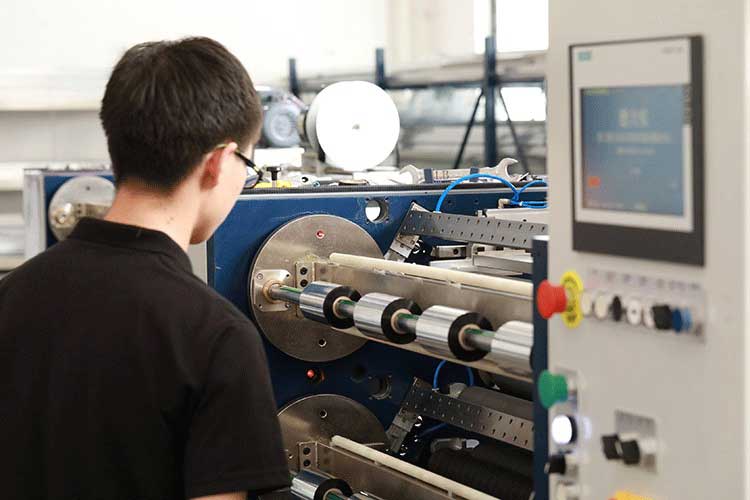
4. Electrical and control parameter optimization
After mechanical and pneumatic circuit inspections show no abnormalities, the electrical parameter adjustment phase begins.
1. Activation and replacement of magnetic powder clutches/brakes
After more than a year of use, magnetic powder clutches may settle or clump together, leading to poor linearity. You can try "magnetic particle activation"—without penetrating the film, running at low speed idling, applying about 50% rated current and running for 10-15 minutes. If ineffective, replace the magnetic powder or the entire clutch set.
2. PID parameter setting
For closed-loop tension control systems, PID parameter mismatch is a common cause of tension fluctuations. Recommended debugging steps:
• First, set the ratio (P) to 10-20%, and set the integral (I) and derivative (D) to 0
• Gradually increase P until a small amplitude of the oscillation appears, then lower it to the critical value where the oscillation disappears
• Add I, start downward adjustment from 5 seconds, and continue until static error is eliminated but no overshoot
• D is generally set to 1/8~1/4 of the I value, used to suppress fast disturbances
Note: The response speed of magnetic powder clutch systems is much slower than that of servo systems, so the P-value should not be too high.
3. Acceleration and deceleration ramping times
Sudden increase in tension at startup and sudden relaxation at stopping often result in mismatches between acceleration and deceleration times and controller response. It is recommended to set acceleration time to 3-5 seconds, deceleration time to 4-6 seconds, and for high-speed models, it can be extended to 15-30 seconds.
4. Taper tension setting
As the reeling diameter increases, the tension should gradually decrease (taper coefficient usually 20%-40%); otherwise, the outer layer will crush the inner layer, causing "chrysanthemum core" wrinkles.
5. Four-step practical debugging process
Step one: No-load testing
Do not thread the ribbon; let the retractor reel spin idle and observe if the tension feedback is stable—if it still fluctuates, the problem lies with the sensor or magnetic powder components.
Step 2: Low-speed film penetration test
Load the scrap belt and run at a low speed of 20-30m/min, setting 60% of the normal tension as the starting value.
Step 3: Make fine-tuning item by item
Change only one variable at a time, observe the effect, and then proceed to the next step:
| Phenomenon | Adjust direction |
| Stable at low speeds, shaking at high speeds | Increase acceleration and deceleration time on slopes |
| It wrinkles the moment it starts | Increase pre-tension (1.2 times the operating tension, lasting 0.5-1 seconds) |
| Periodic fluctuations during operation | Check the parallelism of the pressure roller or the bearing |
| Roll loose on the outside and tight inside | Increase taper tension coefficient (5%→10-15%) |
Step 4: Isolate in segments
If the source of the problem still cannot be pinpointed, sequentially isolate release or rewinding control to determine where the fluctuations are coming from; Alternatively, swap suspected problematic magnetic powder clutches with normal spare parts to quickly locate hardware faults.

6. Easily Overlooked "Soft Factors"
• Poor ribbon quality: If the original roll is "banana roll" (one end tight and the other loose), no machine can adjust it properly. It is recommended to replace the entire roll for testing and eliminate the issue.
• Static interference: During winter drying, carbon ribbons are prone to static electricity, leading to interlayer repulsion and loose end faces. Ion fans or humidification (humidity 40%-60%) can be used to alleviate the issue.
• Sudden changes in material specifications: When the ribbon width is halved, the tension value must also be reduced by half—previous parameters cannot be used indiscriminately.
• Core deformation: Deformation of paper tubes or plastic cores can cause periodic bouncing during winding. Before getting on the vehicle, check the inner and outer diameters of the roll core; severely deformed parts should be scrapped.
7. Preventive maintenance recommendations
Rather than waiting for problems to be repaired, it's better to establish a regular maintenance mechanism:
• Each shift: Clean the toner powder on the surface of the guide roller and floating roller, and check the blade condition
• Weekly: Check friction pad wear, air circuit leaks, and bearing clearance
• Quarterly: Calibrate the zero point of the tension sensor, check the sealing ring of the expansion shaft, and calibrate the parallelism of the guide roller
• Every six months: replace the magnetic powder in the clutch (depending on usage time)
Unstable tension is rarely caused by a single cause; it is often the result of mechanical wear, electrical aging, and the combination of process settings. By following the "from hard to soft" order, the parameters after each adjustment are recorded to form the machine's maintenance archive—once this habit is formed, most tension issues can be resolved within 30 minutes. If all conventional methods fail and the equipment has been used for more than 8 years or has experienced a serious crash, it is not too late to contact the equipment manufacturer.
 English
 Deutsch
 Français
 Español
 Português
 日本語
日本語 русский
 한국어
한국어 عربي
عربي ภาษาไทย
 Tiếng Việt
 Italiano
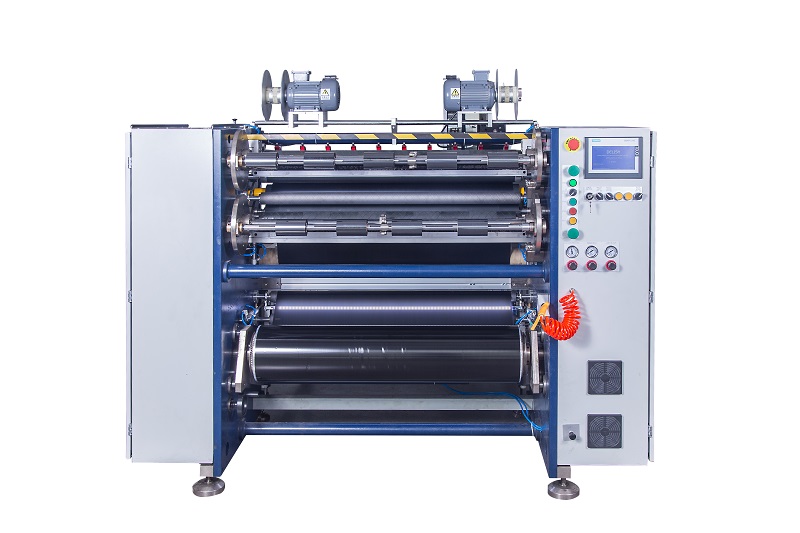
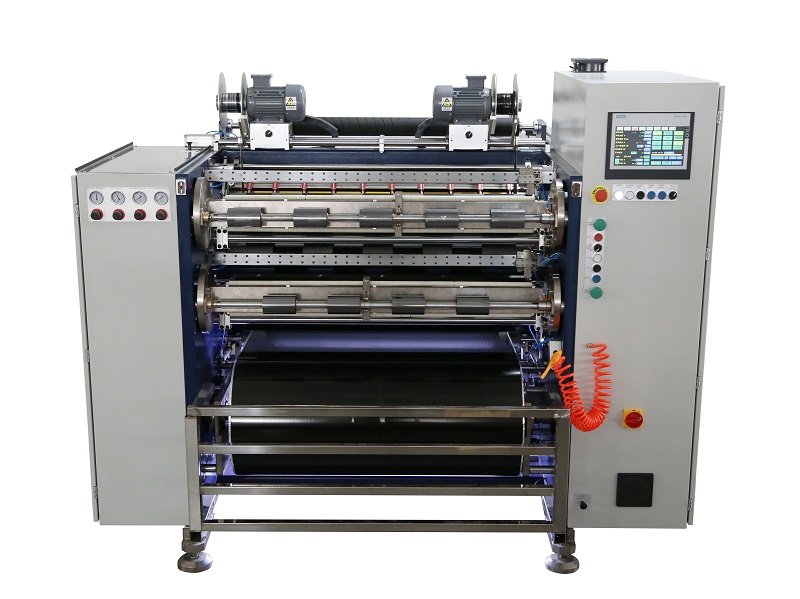 Fully Automatic TTR Slitter RSDS8 Plus
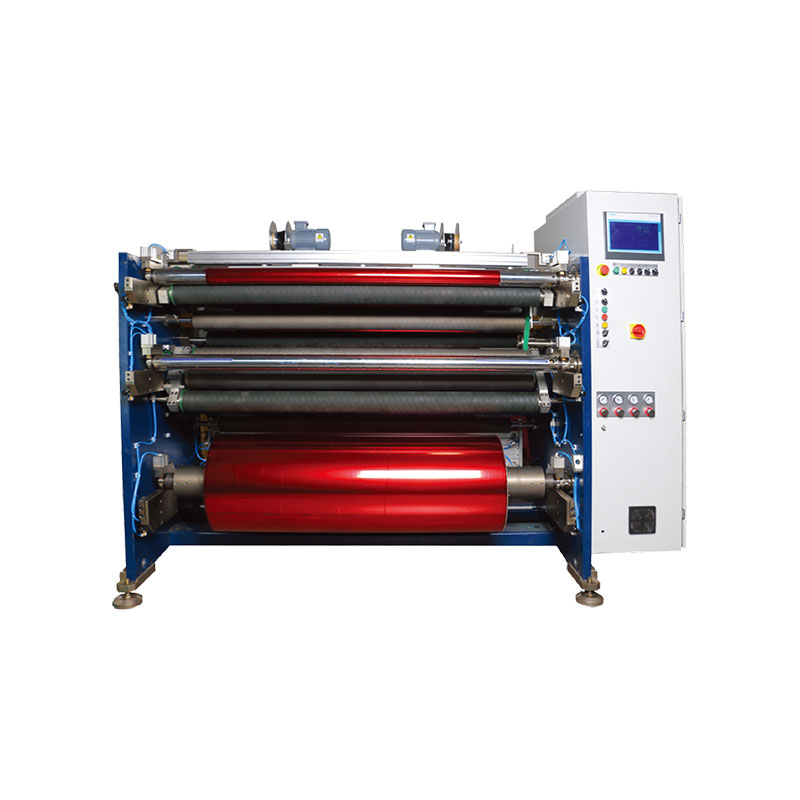 Hot Stamping Foil Slitter 1600mm
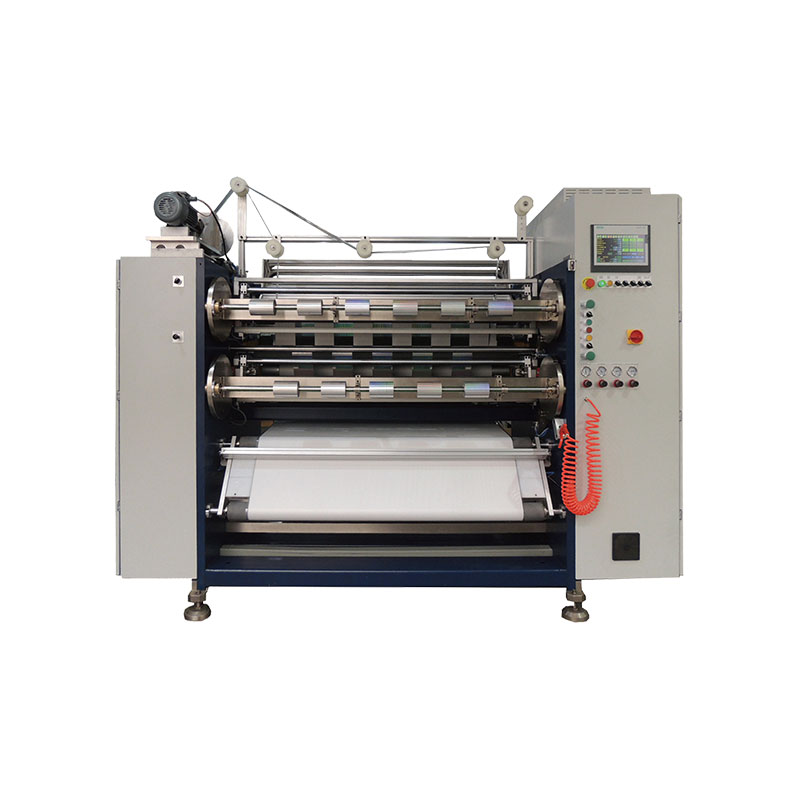 Hot Stamping Foil Slitter (4 Shafts)
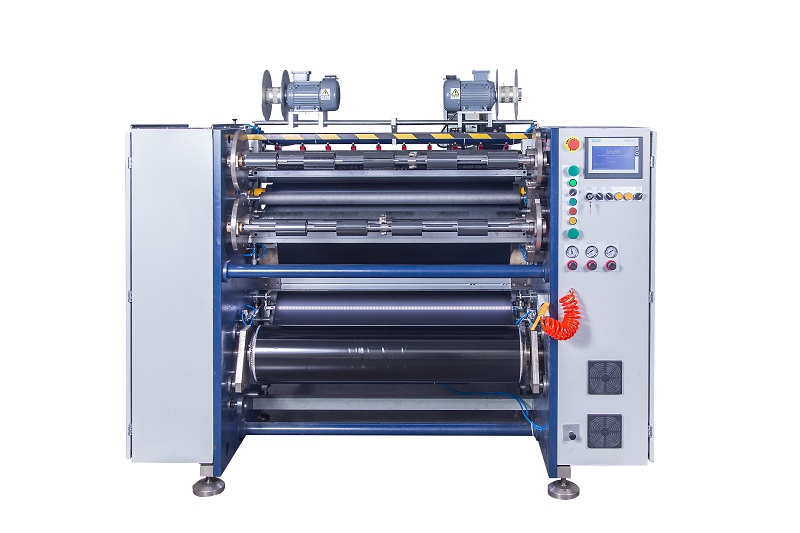 Semi-Auto TTR Slitter RSDS2 Plus
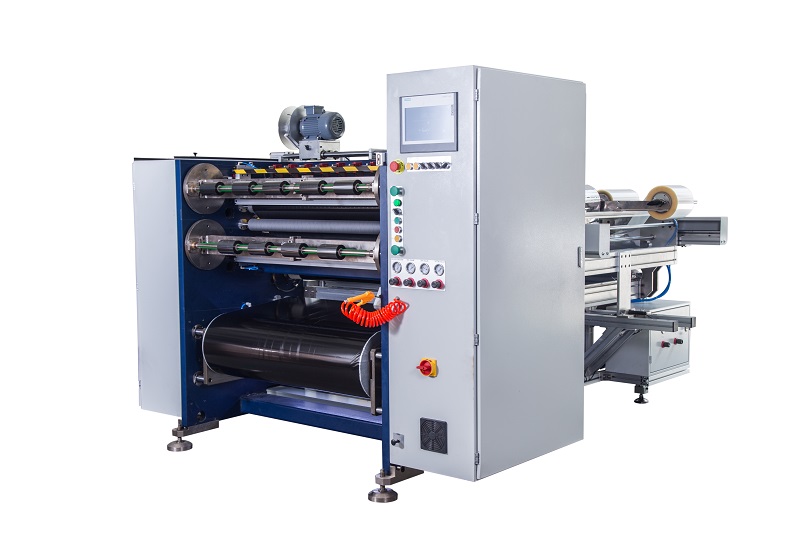 Semi Automatic TTR Slitter RSDS5 Plus
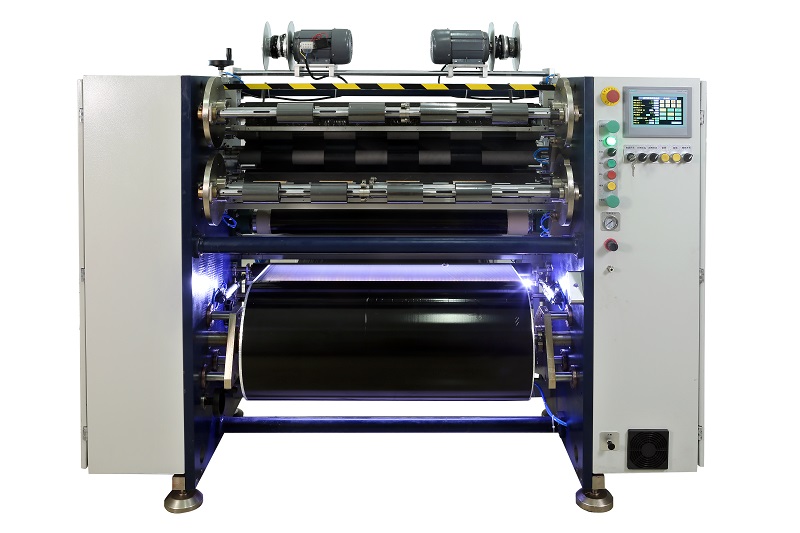 Manual TTR Slitter RSDS2
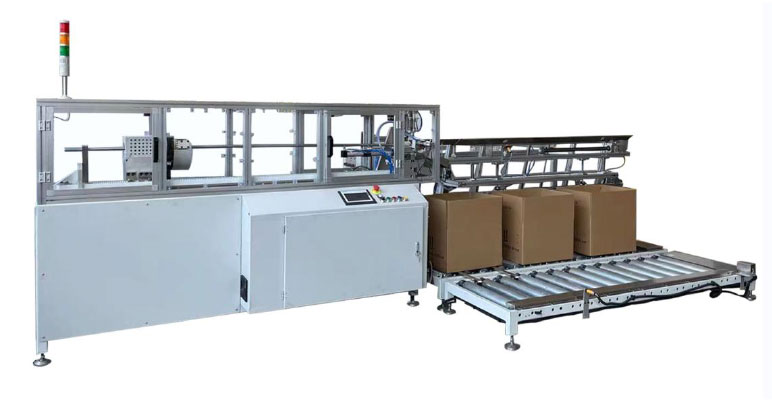 Auto Paper Core Cutter
 Film Slitting Machine



 +86 135 9951 7291
 support@delishgroup.com
 +86 135 9951 7291