22. July, 2026delish0
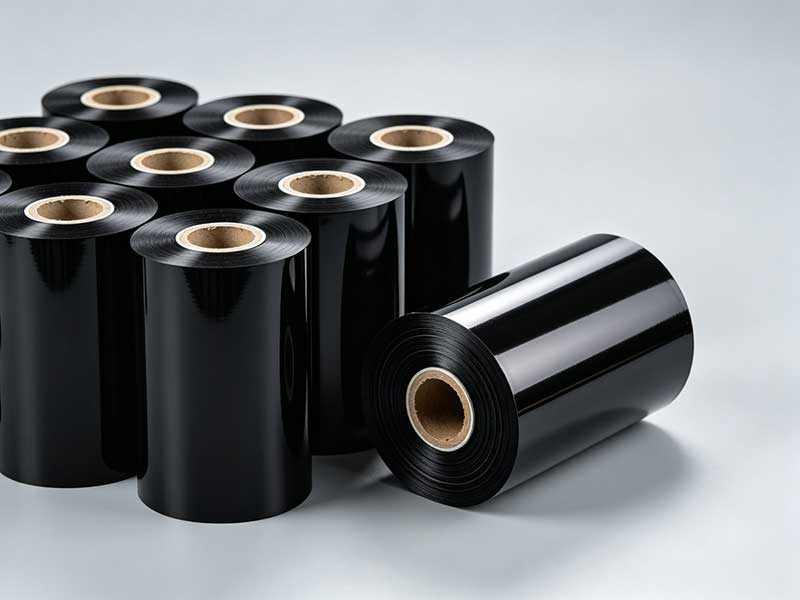
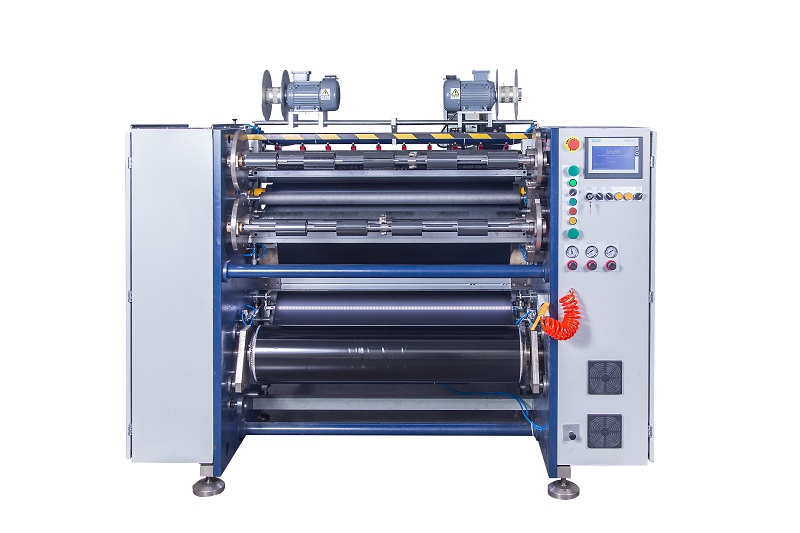
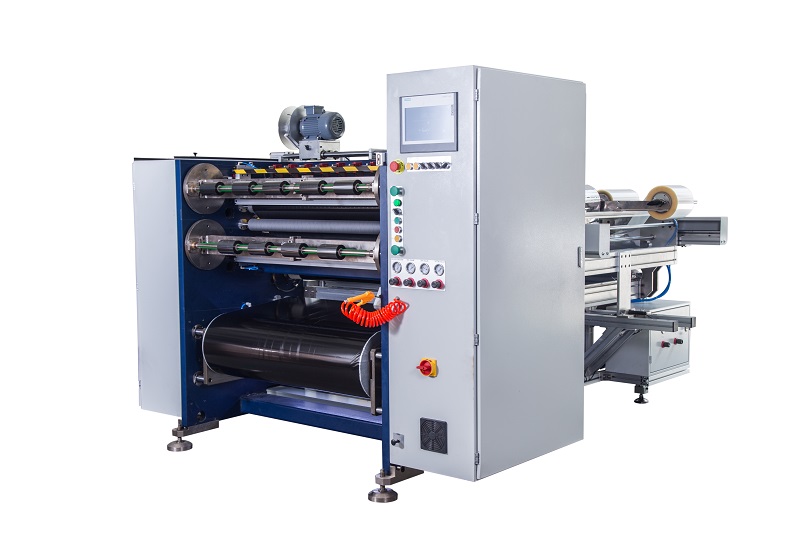
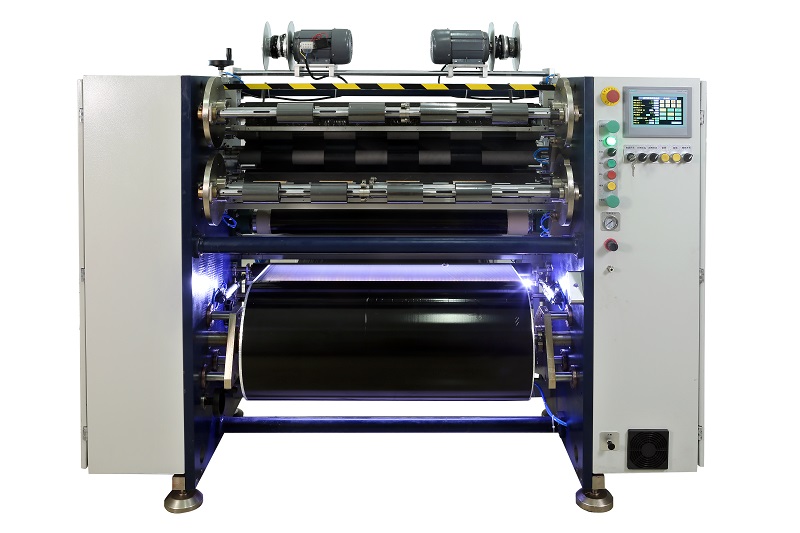
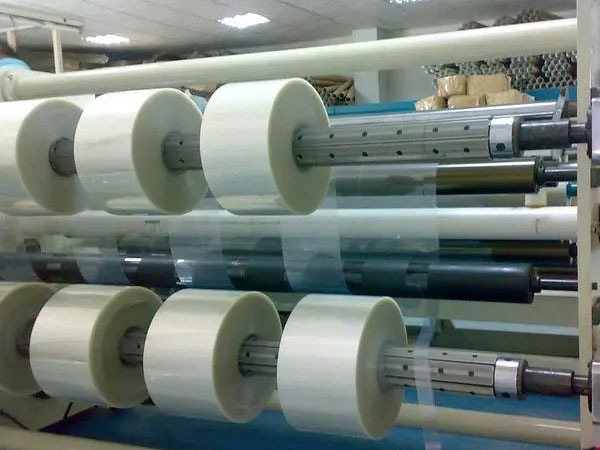
The ribbon slitting machine is a key piece of equipment in the production of thermal transfer ribbons. Its core task is to precisely slice wide-width large rolls of ribbons into narrow roll sizes suitable for different printers. As ribbon application scenarios become increasingly diverse, the slitting machine's compatibility with different materials directly affects product quality and production efficiency.
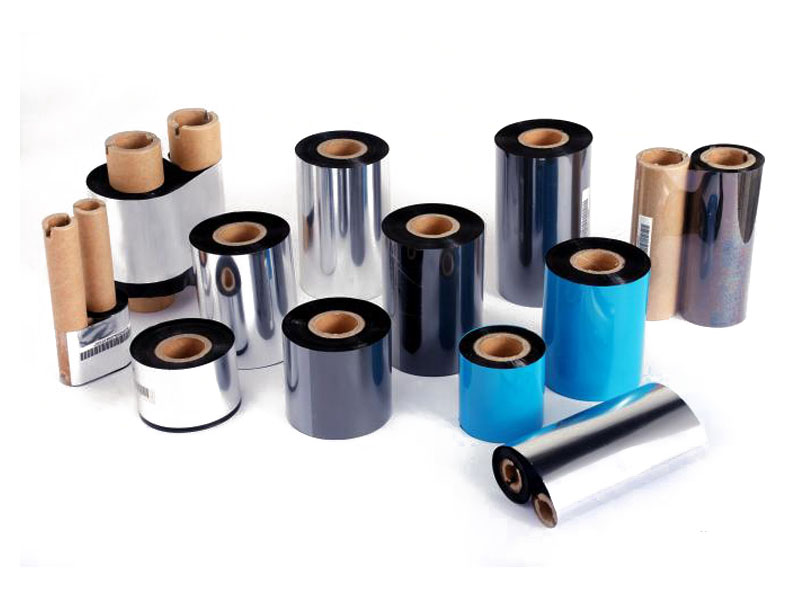
Slitting adaptation for three major mainstream ribbon materials
Depending on the coating composition, heat transfer ribbons are mainly divided into three categories: wax-based, mixed-based, and resin-based. Modern ribbon slitting machines can fully adapt to slitting processing of these three materials.
Wax-based ribbons are the most widely used and cost-effective type on the market, accounting for about 70% of the market share. It uses wax and carbon black as the main coating materials, suitable for materials with slightly rough surfaces such as coated paper and rough paper. When processing wax-based ribbons, since the coating is relatively soft, the slitting temperature must be controlled to prevent the wax layer from melting and sticking. Conventional circular blade slitting can meet quality requirements.
Mixed-base ribbons are made by mixing wax and resin, combining the advantages of both, and are suitable for label materials such as coated paper, smooth paper, synthetic paper, and even PET, PVC, and more. The slitting machine can automatically adjust the tension requirements of mixed base ribbons with different ratios through an adaptive tension control system, flexibly meeting diverse production requirements.
Resin-based ribbons are mainly made of resin and offer excellent high-temperature resistance, chemical corrosion resistance, and scratch resistance, making them suitable for harsh scenarios such as PET labels, washable labels, and heat-generating electrical areas. However, resin coatings are hard and brittle, facing unique challenges such as chipped edges, bursting edges, and dust during slitting. Therefore, resin-based ribbons have the highest requirements for slitting processes, requiring ultra-cemented carbide or ceramic blades combined with suspended flat blades for cutting, achieving "clean and crisp" cutting with sharp edges and avoiding edge crushing.
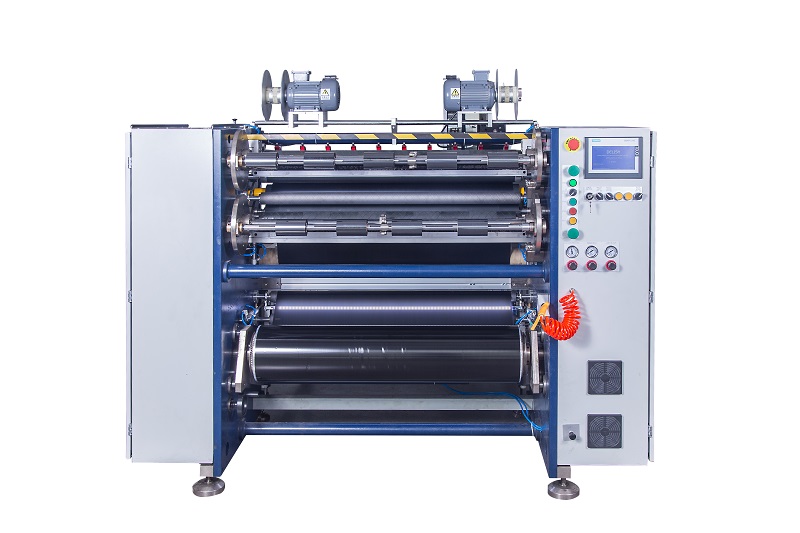
Special slitting requirements for carbon ribbons
In addition to the three mainstream materials mentioned above, slitting machines also need to meet the slitting needs of certain special ribbons:
Washable ribbons are used for garment washed label printing, using soft satin ribbon, nylon, or cotton fabric as the material for printing, rather than traditional plastic film. The main challenges during slitting are edge pilling, fiber shedding, and material deformation. The solution typically uses a rotary cutter with large-angle wear-resistant blades combined with "low tension, high precision" closed-loop servo tension control, and is equipped with static eliminators and vacuum devices to prevent fiber contamination.
The anti-counterfeit ribbon incorporates UV-induced fluorescent or daylight-changing color-changing anti-counterfeiting materials into the ink layer. The base layer is made of polyester fiber with an added slip layer to enhance friction resistance and slitting yield. The slitting of these multilayer composite structures places higher demands on precision and interlayer bonding strength.
Colored ribbons cover a variety of colors including red, blue, gold, and silver. For ribbons other than black, special attention must be paid to color layer uniformity and no discoloration at the cut edges during slitting.

Key technical support for the slitting process
The slitting machine's broad compatibility with different materials stems from its meticulous design in cutting tools, tension, and winding.
In terms of tool selection, rotary rotary cutters use the "scissor type" method, which offers low shear force and minimal material compression, making it suitable for wax-based and soft materials; The flat blade suspend cuts instantly, with low impact force, making it more suitable for brittle resin-based carbon ribbons. Slitting accuracy can reach ±0.1mm, with a maximum slitting speed of up to 500 meters per minute.
In terms of tension control, the slitting machine uses a fully closed-loop servo tension system, implementing a "low tension" strategy for soft materials such as washed labels to prevent tensile deformation, while ensuring smooth tension decay and preventing fracture for resin-based carbon ribbons. The automatic correction device adjusts the ribbon position in real time to prevent misalignment and waste.
Model selection recommendations
When selecting a ribbon slitting machine, it should be configured according to the characteristics of the main processing material. If resin-based ribbons are the main focus, priority should be given to blade material (tungsten/ceramic), vacuum system, and tension stability; For textile products such as washed labels, attention should be paid to the round blade configuration and static elimination functions; Mainly for wax-based and mixed-base general processing, conventional circular cutter slitting machines can meet most needs.
Modern slitting machines are moving toward intelligence, enabling rapid switching between different materials through RFID material identification, one-click recipe recall, and laser online width measurement, significantly enhancing flexibility in multi-variety, small-batch production. The specialized slitting solution design not only greatly improves product yield but is also key to ribbon processing enterprises establishing core competitiveness.
 English
 Deutsch
 Français
 Español
 Português
 日本語
日本語 русский
 한국어
한국어 عربي
عربي ภาษาไทย
 Tiếng Việt
 Italiano
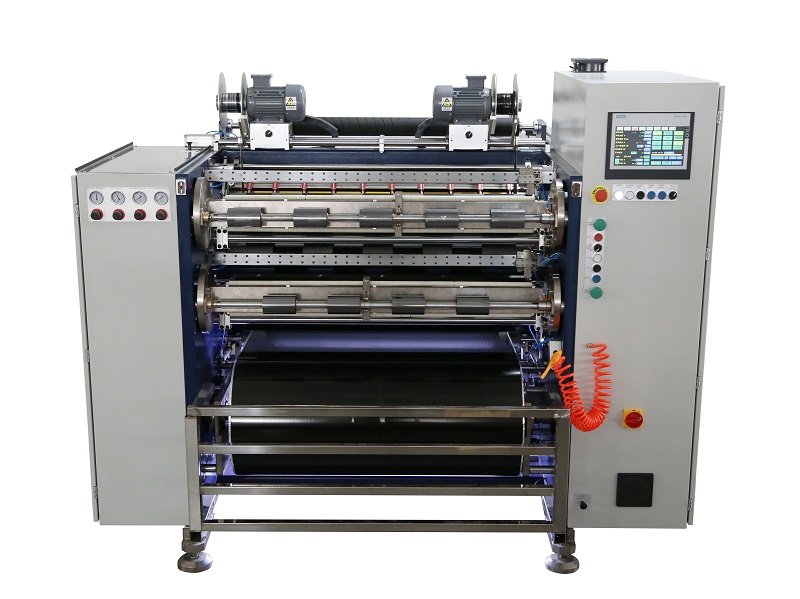 Fully Automatic TTR Slitter RSDS8 Plus
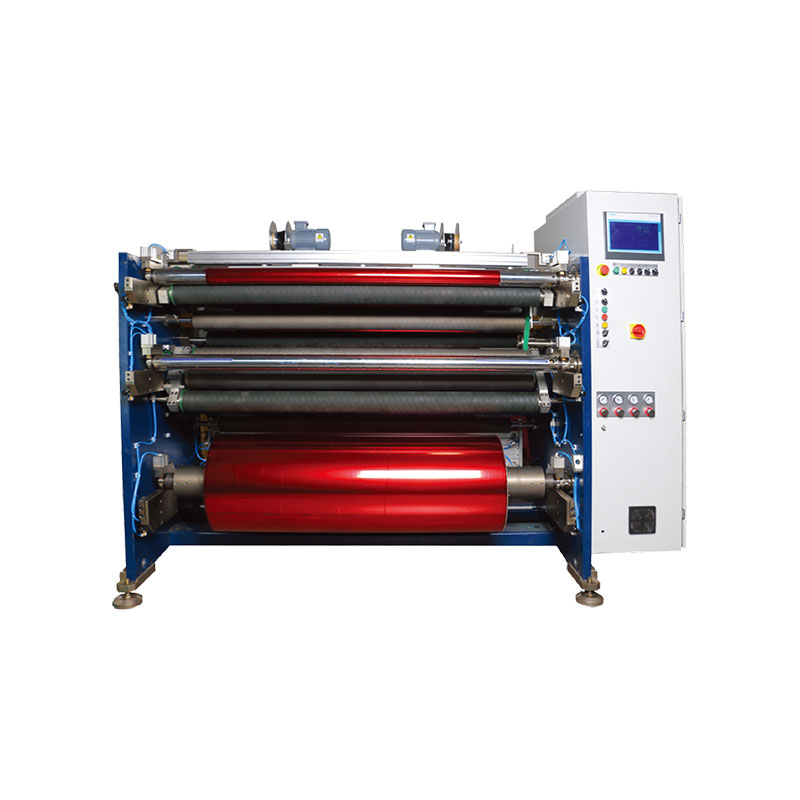 Hot Stamping Foil Slitter 1600mm
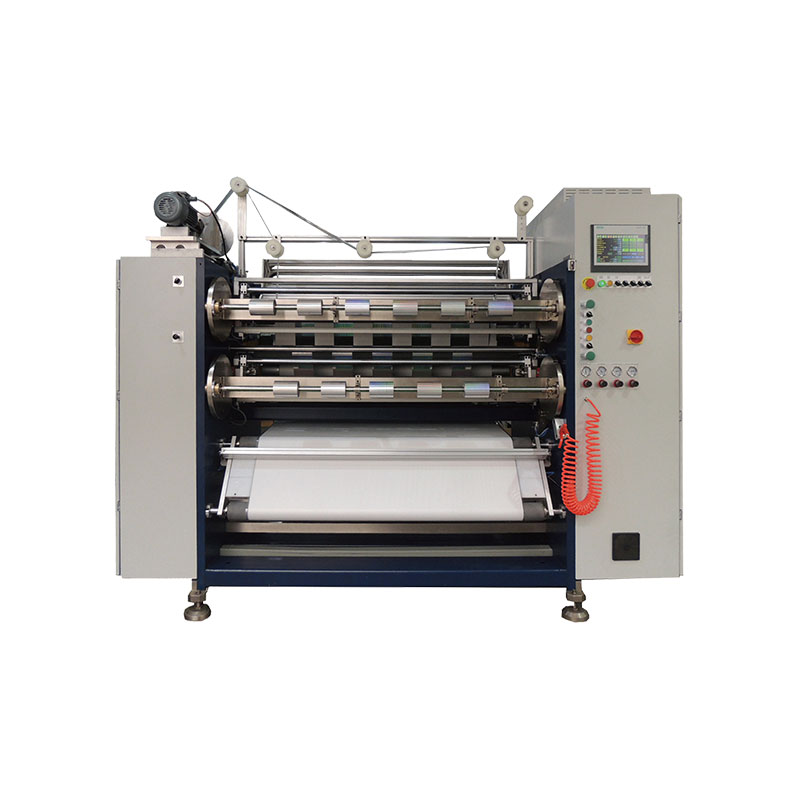 Hot Stamping Foil Slitter (4 Shafts)
 Semi-Auto TTR Slitter RSDS2 Plus
 Semi Automatic TTR Slitter RSDS5 Plus
 Manual TTR Slitter RSDS2
 Auto Paper Core Cutter
 Film Slitting Machine



 +86 135 9951 7291
 support@delishgroup.com
 +86 135 9951 7291