18. August, 2026delish0
Hot stamping foil is a key material for upgrading product quality in the packaging and printing industry, and its slitting precision directly affects the subsequent hot stamping results. The hot stamping foil slitting machine is the core equipment for cutting wide main rolls into the required narrow coils. This article will start from scratch and systematically explain the complete operating process and core technical points of the slitting machine.
1. Get to Know Your Equipment
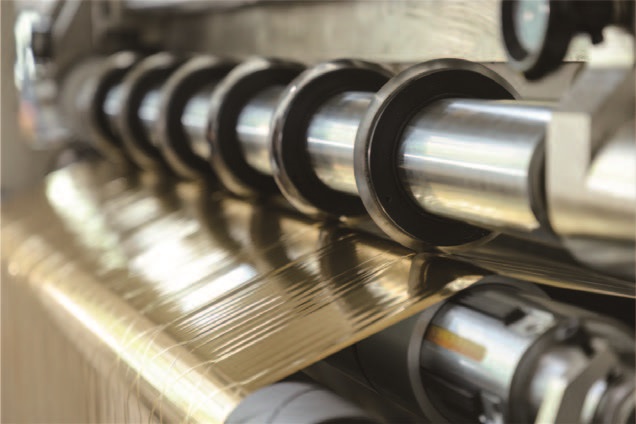
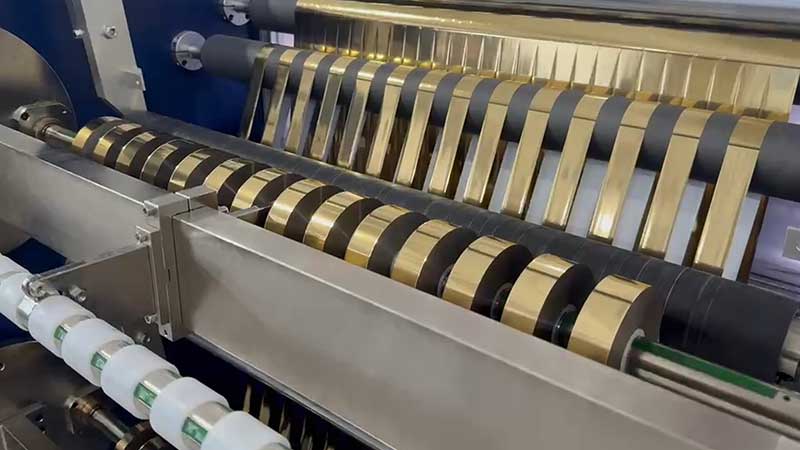
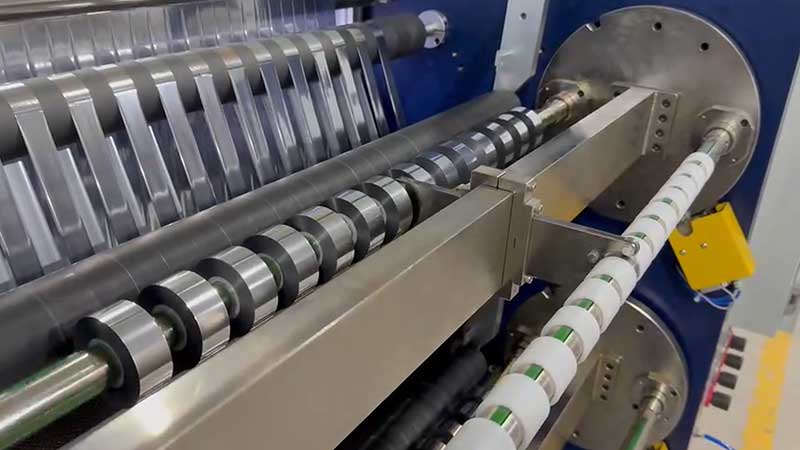
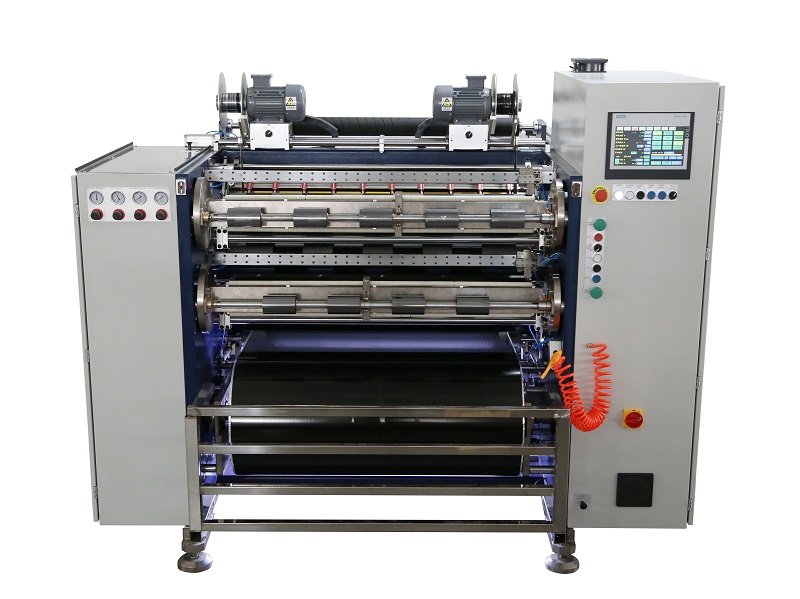
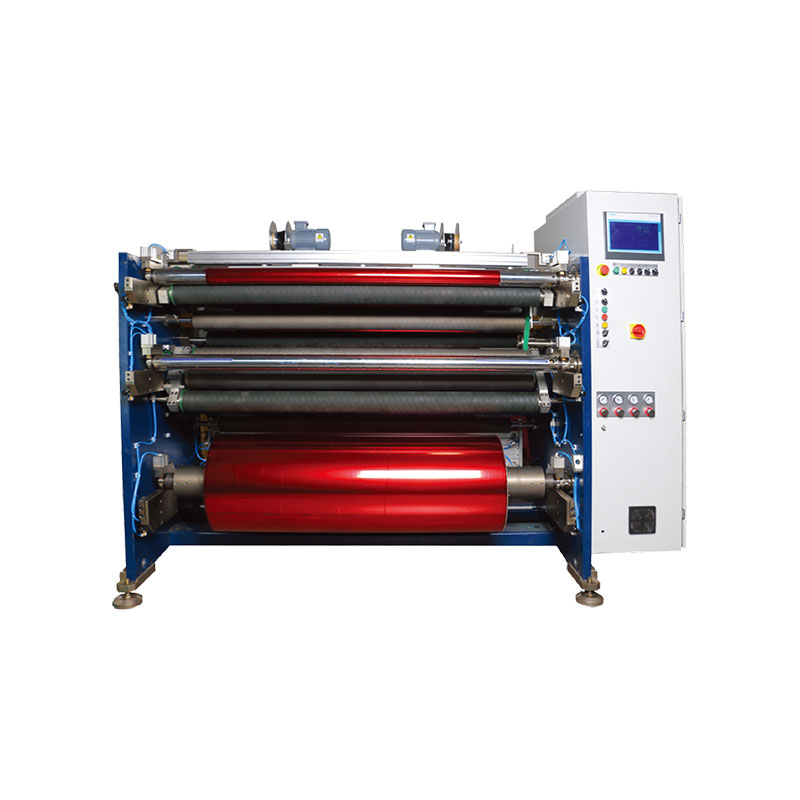
Before starting operations, you first need to familiarize yourself with the core structure of the hot stamping foil slitting machine. This equipment mainly consists of the following components:
• Roll reel: Used to secure large rolls of hot stamping foil raw materials, essentially a "raw material warehouse"
• Traction roller group: responsible for smooth material conveying
• Slitting blade set: The core cutting component (mostly circular blades) cuts through wide sections of material
• Reel: Collect the finished rolls after slitting
• Tension control system: adjusts the tightness of the material during operation to prevent cracking or wrinkling
• Length Measuring Device: Measures slitting length
2. Preparation before startup: Safety first
Safety is the prerequisite for operation. Before turning on the machine, the following checks must be carried out:
Personal protection: Wear tight work clothes and tighten cuffs. Gloves are strictly prohibited when handling rotating parts (to prevent rolling). Long hair must be tucked into the hat. Protective goggles are recommended to prevent debris from flying.
Equipment inspection: clean the machine body and surrounding debris; Check for chipping or wear on the blade; Ensure all screws and clamps are tightened; Check whether the air pressure in the air passage meets the standard (usually 0.5-0.7MPa); confirm that the emergency stop button is functioning properly.
Regarding material inspection: confirm that the hot stamping foil roll to be cut is intact in appearance, free of wrinkles, damage, or moisture, and that specifications match the order requirements.
3. Loading and film penetration
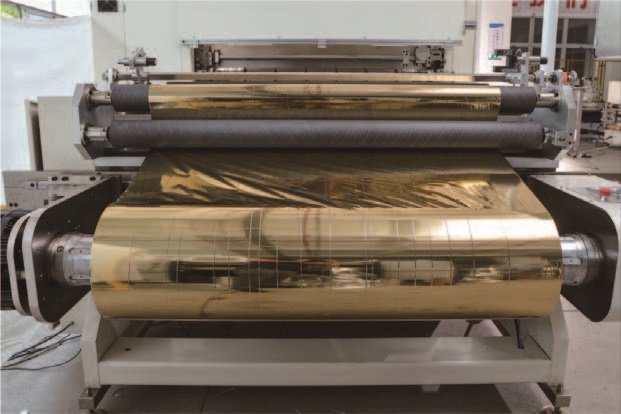
Lift the large roll of hot stamping gold foil onto the uncoiling rack, place it into the uncoiling roll, and lock the chuck to ensure the raw material roll is aligned with the centerline of the equipment to prevent eccentric shaking during operation.
The film penetration path is: unwinding guide roller → tension detection roller → slitting knife set→ each winding guide roller. Finally, the material tip is flatly attached to the winding core tube and fixed in two to three places with tape. During the film penetration process, the material must be kept flat, without twisting or flipping.
Safety warning: Feeding and film penetration must be performed when the equipment is completely shut down; manual operation during operation is strictly prohibited.
4. Parameter settings: beginners start slow, then steady
Based on the process sheet, the following core parameters are set on the control panel:
| Parameter items | Reference value/recommendation | Explanation |
| Slitting width | According to order requirements (commonly 5-200mm) | Adjust the tool holder position and confirm with caliper |
| Winding length | According to order requirements | Set the meter count for each small roll |
| Tightening the tension | 20-50N (beginner's reference value) | The hot stamping foil is relatively thin, so the tension should be low rather than too large; if too large, it can easily break or cause "white spots." |
| Slitting speed | The first time is 30-50 meters per minute | Start with a slow test cut, then increase speed once you become proficient |
Blade pressure should be moderate: if the pressure is too shallow, cutting will not stop; if too deep, it will damage the blade or cause burrs.
5. Trial cutting and first piece confirmation
This is the most easily overlooked yet crucial step for beginners:
1. Jog Operation: Let the equipment move 1-2 meters first, then stop immediately
2. Quality Inspection: Check whether the cut is neat and free of burrs, and use a caliper to measure whether the width meets standards (the error is usually controlled within ±0.5mm).
3. Fine-tuning optimization: If there are burrs, it is usually due to dull blades or too low pressure; If there is wrinkling, appropriately reduce the tension
Repeated trial cutting and adjustment until quality meets standards before entering formal production.
6. Official operation and monitoring
After confirming the trial cut is correct, follow the steps below:
1. Start the equipment, following the principle of "jog → slow → normal," and slowly increase to the set speed
2. Observe the material's operating condition throughout: there must be no misalignment, wrinkling, adhesion, or abnormal noises
3. Check the rewinding end face at intervals to ensure it is neat
4. If an abnormality occurs, immediately press the emergency stop button and wait until the equipment has completely stopped before proceeding
Strictly prohibited: While the equipment is running, it is absolutely forbidden to touch rotating blades, roller surfaces, or materials in motion; Do not clean the rotating roller surface with a cloth.
7. Unloading and Finishing
After the slitting reaches the set length, the equipment automatically stops:
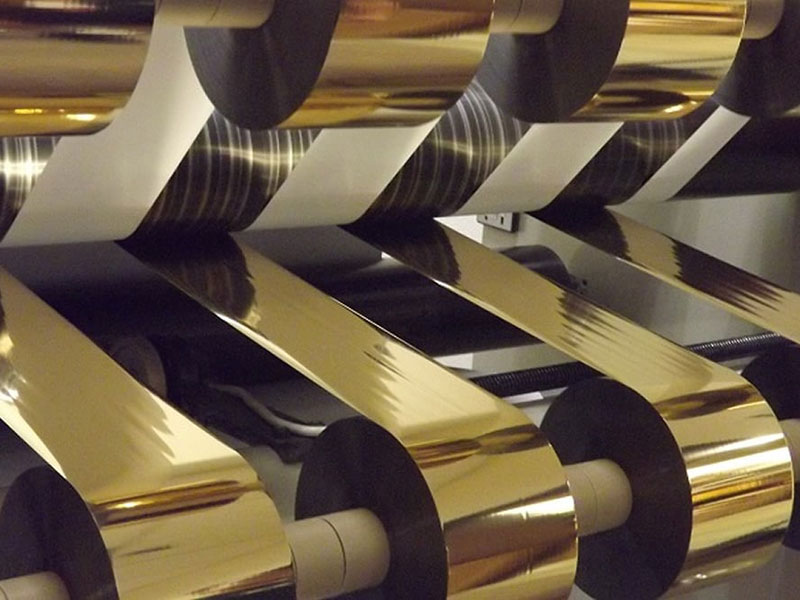
1. Turn off the main motor power and remove the finished small roll from the winding spindle
2. Place gently on a tray with soft material to prevent bumps
3. Check the neatness of each roll's end face, consistency of width, and cut quality
4. Label and indicate specifications, meter count, and production date
5. Promptly clean up waste edge material and foil shavings from the equipment
8. Common Problems and Quick Troubleshooting
Burging/uneven edges: usually due to blade dullness or improper pressure. Solution: Replace or sharpen the blade; Adjust the blade pressure (recommended 0.2-0.3MPa); check if the tension is even.
Material wrinkling: mostly due to uneven tension or unbalanced guide rollers. Solution: Adjust the tension for unwinding and rewinding; Check the parallelism of all guide rollers; Appropriately reduce the slitting speed (especially for thin gold leaf).
Inaccurate dimensions: Possible due to loose mechanical transmission system or encoder failure. Calibration of the size setting is required, and the transmission components are checked and tightened.
Adhesion at the slice surface: caused by static electricity accumulation or excessive temperature. It is recommended to install static eliminators to appropriately reduce the winding pressure.
9. Key points for daily maintenance
Daily maintenance: After each shift, remove foil shavings from the machine body, tools, and guide rails; Check blade wear; Lubricating moving parts.
Weekly maintenance: Calibration tension control system and dimensional positioning system; Thoroughly check whether screws and connectors are loose; Clean dust from electrical cabinets.
Quarterly maintenance: Check the wear of belts and chains; Clean the gearbox and replace the lubricating oil; Use a laser calibrator to check spindle parallelism and tool verticality; Comprehensive testing of safety device functions.
10. Tips for avoiding pitfalls during operation
• Burr issues: 90% of sudden burrs can be solved by replacing the blade with a new one. Don't be reluctant to change the blade
• Fracture issues: First check whether the tension is too high, then troubleshoot the blades
• Environmental control: The workshop should maintain stable temperature and humidity (recommended 20-25°C, humidity 40-60%) to reduce static electricity and material deformation issues
• Parameter recording: Different brands and colors of hot stamping foil have varying sensitivity to tension. It is recommended to keep parameter records for each transaction to build a production database
Once you master the above key points, you will be able to safely and properly complete the slitting task of hot stamping foil. As experience accumulates, you can further explore efficiency enhancement techniques such as quick material changes and parameter optimization, progressing from beginner to expert.
 English
 Deutsch
 Français
 Español
 Português
 日本語
日本語 русский
 한국어
한국어 عربي
عربي ภาษาไทย
 Tiếng Việt
 Italiano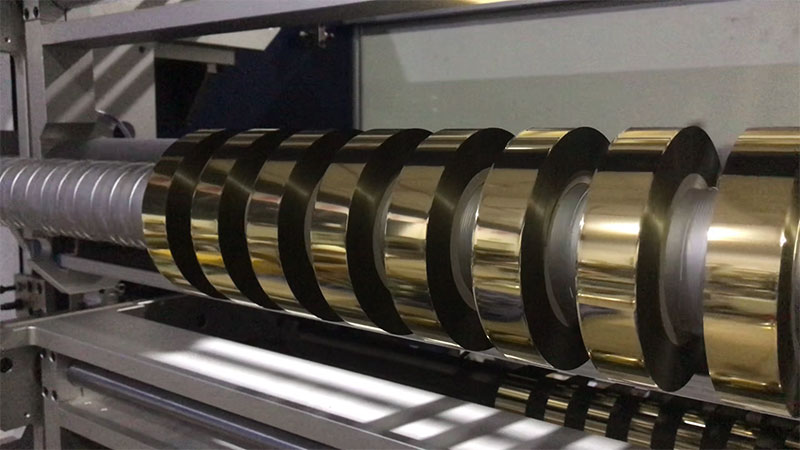
 Fully Automatic TTR Slitter RSDS8 Plus
 Hot Stamping Foil Slitter 1600mm
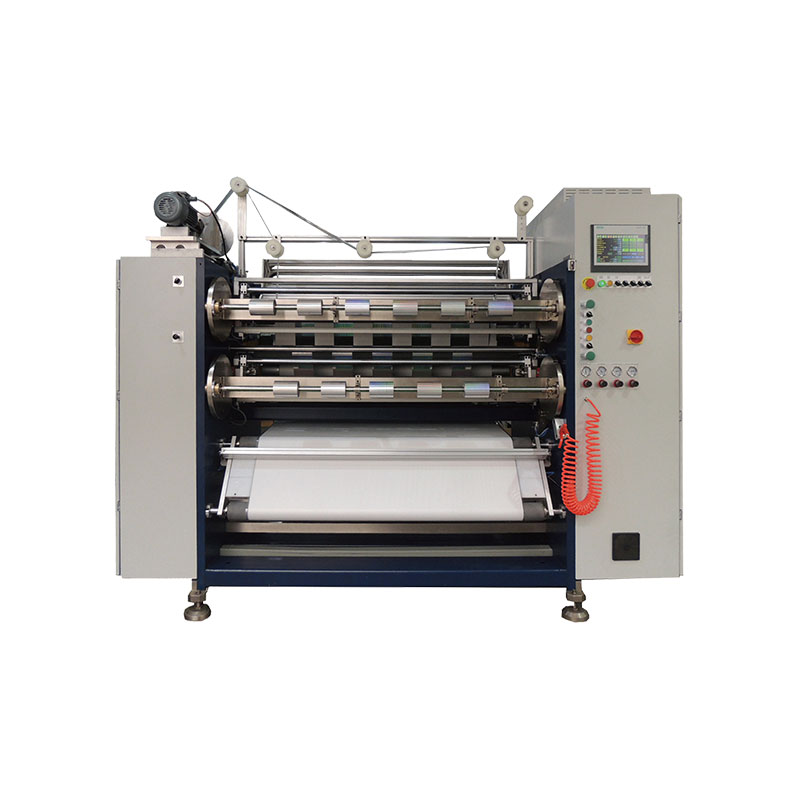 Hot Stamping Foil Slitter (4 Shafts)
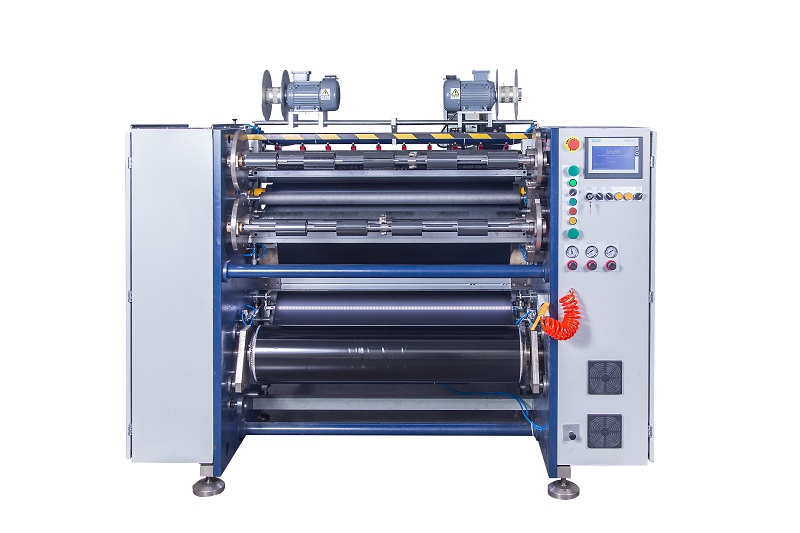 Semi-Auto TTR Slitter RSDS2 Plus
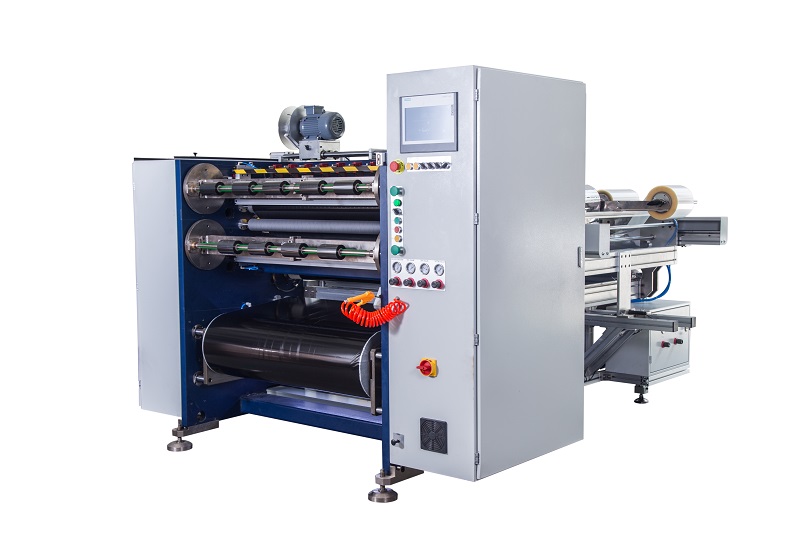 Semi Automatic TTR Slitter RSDS5 Plus
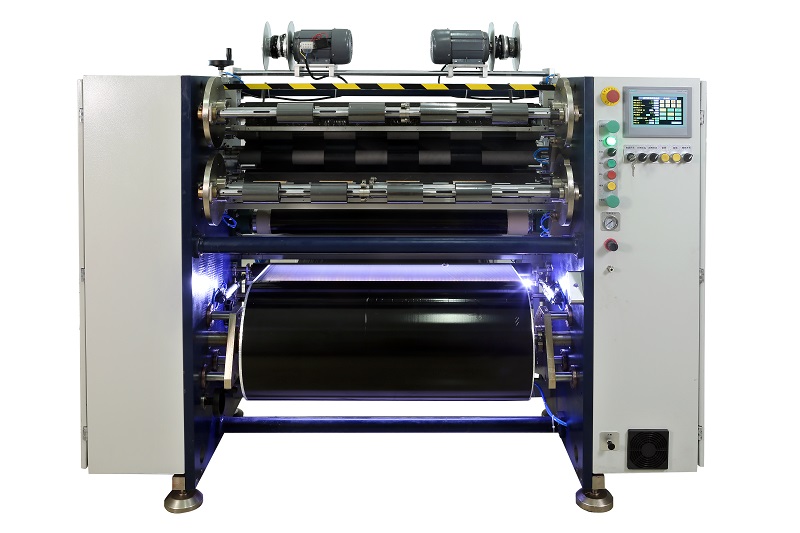 Manual TTR Slitter RSDS2
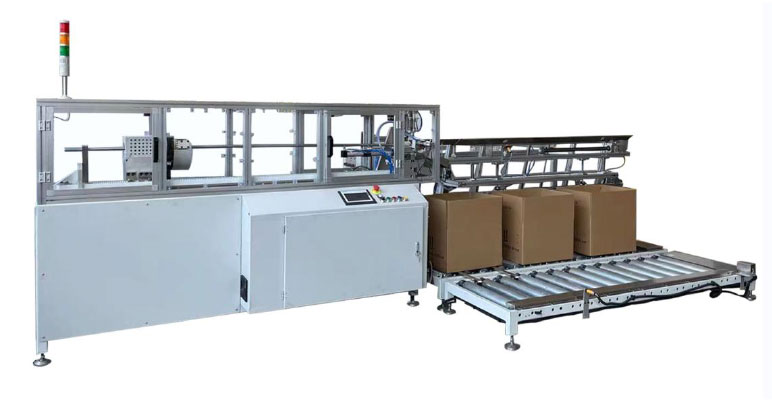 Auto Paper Core Cutter
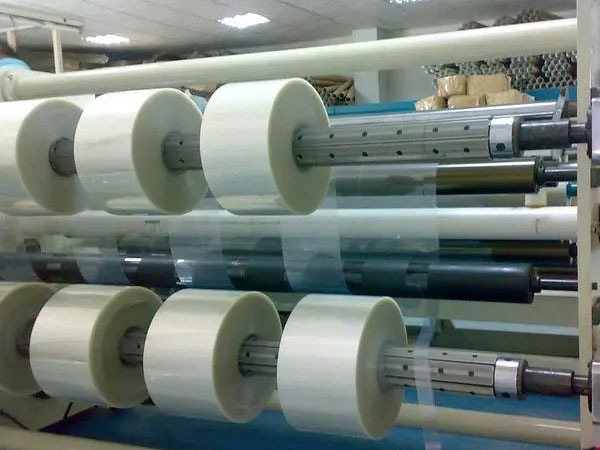 Film Slitting Machine



 +86 135 9951 7291
 support@delishgroup.com
 +86 135 9951 7291