29. August, 2026delish0
In the label printing process of the logistics industry—from waybills to warehouse shelf labels, and even multilingual labels for cross-border transportation—every clear, scannable barcode is inseparable from a roll of high-quality ribbon. The final quality of the ribbon largely depends on the control precision of the slitting process. Faced with the complex types and varied parameters of slitting equipment on the market, how to select the right equipment for logistics business scenarios is a practical challenge faced by many companies.
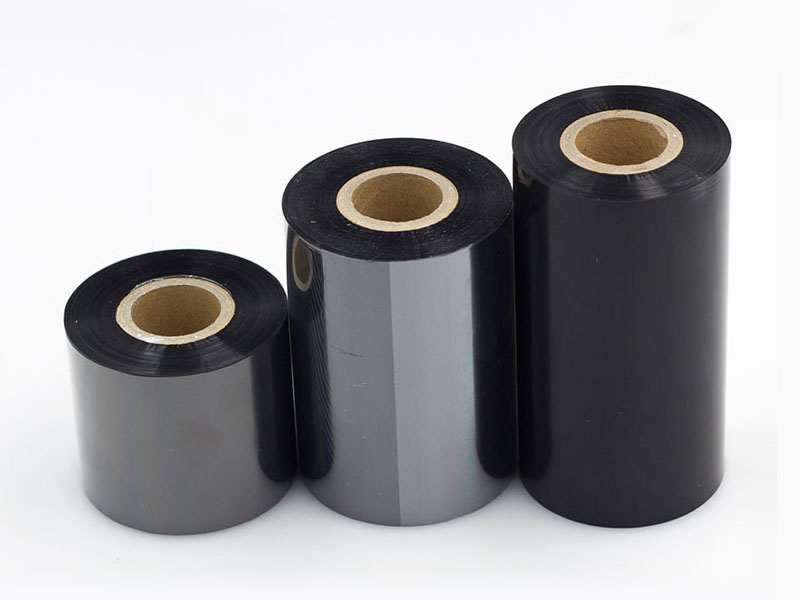
1. Special requirements for ribbon slitting in logistics scenarios
The logistics industry offers diverse use scenarios for ribbons, presenting differentiated requirements for slitting equipment:
• Express waybills: Require high clarity and wear resistance; the ribbon width must be compatible with mainstream waybill printers (such as 110mm size). Daily orders of 10,000 orders demand extremely high equipment efficiency and stability.
• Warehouse shelf labels: Comes in various specifications (e.g., 50×30mm), requiring frequent switching between different widths, testing ease of order changeover and slitting flexibility.
• Cold chain transportation: Ribbon must withstand low temperatures and be moisture-proof, with higher requirements for tension control and material compatibility during slitting.
• Cross-border logistics: Requires printing multilingual small print and international barcodes, with stricter requirements for ribbon slitting precision and edge neatness.
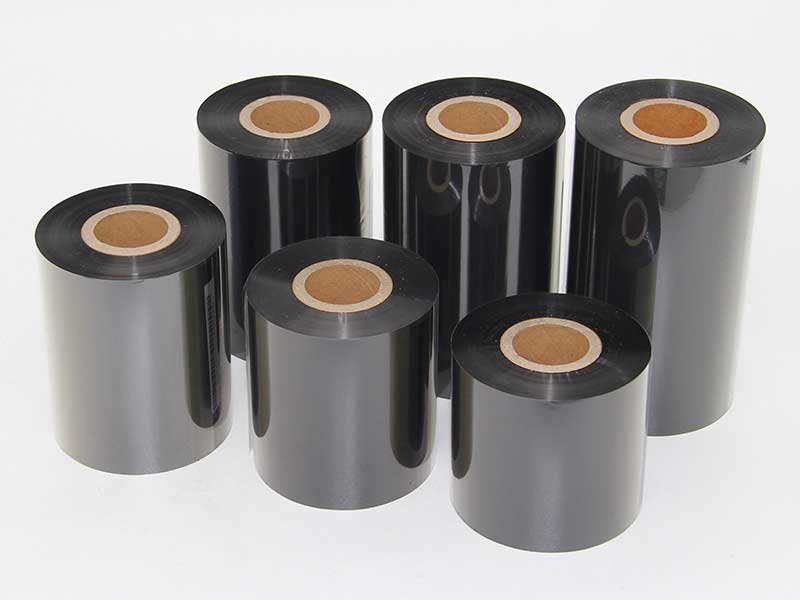
2. Focus on three core selection parameters
Faced with complex technical indicators, focusing on the following three core parameters allows quick judgment of whether a piece of equipment meets logistics production needs.
1. Slitting precision: the lifeline of quality
Slitting accuracy directly determines the width consistency and edge quality of the finished ribbon. Industry reference standards are: standard grade ± 0.5mm, high-precision models can reach ±0.1mm or even ±0.05mm. Insufficient precision can cause ribbon edges to become rough, tape misalignment during printing, or even damage to the print head—this is a fatal risk for logistics scenarios that require high-speed continuous printing. When selecting models, priority should be given to equipment equipped with servo control tension systems and high-rigidity tool holder structures, and manufacturers should be required to provide actual slitting sample inspection data, rather than trusting theoretical values in the parameter table.
2. Slitting speed: The measure of efficiency
Speed determines output per unit time, but rational choices must be made based on the characteristics of logistics operations. Common speed ranges are as follows:
| Level | Speed range | Suitable for logistics scenarios |
| Low-speed economy model | 50–100m/min | For small and medium-sized warehouses for personal use, multi-variety small-batch slitting |
| Medium-speed universal model | 150–250m/min | Most logistics ribbon commercial orders |
| High-speed production model | 300–500m/min | Large express e-commerce distribution centers and mass production |
It should be noted that resin-based ribbons, due to their harder coatings and lower toughness, usually need to operate at speeds 20%–30% lower than wax-based ribbons. Be sure to conduct on-site trial cutting using the ribbon specifications you actually use, and observe the start-stop control and winding effects at high speeds.
3. Roll neatness: A key metric that is often overlooked
The winding end face deviation should usually be controlled within ±1mm, and high-end equipment can reach ±0.5mm. If the end face shows a "bell-mouthed" shape, the edges are "serrated," or internal folds appear, the root cause is inadequate tension control systems and correction devices. These issues can easily cause ribbon breakage or printer jams during subsequent unwinding and printing, directly affecting logistics operational efficiency. When selecting models, choose models equipped with closed-loop tension control + active deviation correction.
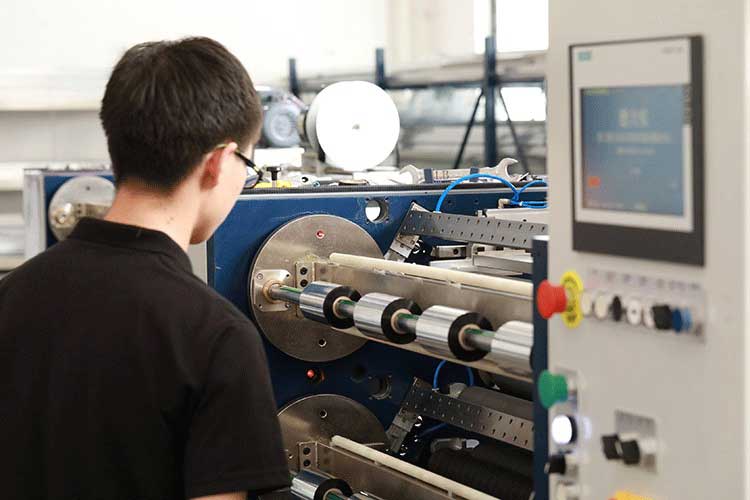
3. Tension Control: The "Soul" of the Equipment
Tension control is the core technical challenge in ribbon slitting, and is even called the "soul" of slitting machines in the industry. The PET base film of the ribbon is only 4.5 to 10 microns thick and is extremely sensitive to tension:
• Excessive tension: the base film stretches and deforms, damaging the ink layer, causing powder shedding and contamination of the print head.
• Insufficient tension: Loose and wrinkled when rolled, white lines and indentations appear during printing.
• Uneven tension: Issues such as "loose inside and tight outside" or "vegetable core" issues in the finished roll, causing core misalignment during transportation or installation.
Selection recommendation: Prioritize a fully automatic closed-loop tension control system, which can monitor and adjust tension in real time at each stage of unwinding, traction, and rewinding. In terms of winding shaft configuration, slip shafts are essential for high-end ribbon production—each roll of material is equipped with an independent slip ring, allowing real-time torque adjustment based on changes in roll diameter. Pneumatic slip shafts offer higher control precision and a wider adjustment range than mechanical ones.
4. Knife Type Selection: Square Knife or Round Knife?
Cutter type selection directly affects product quality and production efficiency. In the industry, 100μm is usually used as the reference line:
• Square knife (razor type): Suitable for slicing thin ribbons under 70μm, with high edge uniformity, making it a "specialist" for thin ribbons.
• Round blade (scissor type): More suitable for thick materials over 100μm and ribbons with paper backing, highly durable and suitable for mass production.
Common ribbons in the logistics industry are mainly wax-based and mixed-based, with thicknesses typically between 4.5–20μm. Square blade configurations often achieve better slitting performance.

5. Key points to avoid pitfalls when choosing a model
1. Matching equipment type and scale
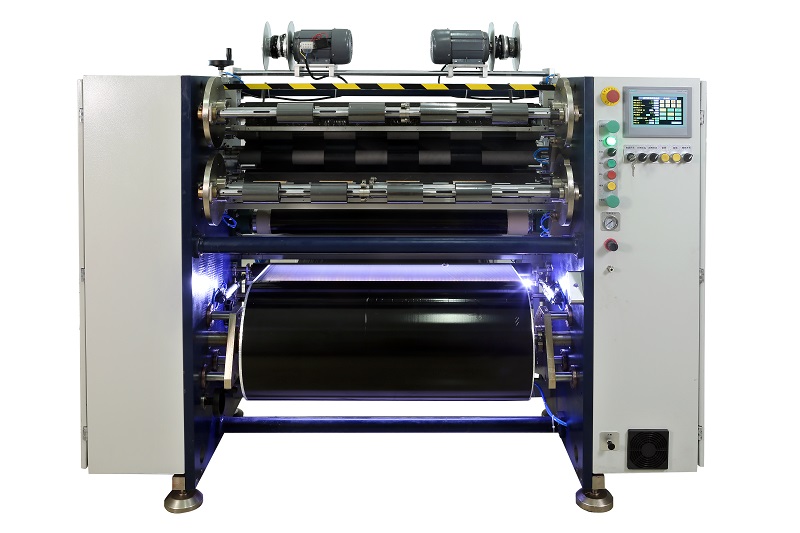
For small to medium-sized warehouses or ribbon distributors, the small slitting rewinder (width within 500mm, speed below 200m/min) offers flexible functions and a low investment threshold to meet the needs; For large express distribution centers or mass production, a large automatic slitting machine (width about 1000mm, speed up to 500m/min) should be selected, equipped with full-process functions such as automatic feeding, automatic flipping and winding, and automatic film application packaging.
2. Frame and core components
The thick frame effectively absorbs vibrations during slitting, ensuring long-term stability of precision. Prioritize equipment made of high-strength cast iron or thick steel frames, and pay attention to bearings and guide rail brands (such as THK, NSK, INA, etc.)—these details determine how well the equipment can maintain accuracy after years of high-speed operation.
3. After-sales service
Equipment inevitably requires maintenance and commissioning, so prioritize choosing vendors with technical support capabilities to ensure timely response when problems arise.
4. On-site trial cutting is more important than parameters
No matter how beautiful the spec sheet is, it is strongly recommended to conduct on-site trial cutting with the ribbon busbar you actually use before purchasing. Key focus: edge quality at different widths (narrowest and widest specifications), winding performance during high-speed starts and sudden stops, and stability during long-term continuous operation.
Conclusion
Selecting ribbon slitting machines in the logistics industry essentially involves finding the most suitable balance between precision, efficiency, stability, and cost, which best fits your business rhythm. From waybills to cold chain labels, from warehouse shelves to cross-border parcels, only by matching the right slitting equipment can every barcode be accurately read at every stage of the logistics process, ensuring logistics efficiency is not compromised.
 English
 Deutsch
 Français
 Español
 Português
 日本語
日本語 русский
 한국어
한국어 عربي
عربي ภาษาไทย
 Tiếng Việt
 Italiano
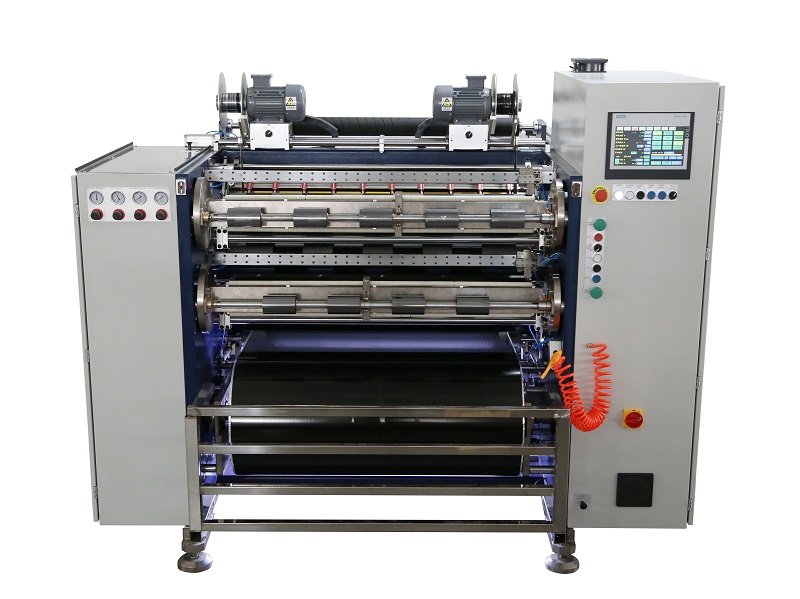 Fully Automatic TTR Slitter RSDS8 Plus
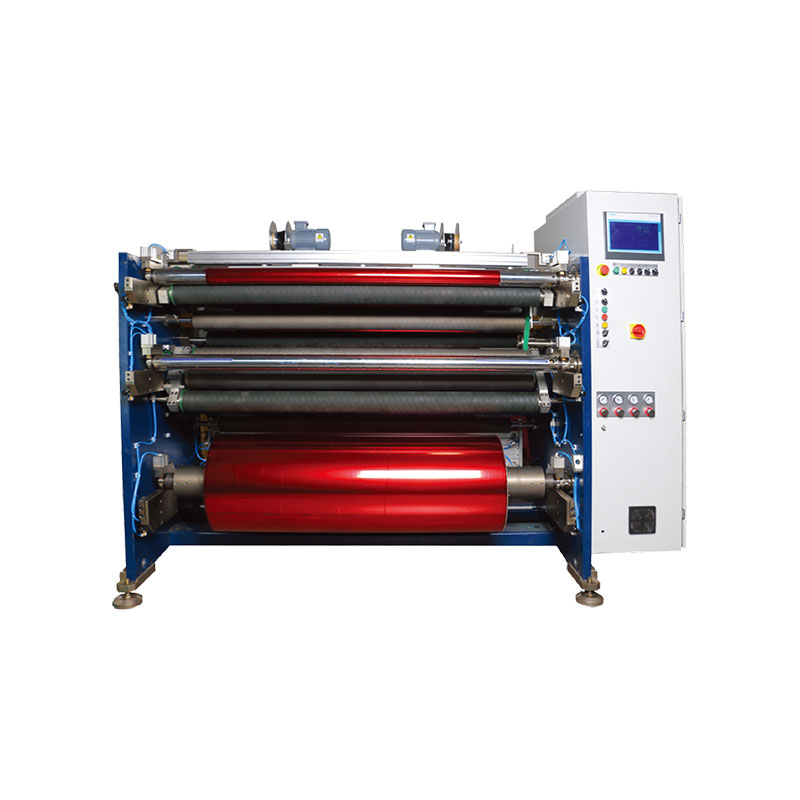 Hot Stamping Foil Slitter 1600mm
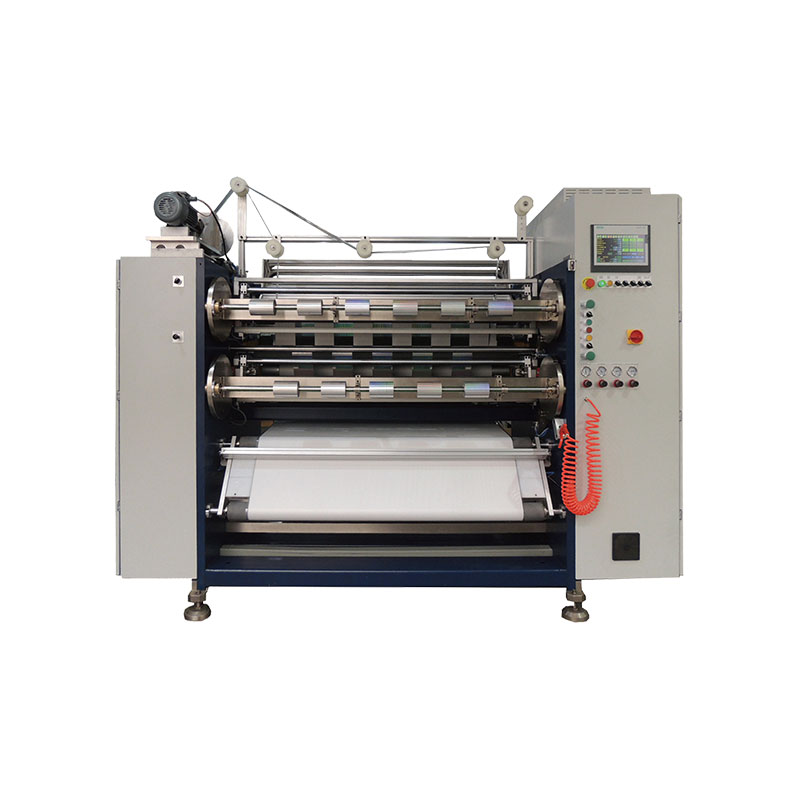 Hot Stamping Foil Slitter (4 Shafts)
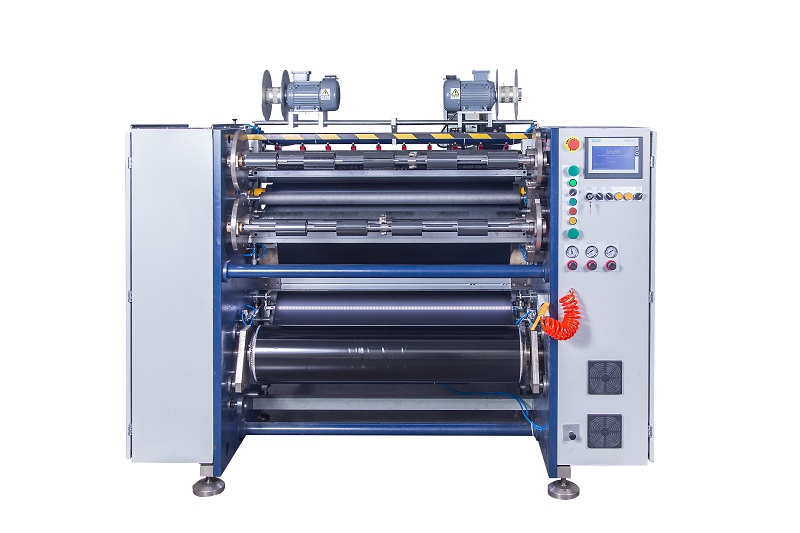 Semi-Auto TTR Slitter RSDS2 Plus
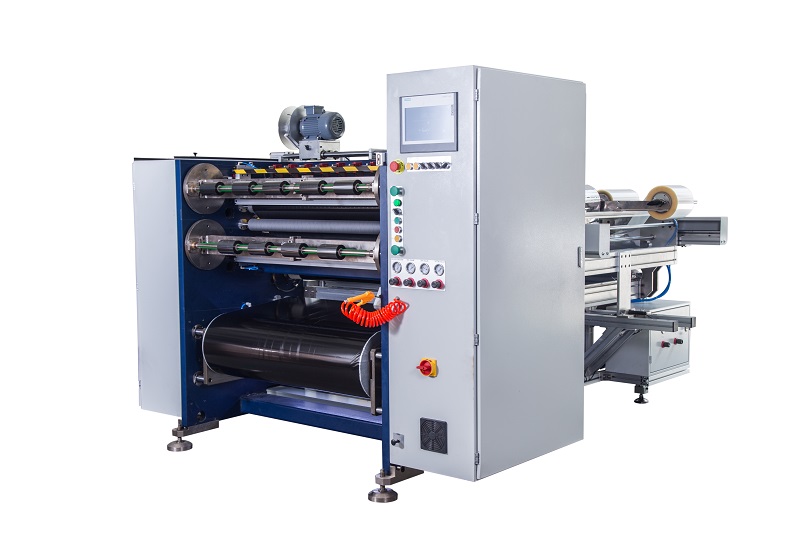 Semi Automatic TTR Slitter RSDS5 Plus
 Manual TTR Slitter RSDS2
 Auto Paper Core Cutter
 Film Slitting Machine



 +86 135 9951 7291
 support@delishgroup.com
 +86 135 9951 7291