18. September, 2026delish0
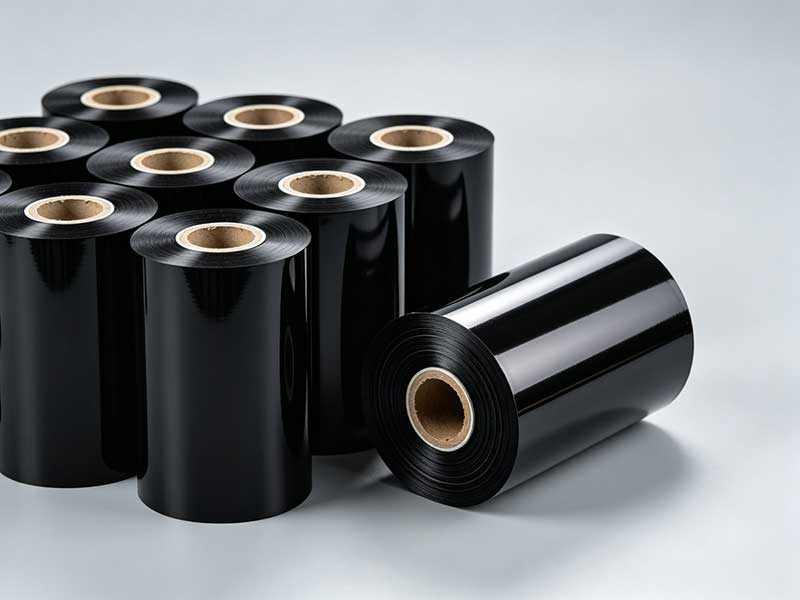
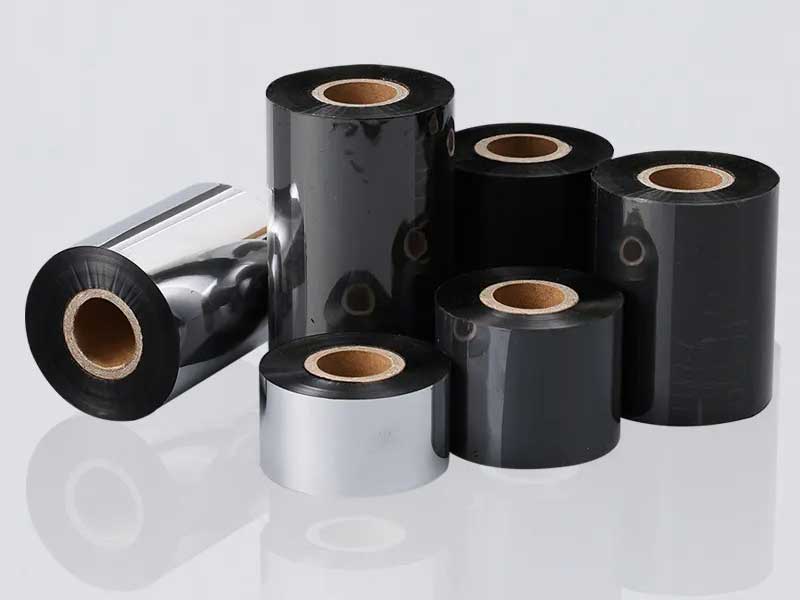
Thermal transfer ribbons are deceptively simple products. A typical ribbon consists of a PET base film, a heat-resistant coating, and an ink layer, with total thickness ranging from just 4.5 to 20 microns . Yet the slitting process that transforms jumbo rolls into finished printer-ready rolls is where quality is either preserved or destroyed. A poorly chosen slitting machine can produce burred edges that damage print heads, inconsistent widths that cause printing misalignment, or uneven winding tension that leads to ribbon breakage during high-speed printing.
For importers, distributors, and label converters evaluating thermal transfer ribbon slitting equipment, the selection process demands attention to seven critical factors. This guide distills the technical specifications and practical considerations that separate production-ready machines from costly mistakes.
1. Slitting Precision: The Quality Foundation
Slitting precision directly determines width consistency and edge quality. Industry standards classify precision into three tiers: standard grade at ±0.3–0.5mm for commercial labels and logistics applications; high-precision at ±0.1mm for electronics and industrial labels; and ultra-high precision at ±0.05mm or better for medical labels and ultra-narrow ribbons under 10mm .
The hardware behind precision matters more than the specification sheet suggests. Key components include tension control systems capable of maintaining fluctuations within ±2% of set values, slitting shafts with radial runout under 0.01mm, and quality blades from established suppliers. Buyers should insist on trial slitting with their own ribbon stock rather than accepting laboratory data. A machine that achieves ±0.1mm on demonstration material may struggle with the specific wax, mixed, or resin formulation the buyer intends to process .
2. Slitting Speed: Matching Throughput to Material
Speed specifications require careful interpretation. The market segments into three practical ranges: low-speed economy models at 50–100 m/min for small-batch and multi-variety production; medium-speed universal machines at 150–250 m/min covering most commercial orders; and high-speed production models at 300–500 m/min for continuous large-volume operations .
The critical caveat is that usable speed depends heavily on ribbon formulation. Resin-based ribbons, with their harder coatings and lower toughness, typically require operating speeds 20–30% below those for wax-based ribbons. Mixed-base formulations fall in between. A machine rated at 400 m/min may prove stable only at 250 m/min when running the buyer‘s actual product. The practical approach is to request on-site trial cutting with representative ribbon stock, observing start-stop control precision and winding quality at the intended production speed .
3. Tension Control: The Operational Core
Tension control is widely considered the “soul” of ribbon slitting equipment. The PET base film is extremely thin and highly sensitive to tension variations. Excessive tension stretches the base film, altering the ink layer‘s physical properties and causing powder shedding. Insufficient tension produces wrinkles that manifest as white lines and indentations during printing. Inconsistent tension throughout a roll creates the “loose inside, tight outside” problem that causes feeding issues in printers .
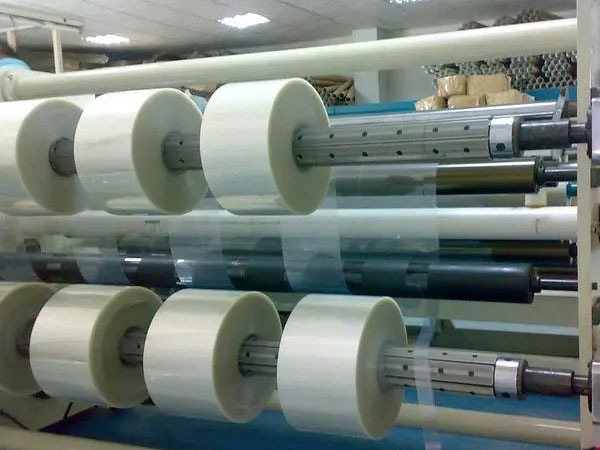
Fully automatic closed-loop tension control should be the baseline expectation. These systems monitor and adjust tension in real time across unwinding, traction, and rewinding stages. For ultra-thin ribbons below 5 microns, buyers should verify that the machine’s minimum stable tension meets requirements. On the rewinding side, slip shafts represent a significant upgrade over mechanical alternatives. Pneumatic slip shafts with independent torque control per winding position allow real-time adjustment as roll diameter changes, effectively eliminating core misalignment and telescoping .
4. Blade Technology and Cutting Method
Blade selection follows a straightforward rule based on material thickness. Square blades (razor-type) suit ribbons below 70 microns, delivering higher precision and superior edge uniformity. Round blades (scissor-type) handle thicker materials above 100 microns and paper-backed ribbons with greater durability .
The cutting method also influences machine design and operational efficiency. Flat knife slitting remains common in thermal transfer applications, with automatic blade setting systems now available on higher-end models. These systems reduce setup time and minimize human error during changeovers. Blade holder design matters as well: magnetic clip holders allow quick width changes without tools, a practical advantage for operations running multiple specifications .
5. Automation Level and Changeover Efficiency
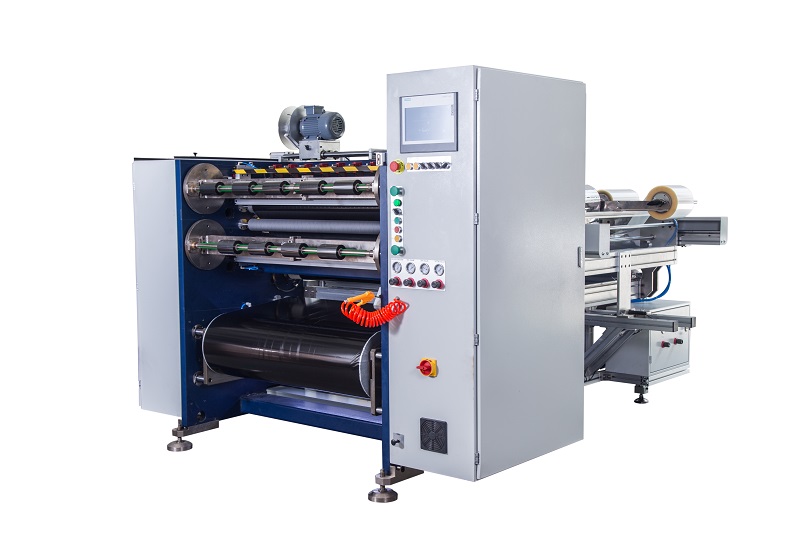
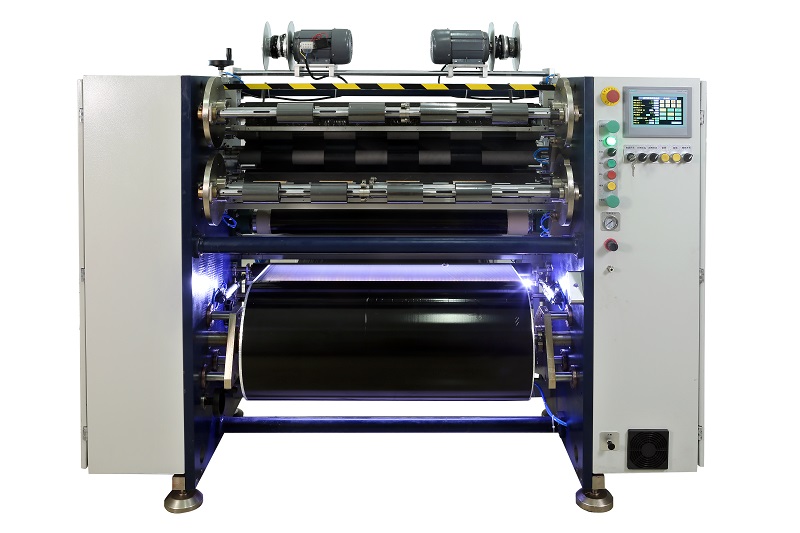
Automation directly impacts labor costs, changeover speed, and waste rates. The market offers three broad tiers. Semi-automatic machines require manual film threading and parameter setting, suitable for small-batch, multi-variety production. Fully automatic machines add features like automatic blade setting, leader/trailer handling, turret rewinding, and cross cutting. Recent product launches in this category demonstrate the direction of travel: automatic blade positioning, pneumatic splicing, and turret winding systems that allow continuous production without manual intervention .
For buyers facing increasingly fragmented orders, rapid changeover capability deserves serious weight. Machines with programmable tool positions, quick-release shafts, and recipe storage reduce the downtime between jobs. The conventional wisdom that changeover takes hours no longer applies to well-designed equipment—but the buyer must specify these features, as they are not universal .

6. Winding Quality and Finished Roll Integrity
Winding neatness is the most commonly overlooked specification, yet it determines how smoothly finished rolls perform in customer printers. End face deviation should be controlled within ±1mm at minimum, with high-end equipment achieving ±0.5mm. Problems including bell-mouthed ends, serrated edges, and internal wrinkles trace directly to inadequate tension control and web guiding systems .
Active deviation correction systems using CCD or ultrasonic sensors maintain proper web alignment throughout the run. CCD sensors work well for transparent and semi-transparent materials, while ultrasonic sensors suit opaque ribbons. The rewinding shaft configuration also affects roll quality: air shafts in both 1-inch and 0.5-inch diameters accommodate different core sizes and materials, improving flexibility .
7. Build Quality and Supplier Evaluation
Frame rigidity and component selection determine long-term accuracy retention. Heavy cast iron or steel frames absorb vibration that would otherwise degrade cut quality over time. Component brands serve as shorthand for quality: Siemens or Mitsubishi PLCs, Taiwan Delta or Sanyo servo motors, THK or NSK linear guides, and Schober or Tachi blades indicate a manufacturer‘s commitment to durability .
Beyond hardware, supplier evaluation should cover test procedures and documentation. Requesting knife shaft runout measurements, mandrel concentricity data, and tension calibration reports provides objective evidence before shipment. Response time and reorder rates offer practical proxies for after-sales support quality. Buyers should also clarify training provisions and spare parts availability, as these factors influence total cost of ownership more than initial price .
Making the Decision
No single specification determines the right machine. A converter running high-volume standard wax ribbons for logistics labels has different priorities than a specialty producer handling ultra-narrow resin ribbons for medical devices. The disciplined approach is to define actual production requirements first—material types, thickness ranges, width tolerances, and annual volume—then evaluate machines against those criteria. Trial cutting with representative materials remains the most reliable test. For B2B buyers, this diligence transforms a capital expenditure from a gamble into a strategic asset.
 English
 Deutsch
 Français
 Español
 Português
 日本語
日本語 русский
 한국어
한국어 عربي
عربي ภาษาไทย
 Tiếng Việt
 Italiano
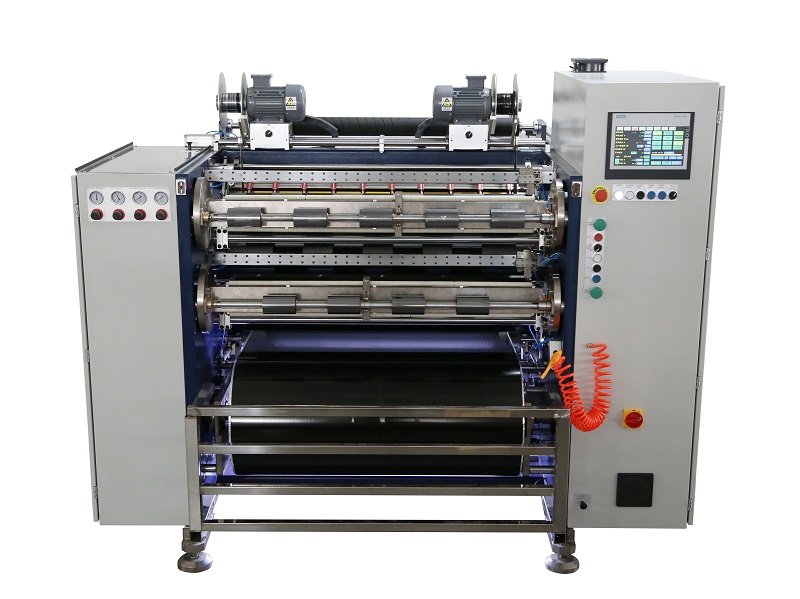 Fully Automatic TTR Slitter RSDS8 Plus
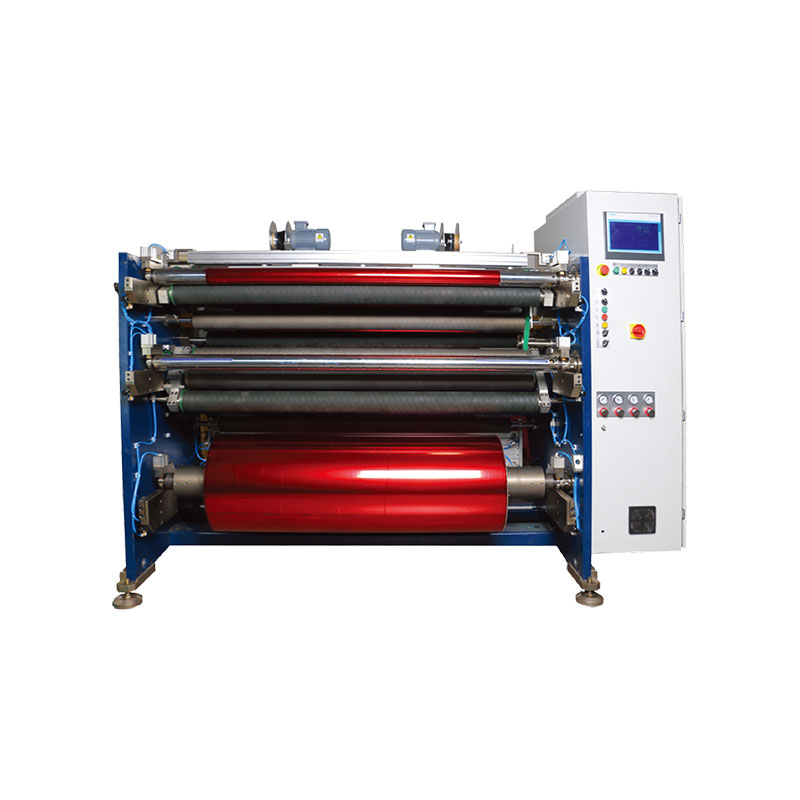 Hot Stamping Foil Slitter 1600mm
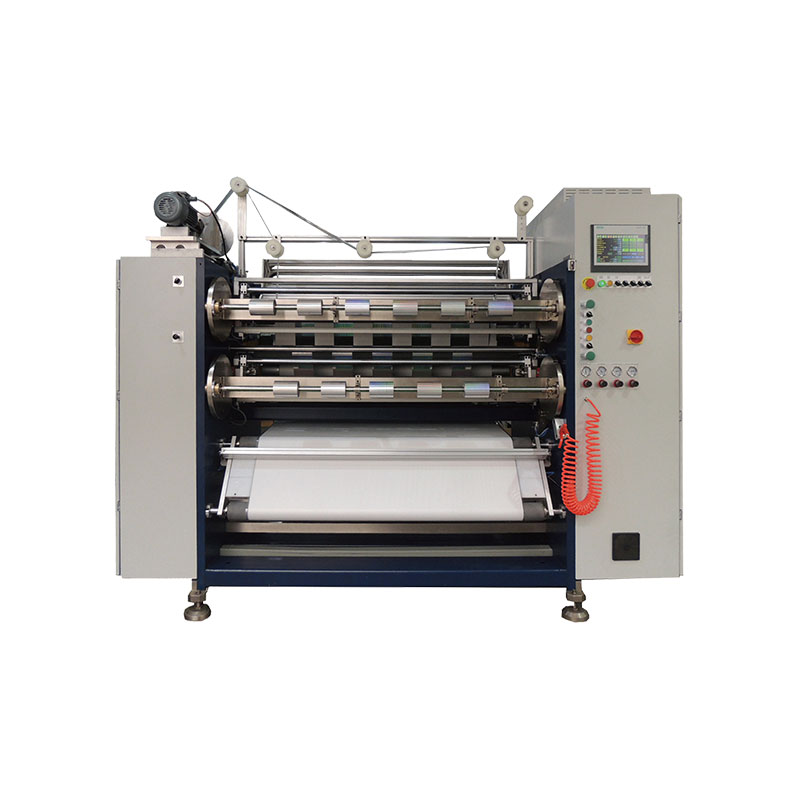 Hot Stamping Foil Slitter (4 Shafts)
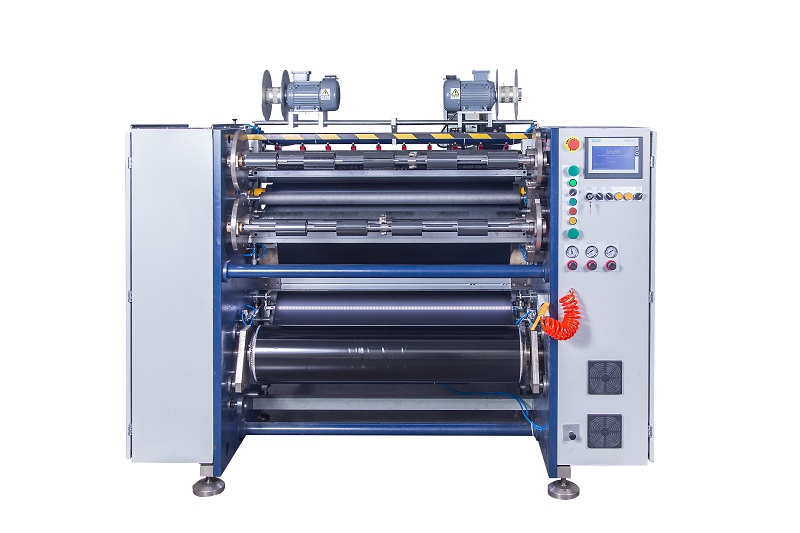 Semi-Auto TTR Slitter RSDS2 Plus
 Semi Automatic TTR Slitter RSDS5 Plus
 Manual TTR Slitter RSDS2
 Auto Paper Core Cutter
 Film Slitting Machine



 +86 135 9951 7291
 support@delishgroup.com
 +86 135 9951 7291