08. October, 2026delish0
Selecting the right hot stamping foil slitting machine is not about finding the machine with the highest top speed or the most impressive spec sheet. It is about matching the equipment’s capabilities to your specific material, order profile, and downstream quality requirements. A machine that performs flawlessly on standard 25μm foil may struggle with 12μm laser film, and a unit optimized for 1600mm wide-format master rolls may not deliver the precision needed for 10mm narrow-strip production.
This guide breaks down the specifications that actually matter, organized by the parameters that directly affect your yield, efficiency, and bottom line.
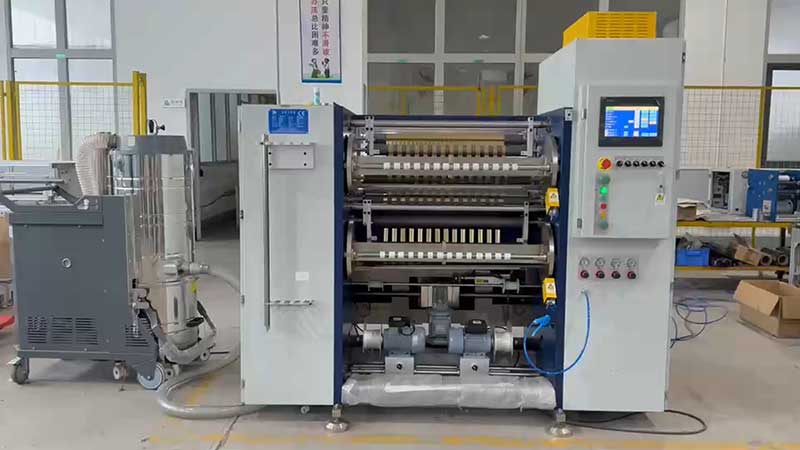
Width Capacity: Match the Machine to Your Master Roll and Finished Product
The width specification of a slitting machine has two dimensions: the maximum unwind width and the minimum slit width. Both must align with your production reality.
For wide-format operations processing master rolls up to 1600mm, the critical specification is frame rigidity and blade shaft diameter. Wider slitting means greater cantilever forces on the blade shaft; if the shaft flexes even slightly under pressure, the center of the web will not cut through while the edges are over-penetrated. Look for machines with thickened alloy steel wall panels and large-diameter, dynamically balanced blade shafts. A 1600mm-class machine often needs to weigh several tons to maintain stability at speed.
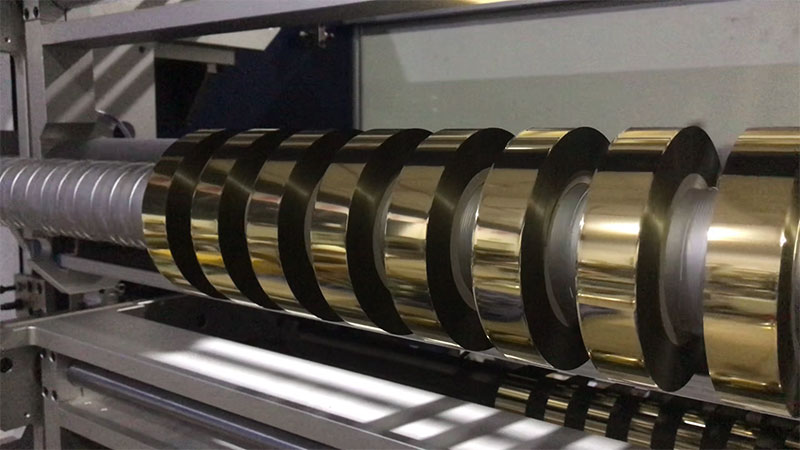
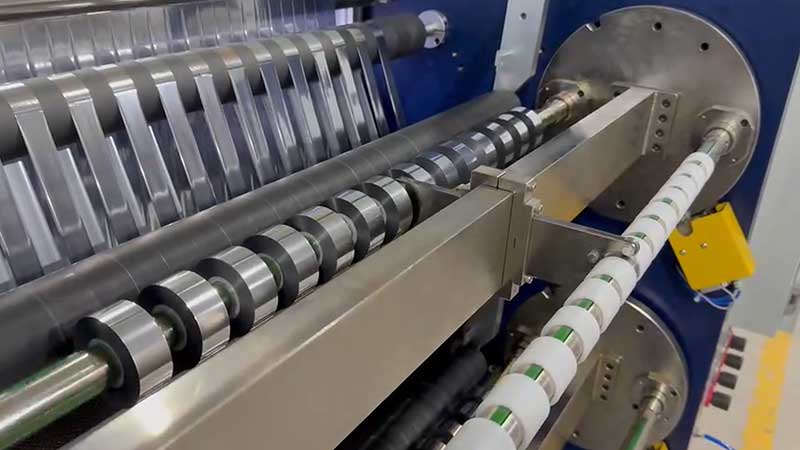
For narrow-strip production below 50mm, the priorities shift to tool positioning precision and anti-winding design. Manual locking systems are prone to dimensional drift because uneven clamping forces allow axial movement during operation. Hydraulic locking or high-precision slip shafts are the more reliable choice when slit widths are measured in millimeters. If your order profile includes frequent width changes, an automatic tool positioning system can reduce changeover time from hours to minutes by moving blade holders to programmed positions.
A practical specification benchmark: if your master roll is 640mm and your finished rolls are 2cm wide (common for hot stamping lines), the machine must be capable of holding ±0.5mm tolerance at that narrow width.
Tension Control: The Specification That Determines Whether Your Foil Survives the Process
Hot stamping foil is typically 12–25μm thick, composed of a PET base film, release layer, color layer, aluminized layer, and adhesive layer. This structure is extremely sensitive to mechanical stress. Tension control is not a feature—it is the foundation of whether the machine produces sellable product.
Open-Loop vs. Closed-Loop: The Non-Negotiable Distinction
Open-loop tension control relies on preset values and magnetic particle brakes. It is acceptable for low-speed, non-critical applications below 100m/min, but it cannot compensate for diameter changes during winding or for acceleration/deceleration disturbances.
Closed-loop servo tension control uses tension sensors or floating rollers to measure actual tension in real time and adjust the unwinding and rewinding drives accordingly. For hot stamping foil, this is the minimum acceptable specification. A quality closed-loop system maintains tension fluctuation within ±1% to ±3% of the set value; high-end systems achieve ±0.5N precision.
Taper Tension: Why Constant Tension Fails
As the rewinding roll diameter increases, maintaining constant tension causes the outer layers to compress the inner layers, resulting in a “chrysanthemum core” defect, trapped air, or aluminum layer transfer. Taper tension control automatically reduces winding tension according to a preset curve as the roll diameter grows. For hot stamping foil, a taper coefficient between 60% and 80% is recommended, with final tension reduced to 40–70% of the initial value. Machines without taper functionality are unsuitable for quality hot stamping foil production, regardless of other specifications.
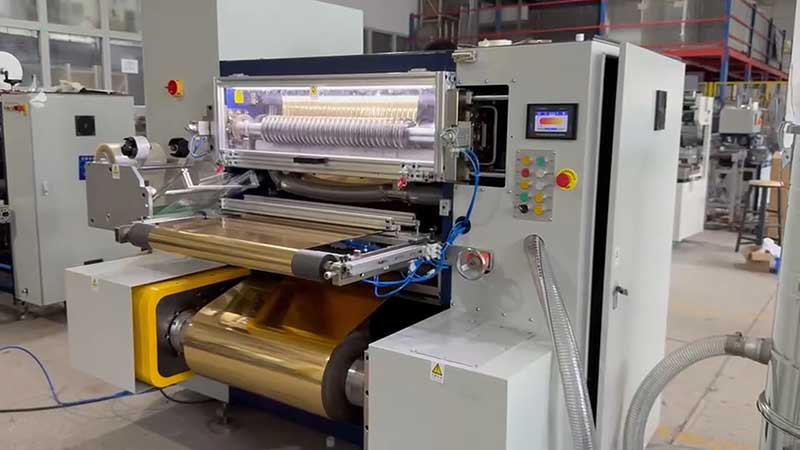
Slitting Method and Blade System: Cutting Versus Tearing
The difference between a clean edge and a burred edge is the difference between “cutting” and “tearing.” A dull blade or improper blade geometry will press and fracture the foil rather than shear it cleanly, producing microscopic burrs and aluminum dust that contaminate the web and cause hot stamping defects.
For hot stamping foil, circular shear cutting (upper and lower rotary blades) is the industry standard. This method produces a smooth, clean cut with minimal deformation. Razor blade or crush-cut systems are less suitable for PET-based foil because they tend to create edge deformation or incomplete separation.
Key blade specifications to verify:
• Blade material: Tungsten carbide or diamond-coated blades offer the wear resistance required for PET base film
• Blade adjustment: The clearance and overlap between upper and lower blades must be precision-adjustable. Too much clearance causes incomplete cuts; too little accelerates wear
• Blade shaft rigidity: For widths above 800mm, a dynamically balanced, large-diameter shaft is essential to prevent deflection and inconsistent cut depth across the web
Web Guiding and Edge Control: Preventing Drift Before It Becomes Waste
Even with perfect tension control, the web can drift laterally during high-speed operation. An edge position control (EPC) system ensures the foil remains aligned as it enters the slitting station.
For hot stamping foil—especially metallized and holographic varieties—ultrasonic edge sensors are the preferred specification. They are unaffected by the reflective surface of the foil, which can confuse optical sensors. For applications requiring precise registration to printed marks, CCD vision systems offer automatic edge or line detection.
The correction response time must match the slitting speed. At 300m/min and above, the actuator must complete corrections in milliseconds; otherwise, edge oscillation cannot be suppressed effectively.
Speed Ratings: Interpret the Number Correctly
Manufacturers advertise maximum mechanical speeds ranging from 50m/min for economical models to 500m/min for high-performance machines. However, the stable working speed is the specification that matters.
A machine rated at 500m/min may only achieve stable, defect-free operation at 300–350m/min with thin foil. When evaluating speed specifications, ask for:
• Stable operating speed for your specific material thickness
• Tension fluctuation data at acceleration, deceleration, and steady state
• Demonstrated performance during actual trial cutting, not brochure conditions
Speed is inseparable from width and material. A 1600mm machine running thin holographic foil at 400m/min represents a fundamentally different engineering challenge than a 400mm machine running standard foil at the same speed. The wider and thinner the material, the more the machine’s drive system, tension algorithm, and frame rigidity must compensate.
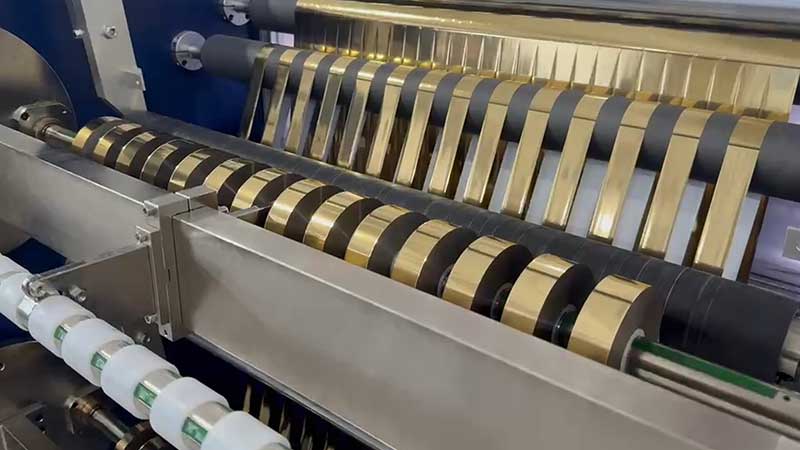
Automation and Changeover Efficiency: The Hidden Cost Driver
Hot stamping foil order profiles have shifted toward smaller batches and greater variety. A machine that requires hours to change from one width to another cannot profitably serve this market, regardless of its precision.
Automatic tool positioning allows the operator to enter the desired slit widths, after which motorized blade holders move to the programmed positions. This reduces changeover time from 30–60 minutes to under 5 minutes and eliminates human positioning errors.
Recipe management stores tension, speed, and blade pressure parameters for each material and width combination, enabling one-touch recall for repeat orders.
Dust and Static Control: Protecting the Surface You Cannot See
Slitting generates microscopic aluminum and plastic particles from the cut edge. If these particles adhere to the foil surface, they become “pinhole” defects in the final hot stamping. Static electricity, particularly problematic with PET film, attracts and holds these contaminants.
Specifications to look for:
• Ionizing bars at the slitting point and before rewinding to neutralize static charge
• Contact cleaning rollers combined with vacuum extraction at the blade area to capture particles at the source
• Anti-static brushes on guide rollers to prevent charge buildup along the web path
The Specification That Cannot Be Measured: Trial Cutting Performance
No specification sheet substitutes for running your material on the machine. Before purchase, arrange a trial with your most challenging foil—the thinnest, the most static-prone, or the one with the most sensitive coating. Inspect the cut edge under magnification for micro-cracks. Measure width consistency across a full roll. Check the rewound roll for even tightness from core to surface.
A machine that meets every specification on paper but produces burred edges or inconsistent tension with your material is the wrong machine. The specifications matter because they enable performance—but the trial cutting is where performance is proven.
 English
 Deutsch
 Français
 Español
 Português
 日本語
日本語 русский
 한국어
한국어 عربي
عربي ภาษาไทย
 Tiếng Việt
 Italiano
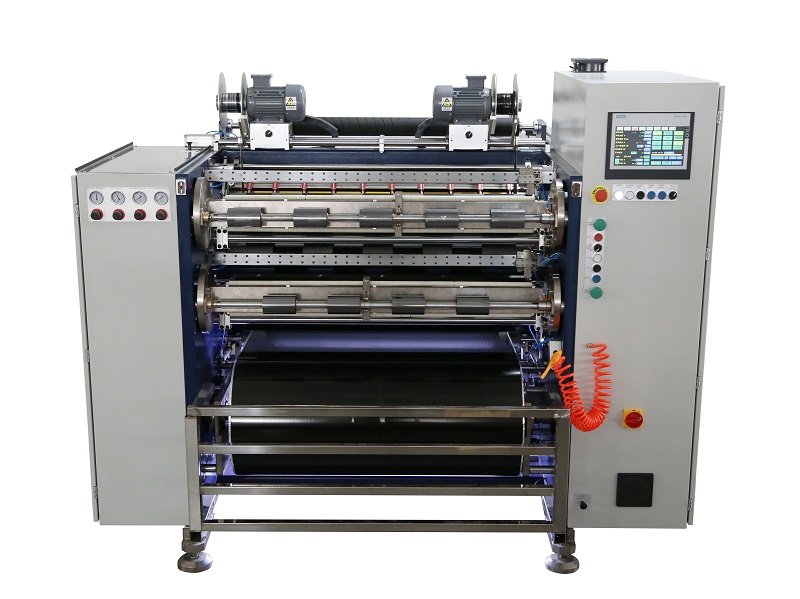 Fully Automatic TTR Slitter RSDS8 Plus
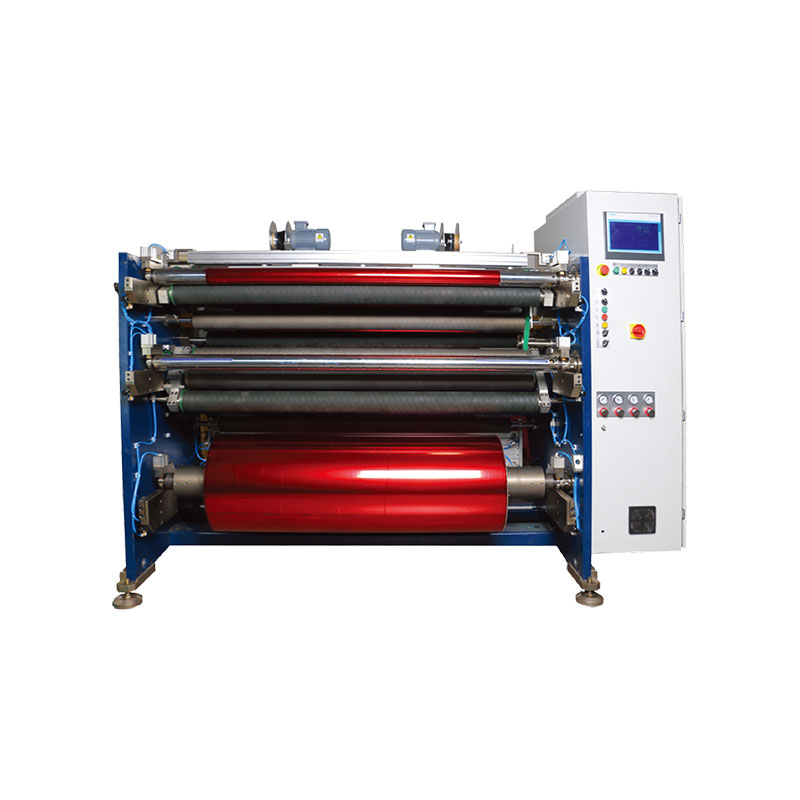 Hot Stamping Foil Slitter 1600mm
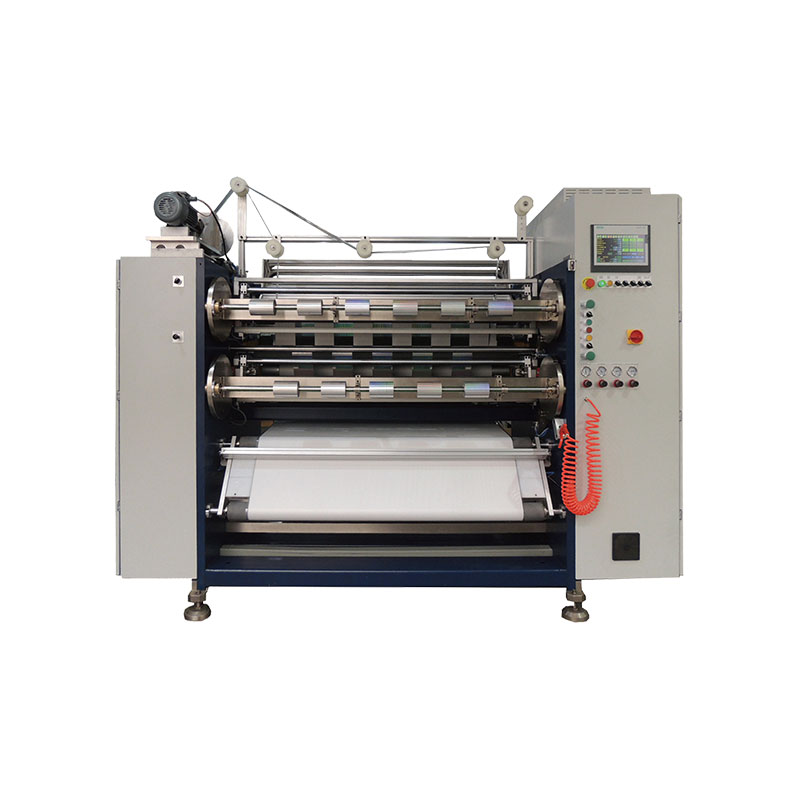 Hot Stamping Foil Slitter (4 Shafts)
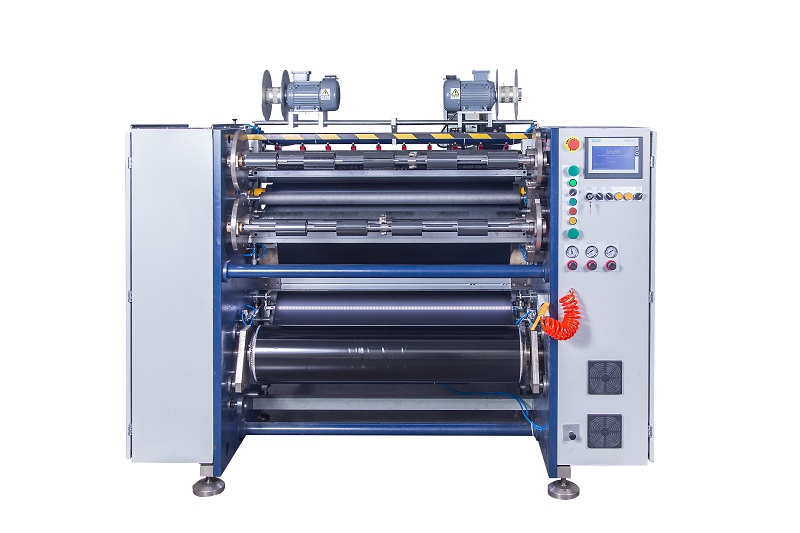 Semi-Auto TTR Slitter RSDS2 Plus
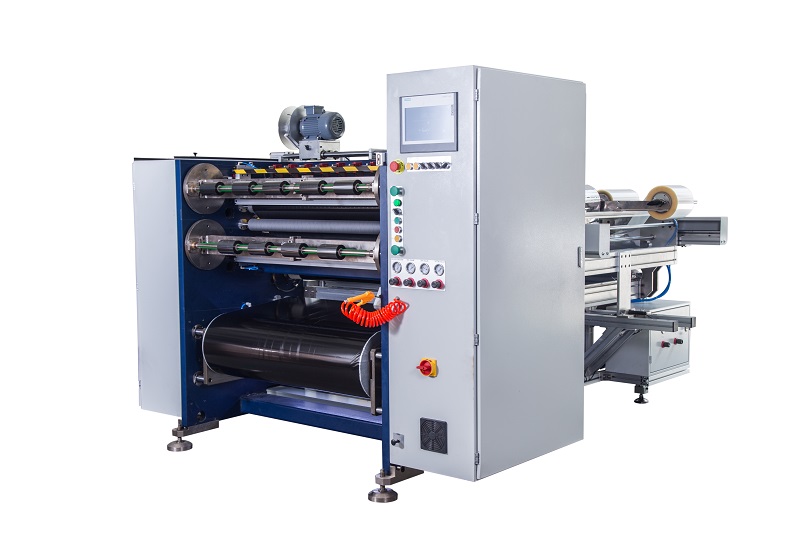 Semi Automatic TTR Slitter RSDS5 Plus
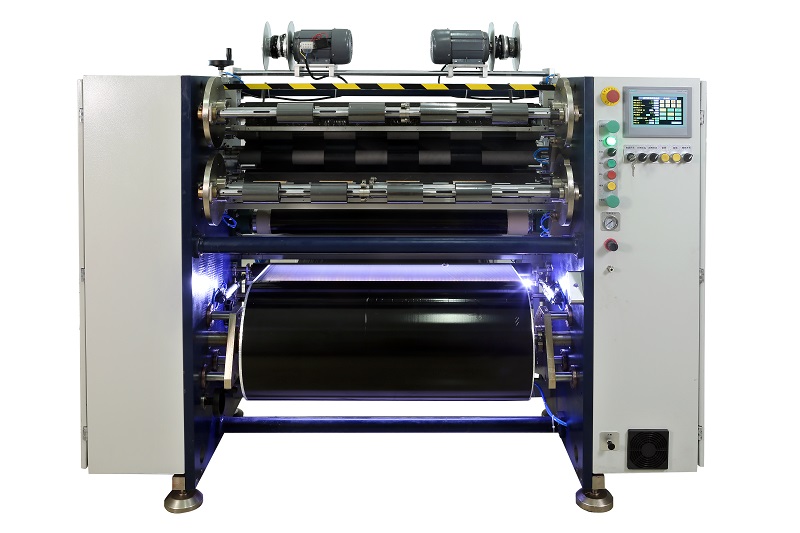 Manual TTR Slitter RSDS2
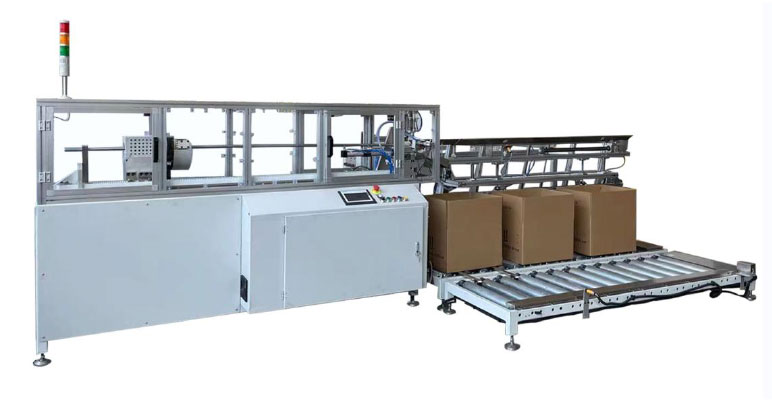 Auto Paper Core Cutter
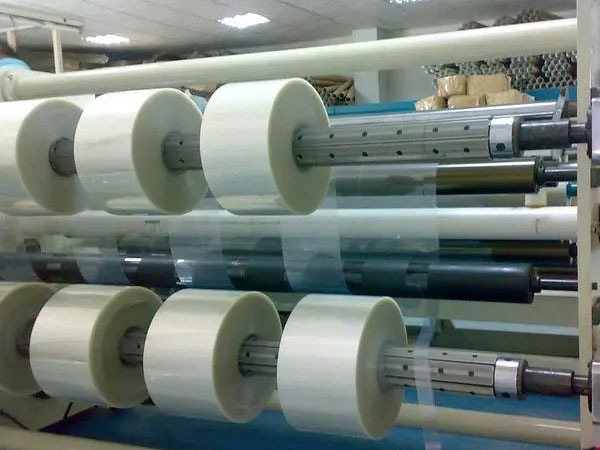 Film Slitting Machine



 +86 135 9951 7291
 support@delishgroup.com
 +86 135 9951 7291