04. May, 2026delish0
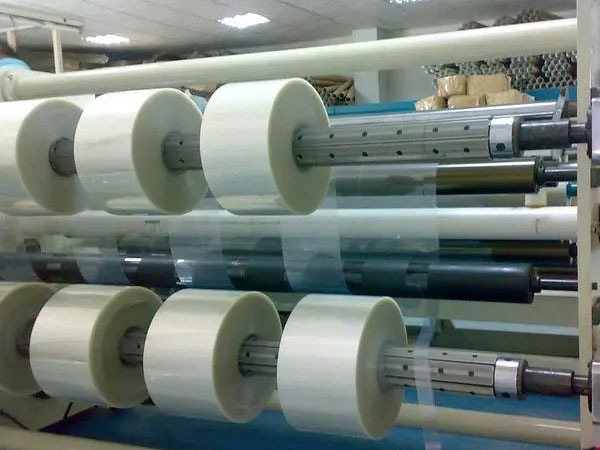
Purchasing a ribbon slitting machine is a critical investment that is directly related to the end face flatness, slitting accuracy, and tightness of the finished ribbon on the heat transfer ribbon. However, many buyers only discovered the problem after the equipment arrived, leading to reduced production efficiency and soaring scrap rates.
How do you complete rigorous factory inspections (FATs) at suppliers to ensure equipment meets standards before shipping? Below is a comprehensive list of inspection guidelines and test criteria.
1. Preparation before the inspection: do not fight unprepared battles
Before going to the supplier's factory or requesting an online live inspection, first confirm the basic conditions:
1. Check the configuration list: Confirm the core component brand against the contract. Focus on whether the servo motor (whether Mitsubishi, Panasonic, Siemens, etc.), bearings (THK, NSK and other imported brands), blades and control system are consistent with the contract.
2. Prepare test materials: Carry no less than 2000 meters of representative master rolls.
3. Environmental confirmation: The inspection site environment should try to simulate your production workshop, with a recommended temperature of 20±5°C and humidity of 40%-60% to reduce the interference of environmental factors on the test results.
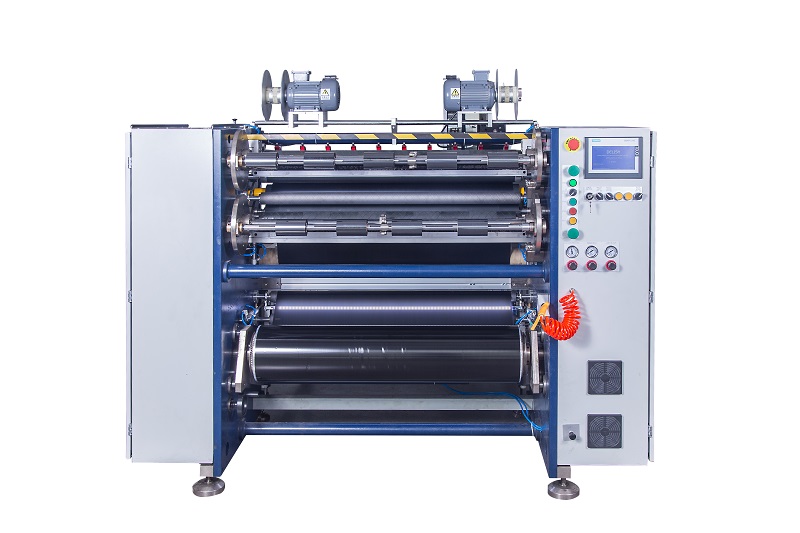
2. Core inspection process: 7 factory test standards
This stage is not only to see whether the equipment can be rotated, but also to see whether the equipment can operate stably, continuously and with high precision.
1. Static Geometry Accuracy Check (Basics)
When the equipment is not powered on, use professional tools for physical measurements.
• Frame horizontality: ≤0.1mm/m, ensure no distortion of the fuselage.
• Spindle/guide roller parallelism: The parallelism error between each guide roller should be controlled within ±0.05mm, which is the physical basis for preventing ribbon deviation.
• Tool holder contact accuracy: The meshing amount of the upper and lower knives (round knife or razor) should be uniform, the gap should not change, and the incision should be free of burrs.
2. Continuous running stress test (24-hour endurance race) - [Mandatory test]
This is the gold standard for verifying the reliability of equipment.
• Test duration: 24 hours of continuous operation without load or load, simulating three-shift production.
• Judgment criteria:
◦ No fault: During the period, there should be no unplanned downtime due to equipment reasons (such as control system crash, motor overload alarm).
◦ Temperature rise: The temperature rise of the surface of the spindle bearing and motor does not exceed the ambient temperature of +15°C, and high temperature is a precursor to the failure of the lubricating oil.
◦ Noise: The operating noise of the equipment should be ≤ 75dB(A) and there should be no sharp and harsh irregular noises.
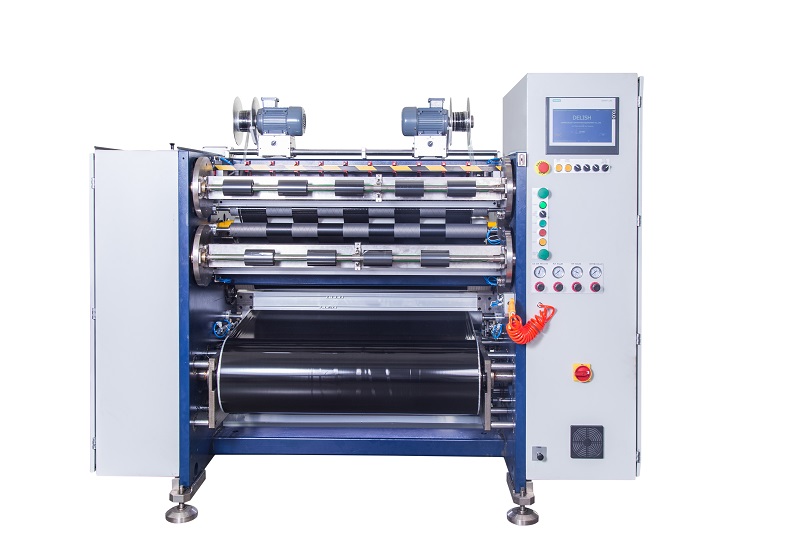
3. Dynamic slitting accuracy test (core performance) - [Required items]
It is directly related to whether the finished product can be used for high-end barcode printing.
• Tolerance standard: The width tolerance of the carbon band after slitting should be controlled within ±0.1mm. For example, for slitting a ribbon with a width of 110mm, the actual measurement should be between 109.9mm-110.1mm.
• Serpentine deviation: The end face of the finished roll should be flat, and the offset (serpentine deviation) at any point on the edge should not exceed ±0.5mm.
• Appearance inspection: The slitting edge should not have burrs, white edges (coating peeling) or toner pollution, observe with a 10x magnifying glass or directly test the printing effect through the black card.
4. Tension Control System Test (Cardiac Test)
Tension stability determines the consistency of the tightness of the winding.
• Fluctuation value: During the acceleration and deceleration process, the fluctuation range between the tension setting value and the actual value should be controlled within ±1.5%.
• Taper control: Verify that the taper function is effective. The hardness of the finished coil should gradually soften from the shaft to the outer circle to prevent the inner ribbon from being entrued or the outer ring collapsing.
• Start-stop response: Sudden emergency stop at high speed (e.g., 200m/min) to observe whether the ribbon is loose or broken. Quality equipment should be able to brake instantly and synchronously, keeping the membrane surface tight without stretching.
5. Automatic correction system test
• Response speed: artificially toggle the ribbon to off-track and observe the response of the guidance correction sensor (EPC). The response time should be ≤ 0.3s.
• Accuracy: The correction accuracy should be controlled within ±1mm.
6. Safety and electrical protection testing
• Safety interlock: The device should be able to cut off the power output immediately at the moment the protective cover is opened, without delay.
• E-stop button: Take a picture of the emergency stop button, and the braking distance should meet the design requirements (usually no more than 120% of the set value) to ensure the safety of personnel.
• Grounding Testing: Confirm that the device's grounding resistance meets electrical safety standards, preventing static electricity buildup from breaking through the ribbon coating.
7. Automated configuration validation
• Parameter memory: Live demonstration of replacement orders, operators should be able to retrieve all parameters (tension, length, speed) of the last production within one minute and start it directly.
• Meter counting accuracy: The actual winding is 1000 meters, and the meter counting error displayed by the equipment should be ≤ 0.5%.

3. List of acceptance forms
In order to facilitate on-site operation, you can print the following table and check it item by item:
| Serial number | Test items | Standard requirements: | Measured results | Judgment |
| 1 | Appearance dimensions | The model and accessories are consistent with the contract and do not rust | —— | ☑️ |
| 2 | 24h continuous operation | Trouble-free alarm with ≤ 75dB noise | —— | ☑️ |
| 3 | Width accuracy | ±0.1mm | —— | ☑️ |
| 4 | Rewind end face | Serpentine deviation ≤± 0.5mm, no tower wheel | —— | ☑️ |
| 5 | Tension fluctuations | ≤±1.5% | —— | ☑️ |
| 6 | Safety testing | Stop when you open the hood, and the grounding is good | —— | ☑️ |
| 7 | Key components | Check servo/bearing brands (e.g. THK/NSK) | —— | ☑️ |
4. Details that are easy to overlook
1. Sample retention and sealing: After the slitting is completed, the finished roll and the remaining waste are sealed separately. Signature confirmation as a comparison standard for future receipt.
2. Random Documents: Confirm whether the supplier provides detailed mechanical drawings, electrical schematics, operation manuals, and spare parts lists. Inquire about the lead time of wearing parts (e.g., blades, belts).
3. Waste edge treatment: Observe whether the equipment is smoothly removed under high-speed operation. If the waste edge is often entangled or broken, it will lead to frequent downtime in automated production, which is a common problem for many domestic low-end machines.
By following this list of factory testing standards, you can minimize the risk of filtering out inferior equipment and ensure that the ribbon slitting machine you purchase can meet the demands of high-intensity industrial production. Don't make decisions based solely on appearance or low price, strict "stress testing" in the supplier's workshop is the long-term solution to ensure long-term profits.
 English
 Deutsch
 Français
 Español
 Português
 日本語
日本語 русский
 한국어
한국어 عربي
عربي ภาษาไทย
 Tiếng Việt
 Italiano
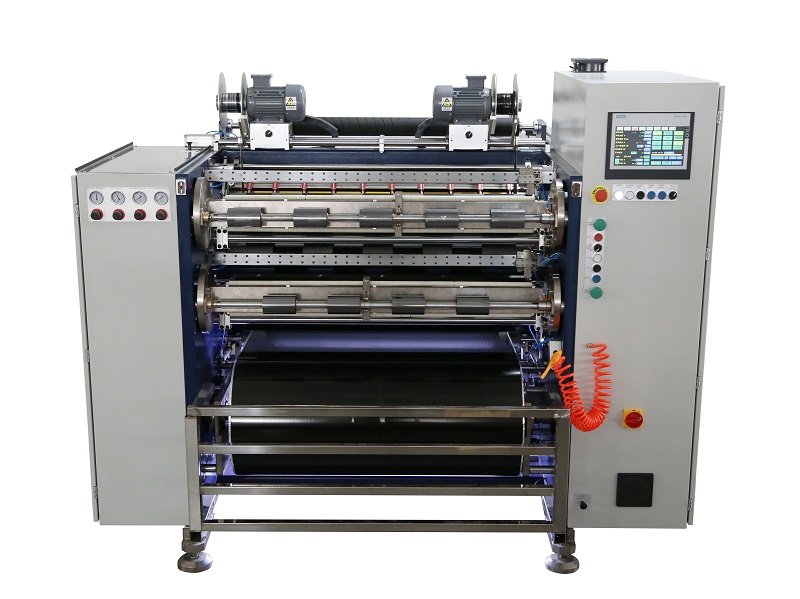 Fully Automatic TTR Slitter RSDS8 Plus
 Hot Stamping Foil Slitter 1600mm
 Hot Stamping Foil Slitter (4 Shafts)
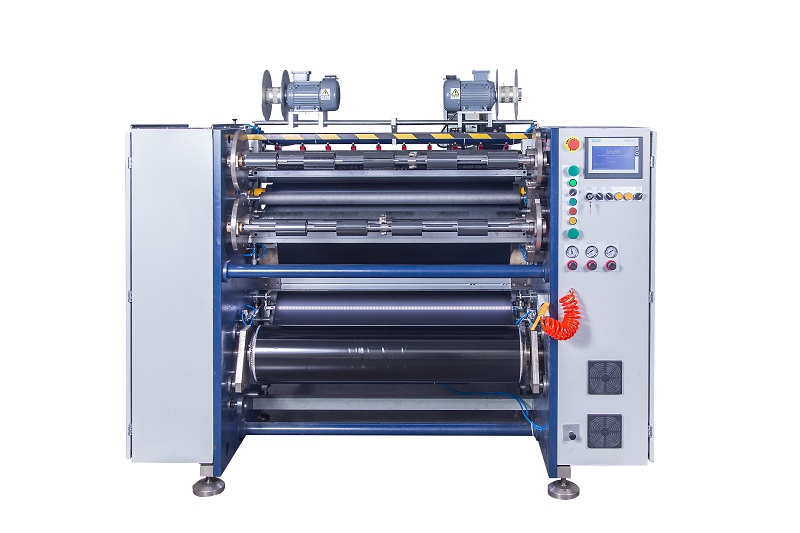 Semi-Auto TTR Slitter RSDS2 Plus
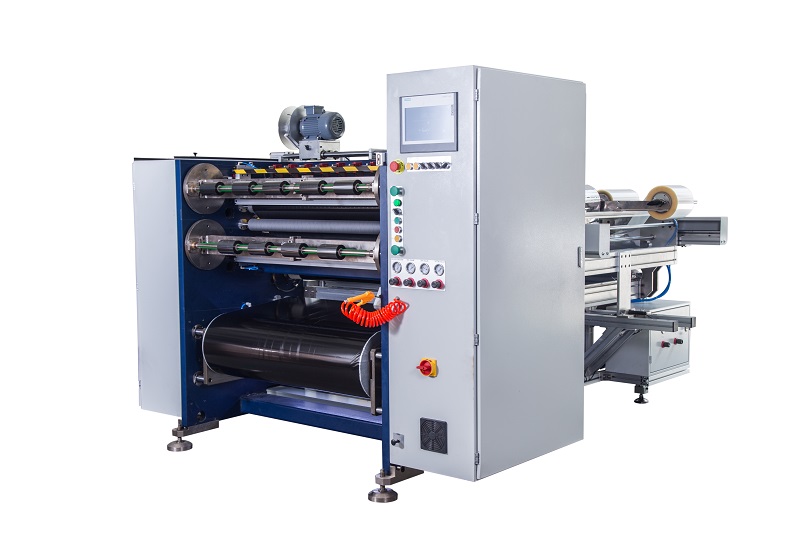 Semi Automatic TTR Slitter RSDS5 Plus
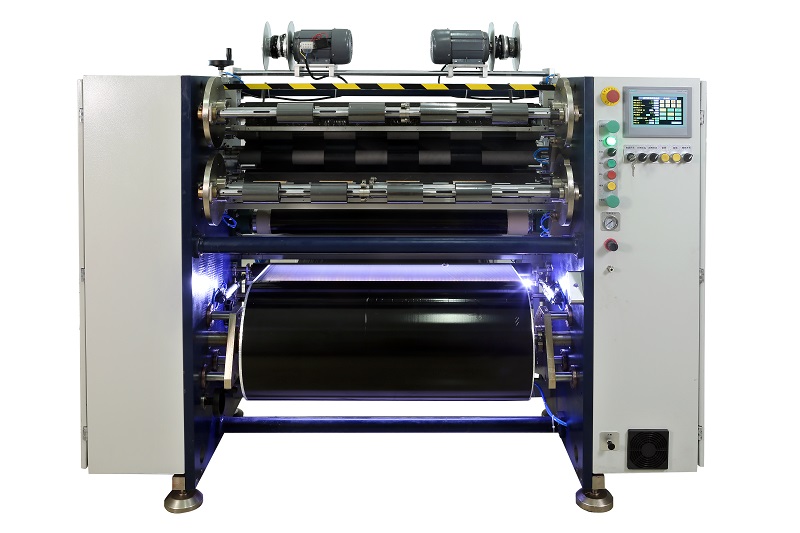 Manual TTR Slitter RSDS2
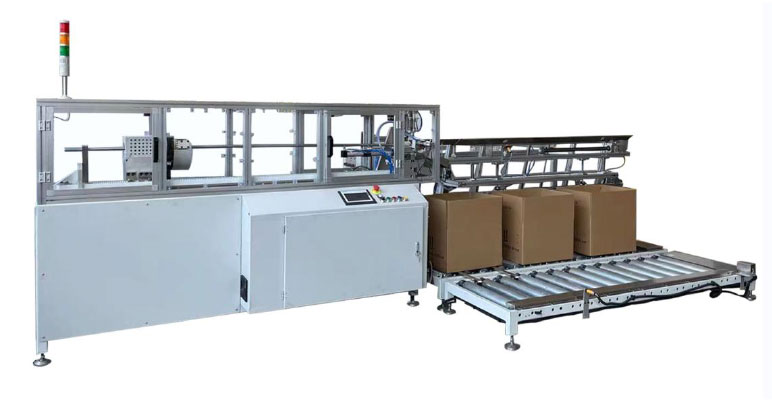 Auto Paper Core Cutter
 Film Slitting Machine



 +86 135 9951 7291
 support@delishgroup.com
 +86 135 9951 7291