11. May, 2026delish0
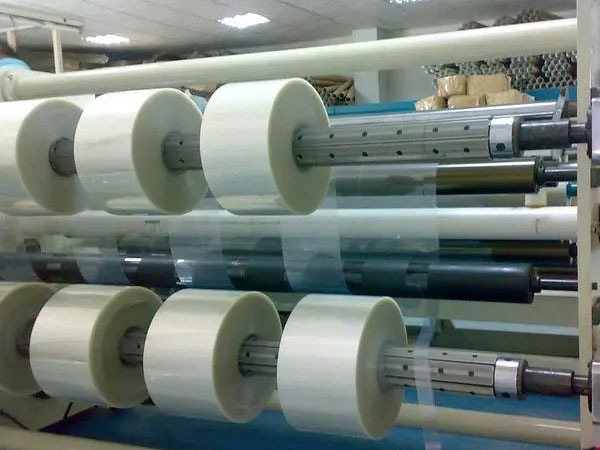
In high-end packaging, anti-counterfeiting labels, decorative materials and other fields, the quality of hot stamping foil directly affects the visual effect and market value of the final product. The hot stamping foil slitting process is the key process that determines product quality - whether the slitting width is accurate and whether the edges are neat, which is directly related to the subsequent hot stamping effect and material utilization. In recent years, with the breakthrough of precision manufacturing technology, hot stamping foil slitting machines have been able to achieve micron-level precision control, eliminate dimensional deviations from the root, and set a new quality benchmark for the industry.
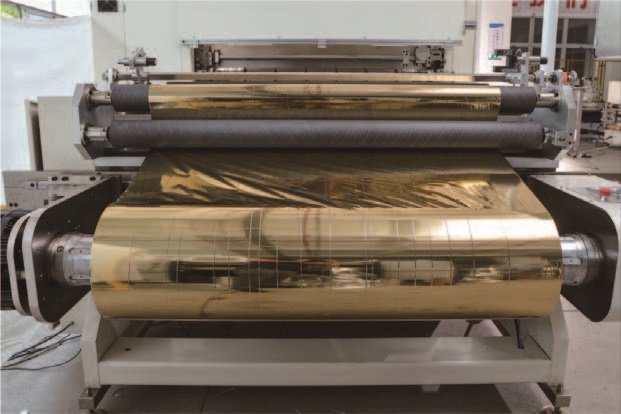
1. Micron-level precision: the hard requirements of hot stamping foil slitting
Hot stamping foil is usually composed of multiple layers such as polyester film base film, release layer, coloring layer, and metal plating, with a thickness of only about 12 μm to 30 μm. During the slitting process, common dimensional deviations include:
• Width tolerance exceeds the standard: resulting in inaccurate pattern alignment during hot stamping, and metal reflection spillage or absence at the edges;
• Serpentine deviation: the edge of the foil band is wavy after winding, and the subsequent process cannot be unwinded stably;
• End face burrs and adhesions: tiny debris contaminates the hot stamping surface, causing bronzing defects or sand holes.
For application scenarios such as high-end cosmetic boxes, tobacco and alcohol packaging, and currency anti-counterfeiting lines, the slitting width tolerance is usually required to be controlled within ±0.05mm or even higher. Traditional mechanical die-based or ordinary servo control can no longer meet this demand.
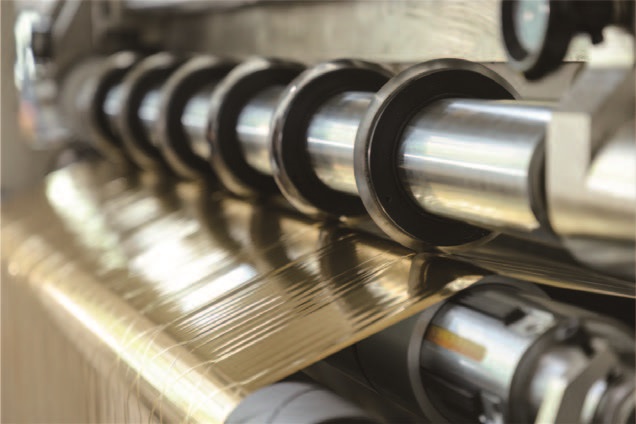
2. Technological breakthroughs: from mechanical precision to intelligent closed-loop control
Achieving micron-level slitting accuracy is not the result of a single component upgrade, but the deep integration of mechanical, electrical, and software systems.
1. Precision mechanical foundation: rigidity and low vibration
• Ultra-precision cutter shaft system: The cutter shaft is ground by alloy steel integrally, the radial runout is controlled within 2μm, and the high-rigidity double bearing housing effectively suppresses micro-vibration during high-speed operation.
• Slitting tool revolution: Upgrade from traditional circular knives to carbide or diamond-coated micro-toothed knives, which extend the sharpness retention time of the cutting edge by 3-5 times, and significantly narrow the width of the foil deformation zone during cutting, reducing the dimensional error caused by the plastic extension of the cut.
• Air flotation guide roller: Micro holes are arranged on the surface of the key guide roller, and the foil belt is lifted by the air film to eliminate tension fluctuations and lateral drift caused by contact friction.
2. Precision tension control system: micro-Newton-level control
The hot stamping foil has a low tensile modulus, and a slight uneven tension will lead to width shrinkage or tensile deformation. Modern slitting machines adopt:
• Dual-axis closed-loop tension sensor: real-time detection of the actual tension at unwinding, rewinding and rolling, with a resolution of ±0.1N.
• Adaptive PID and fuzzy control algorithm: dynamically adjust the magnetic particle brake and servo motor torque according to the changes of foil material, thickness and coil diameter, and suppress the tension fluctuation within ±0.5%.
• Low inertia swing roller system: The carbon fiber swing arm with backlash-free drive quickly absorbs small tension spikes and prevents instantaneous stretching of the foil belt.
3. Intelligent correction and alignment: micron-level lateral positioning
• Ultrasonic/photoelectric dual-mode sensor: real-time detection of foil edge position, resolution of 1μm, response time < 2ms。
• Linear motor drive guiding frame: compared with traditional cylinders or screws, linear motors have no reverse backlash, correction accuracy reaches ±0.01mm, and smooth action without jitter feedback.
• CCD visual full-frame monitoring: A high-speed industrial camera is set up after slitting to measure the actual width of each foil strip in real time, and the data is transmitted back to the control system to form a full closed-loop adjustment.
4. Digital twin and precompensation algorithm
The advanced slitting machine is also equipped with a digital twin system. Before formal slitting, the system simulates the offset load, thermal expansion, and mechanical elastic deformation of the cutting edge under different materials and different coil diameters, and gives the tool distance correction amount in advance. For example, when the temperature of the tool shaft rises by 2°C, the system automatically compensates for the spacing between the left and right tool holders by -3 μm to offset the widening of the slitting caused by thermal expansion.
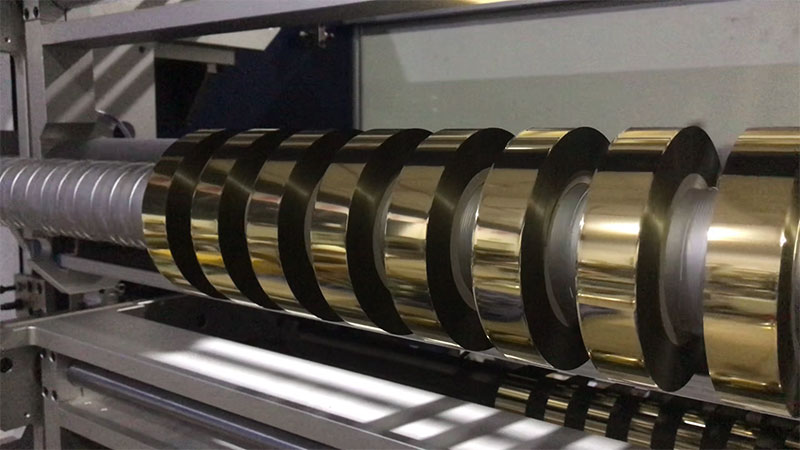
3. Practical effect: eliminate the industrial value brought by deviation
With micron-precision slitting machines, hot stamping foil manufacturers can achieve significant improvements:
| Indicators | Traditional equipment | Micron-level precision equipment |
| Slitting width tolerance | ±0.10mm~±0.20mm | ±0.02mm~±0.05mm |
| Deviation (per meter) | ≤0.5mm | ≤0.05mm |
| End face burr height | >30μm | <8μm |
| Utilization rate of finished products | 92%~95% | 98%~99.5% |
| Hot stamping scrap rate | 1.5%~3% | <0.3% |
Based on the calculation of medium-sized enterprises with an annual output of 1 million square meters of hot stamping foil, only two items are reduced in width allowance and waste products, which can save more than 500,000 yuan in material costs per year. At the same time, the end face of the foil strip after slitting is smooth and the winding is smooth, which greatly improves the running speed and yield rate of the subsequent hot stamping machine.
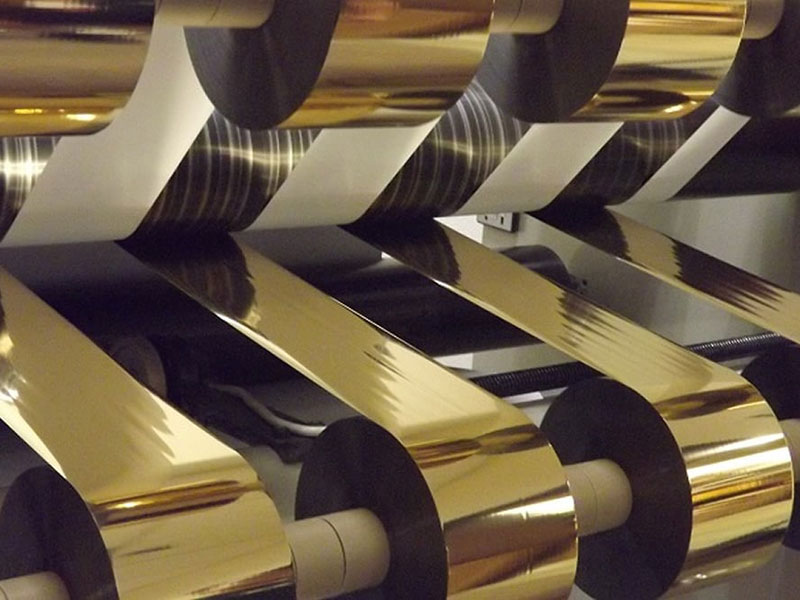
4. Industry challenges and future trends
Although micron-level slitting technology has made great progress, there are still challenges in the face of new demands such as ultra-thin hot stamping foil (base film thickness less than 6 μm), degradable hot stamping materials, and slitting of large coils with a width of more than 2 meters:
• Temperature and humidity sensitivity: some new materials change significantly after moisture absorption, which needs to be combined with online width measurement and real-time compensation;
• Dynamic stability at high speed: When the slitting speed exceeds 500m/min, the stability of the air film and the heat dissipation of the blade become bottlenecks.
Future directions include:
• AI self-learning parameter adjustment: Train the model through a large amount of historical slitting data to automatically recommend optimal tension, knife pressure, and deviation correction parameters.
• Holographic laser online width measurement: using the diffraction grating principle to achieve non-contact, sub-micron width real-time feedback;
• Intelligent tool life management: Through high-frequency vibration spectrum analysis, predict the timing of micro-passivation of the blade, and automatically sharpen the tool in advance or prompt replacement.
5. Conclusion
From "roughly not bad" to "micron controllable", hot stamping foil slitting is not a simple precision number game, but the result of collaborative innovation in mechanical design, precision sensing, automatic control, and materials science. When the slitting machine can stably lock the tolerance within 1/3 of the diameter of the hair strand, it not only eliminates waste and defects caused by size deviations, but also gives hot stamping foil products stronger competitiveness in the high-end market. For packaging and printing companies that pursue the ultimate, micron-level precision slitting machines are no longer a "plus", but a ticket to high-end manufacturing.
 English
 Deutsch
 Français
 Español
 Português
 日本語
日本語 русский
 한국어
한국어 عربي
عربي ภาษาไทย
 Tiếng Việt
 Italiano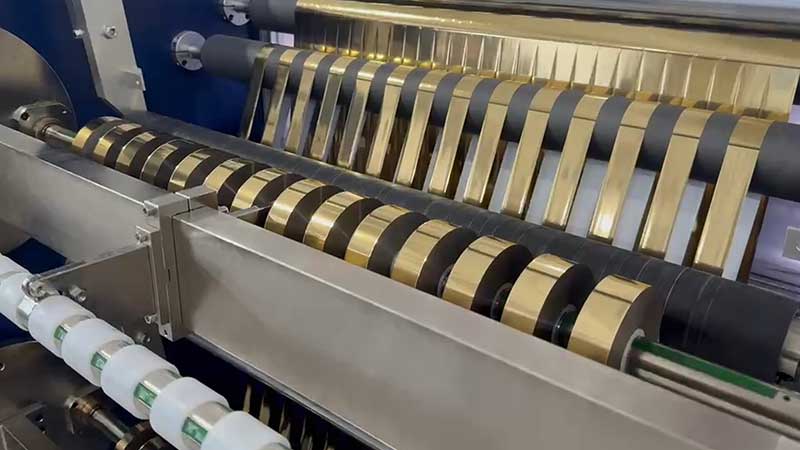
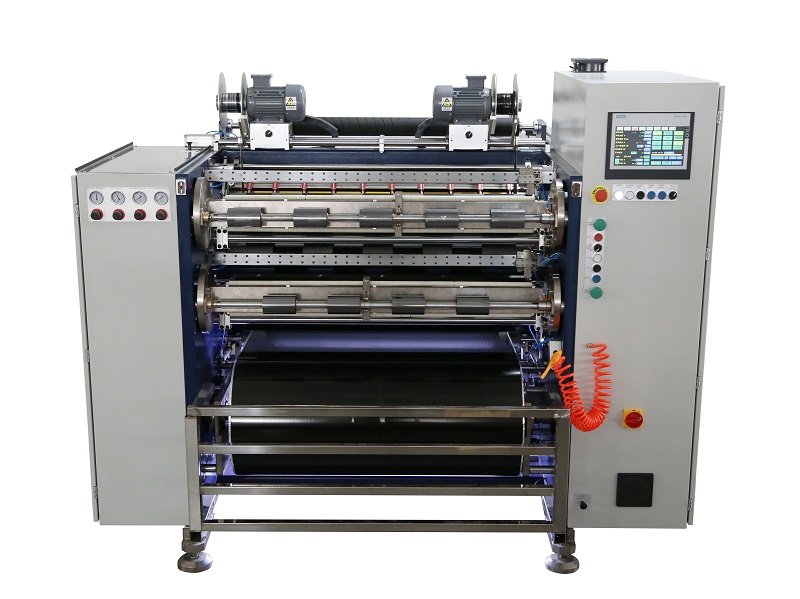 Fully Automatic TTR Slitter RSDS8 Plus
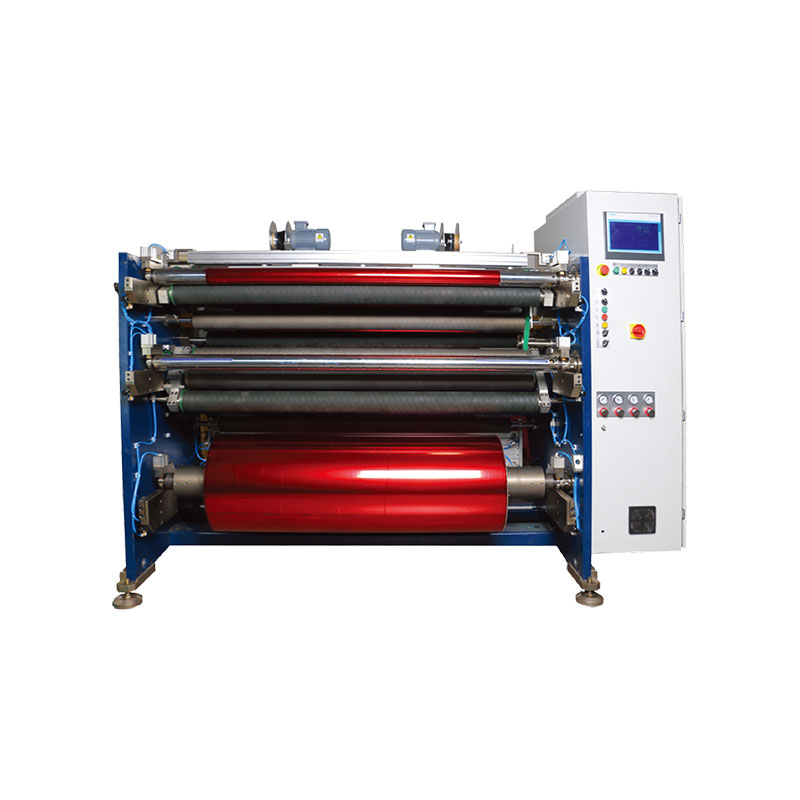 Hot Stamping Foil Slitter 1600mm
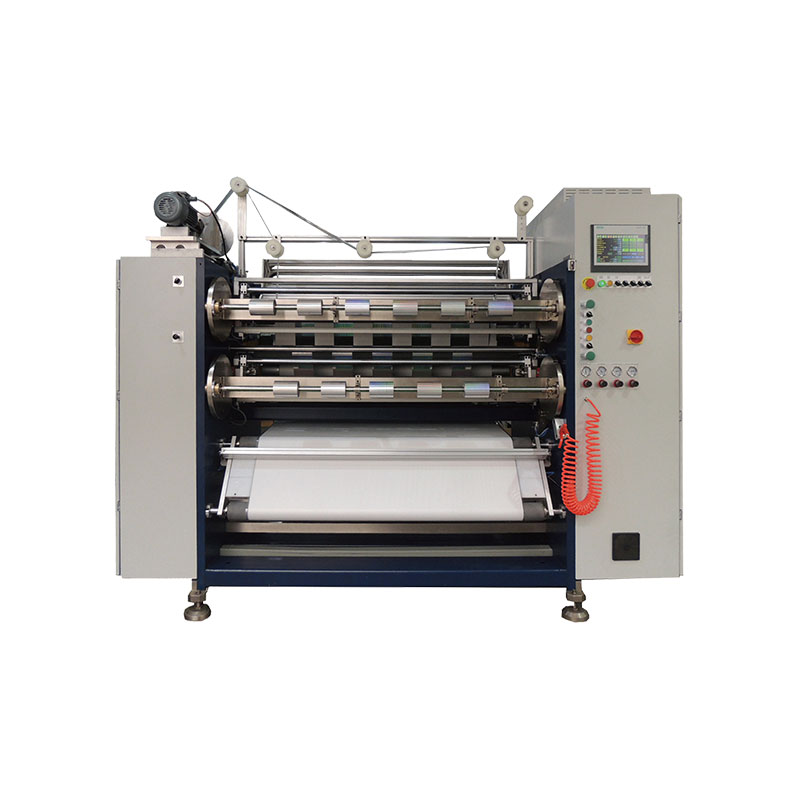 Hot Stamping Foil Slitter (4 Shafts)
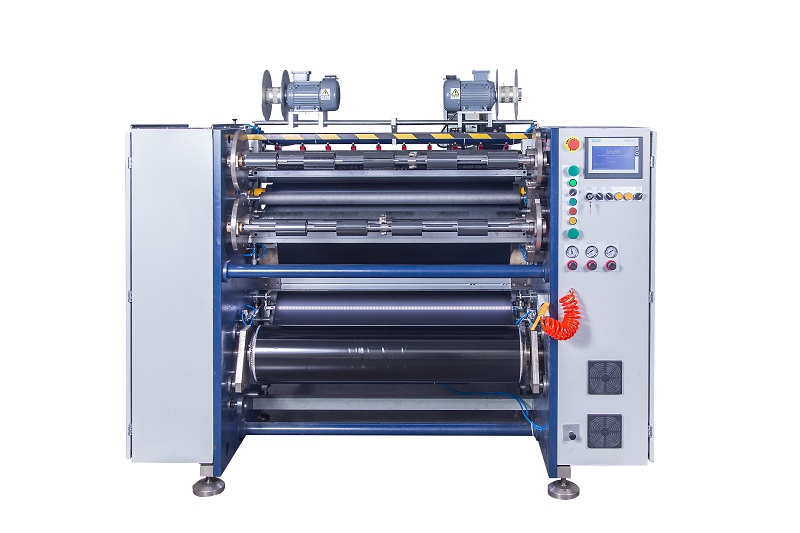 Semi-Auto TTR Slitter RSDS2 Plus
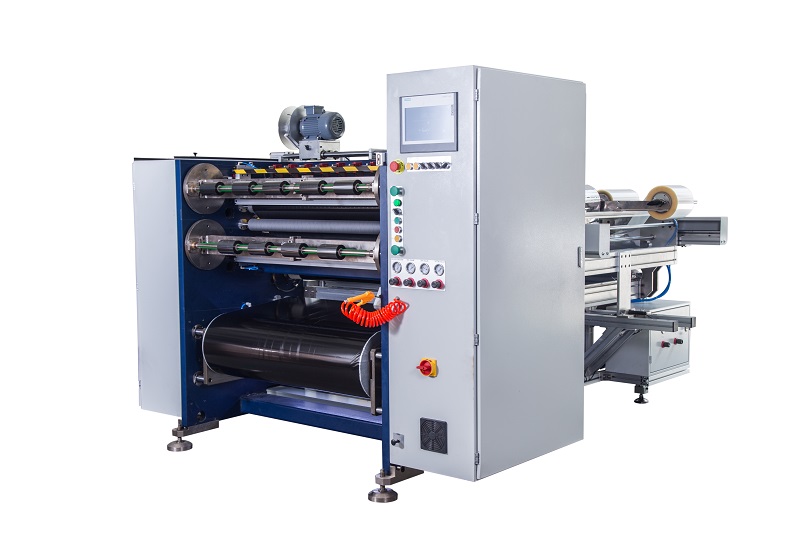 Semi Automatic TTR Slitter RSDS5 Plus
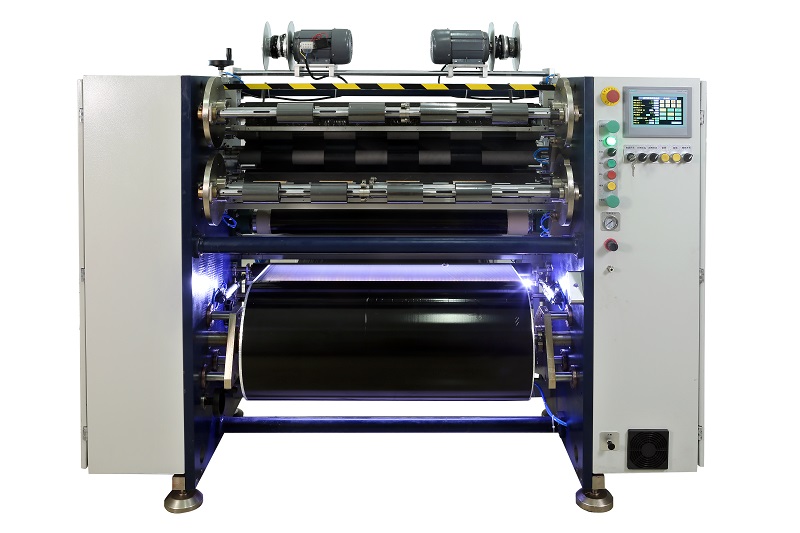 Manual TTR Slitter RSDS2
 Auto Paper Core Cutter
 Film Slitting Machine



 +86 135 9951 7291
 support@delishgroup.com
 +86 135 9951 7291