29. May, 2026delish0
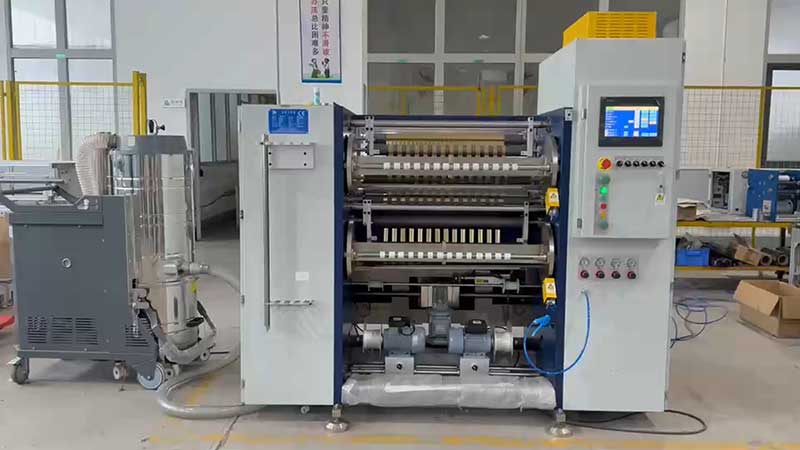
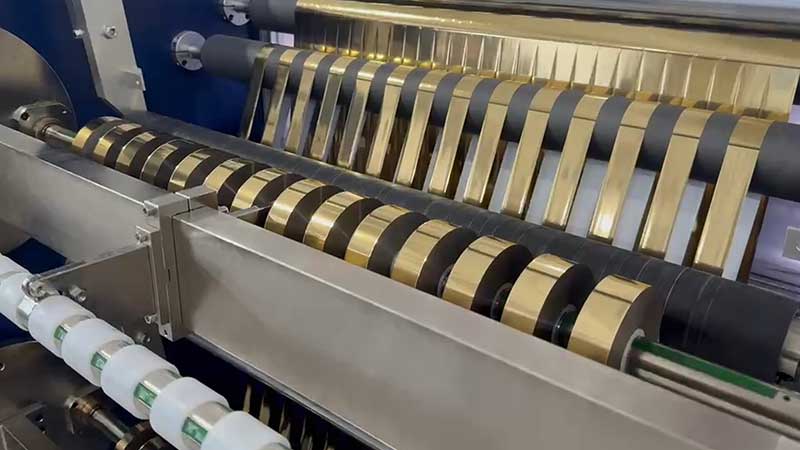
As hot stamping technology becomes increasingly widespread in industries such as packaging, printing, and decoration, the technical level of hot stamping foil slitting machines as key production equipment directly affects the slitting accuracy, efficiency, and yield of hot stamping foil. Entering 2026, the industry's requirements for slitting equipment will no longer remain at the "cutting" stage, but will comprehensively upgrade toward high precision, intelligence, and energy saving. This article will focus on the three most representative core technical indicators for 2026, providing you with a practical purchasing guide.
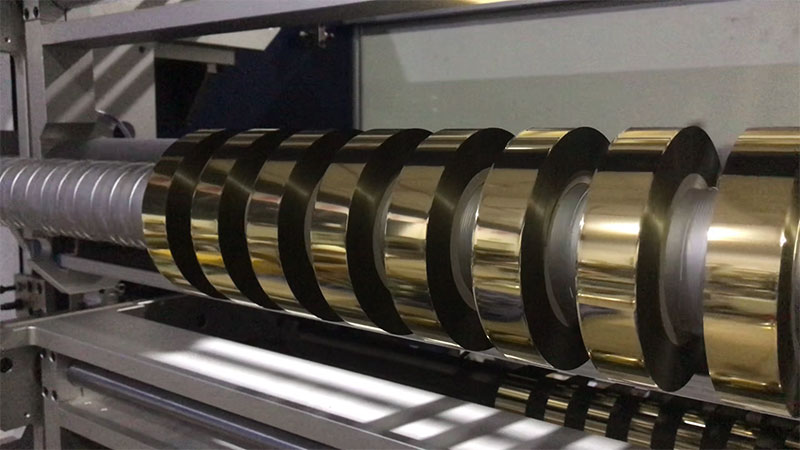
1. Slitting accuracy: micron-level dynamic control capability
Slitting precision is the core performance indicator of hot stamping foil slitting machines. The mainstream standard for 2026 has been raised from the previous ±0.1mm to ±0.03mm, with high-end models even reaching ±0.01mm.
Key Points for Selection:
• Servo tension control system: Uses closed-loop servo tension control to monitor and automatically adjust tension fluctuations in real time during unwinding, traction, and winding stages, preventing deviation or stretching deformation caused by uneven tension.
• High-rigidity tool shafts and tools: The tool shaft must undergo dynamic balancing treatment. Tool materials are recommended to be cemented carbide or ceramic-coated inserts, which offer high wear resistance and good edge consistency.
• Online Inspection and Feedback: Equipped with laser or vision online width measurement capabilities, it can provide real-time feedback on slitting width deviations and automatically compensate for them, reducing the frequency of manual sampling inspections.
Recommendation: During trial operation, manufacturers should provide width difference data reports for continuous slitting over 500 meters, with a focus on accuracy stability during winding changes and acceleration/deceleration stages.
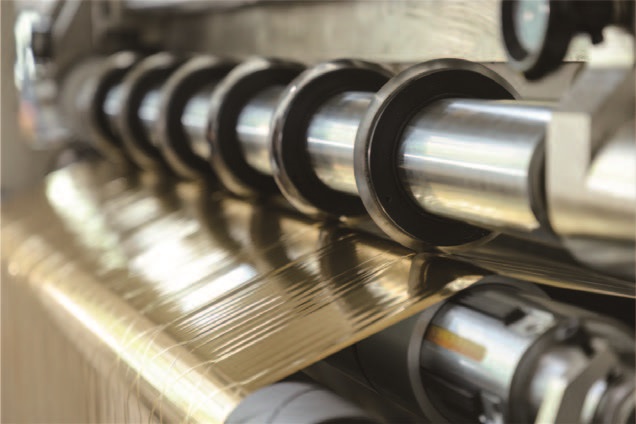
2. Operational efficiency: intelligent production and low-waste design
Efficiency is not just about speed; it is also reflected in overall utilization rate and material utilization rate. The operating efficiency indicators of excellent hot stamping foil slitting machines in 2026 are generally reflected as:
• Maximum mechanical speed: 300~500 m/min (depending on material thickness)
• Order change time: ≤5 minutes (with automatic tool layout system)
• Scrap rate: ≤1.5% (including losses from joints, edge materials, and start-stop sections)
Key Points for Selection:
• Automatic tool placement system: Uses servo motors to drive the tool holder for automatic positioning, replacing manual tool movement one by one, significantly shortening specification change time and avoiding manual misalignment.
• Receiving platform and automatic stapling: Models with non-stop coil change (automatic stapling) can significantly enhance continuous production capacity, especially suitable for large-volume orders.
• Automatic waste edge disposal: The automatic suction and drainage device for waste edges should be stable and reliable to avoid waste foil tangling or clogging, which could cause shutdown.
Recommendation: When calculating overall efficiency, don't just look at the maximum speed, but compare by "effective output (meters/hour)," including auxiliary times for order change, film penetration, waste removal, etc.
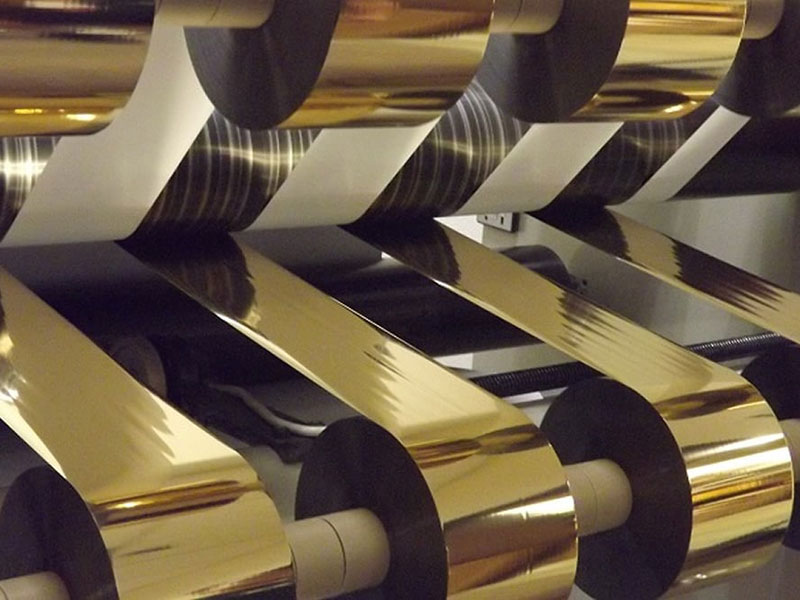
3. Intelligence and Data Interconnection Capability
By 2026, hot stamping foil slitting machines will be fully integrated into the "smart factory" ecosystem. The level of intelligence has become a key indicator for measuring the advancement of equipment.
Core Functional Requirements:
• Automatic production parameter formula management: can store and quickly recall slitting process parameters (tension, speed, tool pressure, etc.) for different materials, widths, and thicknesses, reducing human setting errors.
• Remote monitoring and early warning: The equipment should support OPC UA or MQTT protocols, and be able to interface with MES/ERP systems to enable real-time uploading of production progress, alarm records, and energy consumption data.
• Predictive maintenance: Using sensor data such as vibration, current, and temperature to predict tool wear or bearing failures, proactively push maintenance reminders to prevent sudden shutdowns.
• Interface: Touchscreen no less than 10 inches, clear logic interface, supports multilingual and hierarchical permission management.
Recommendation: If your enterprise already has a digital platform, be sure to ask the vendor to provide actual API interface documentation or data integration cases to avoid "data silos" later on.
Comprehensive purchasing advice
| Indicator dimension | Entry-level configuration (2026 reference) | Recommended configuration |
| Slitting accuracy | ±0.05mm | ±0.02mm |
| Top speed | 200m/min | 400m/min |
| Method of order exchange | Manual tool layout | Automatic tool layout |
| Tension control | Open-loop control | Closed-loop servo + automatic material rewinding |
| Data interface | No or only RS485 | OPCUA/MQTT |
| Reference price range | 150,000 to 250,000 RMB | 350,000 to 600,000 RMB |
Conclusion
When choosing a hot stamping foil slitting machine, don't just look at "how fast it can cut." Instead, you should focus on three core indicators: precision, efficiency, and intelligence, combined with your own product specifications (common widths and thickness ranges), order structure (batch size, order change frequency), and digital capabilities. By 2026, equipment has evolved from a tool into a data node. Choosing a slitting machine with good scalability and intelligent capabilities will lay a solid foundation for your company's competitiveness over the next three to five years.
It is recommended to arrange a trial cutting with material for no less than 2 hours before signing the contract, and clearly define acceptance standards (such as width difference, end face neatness, and winding hardness). If conditions permit, conduct on-site inspections of users of the same model already in production to understand actual operational stability and after-sales service response speed.
 English
 Deutsch
 Français
 Español
 Português
 日本語
日本語 русский
 한국어
한국어 عربي
عربي ภาษาไทย
 Tiếng Việt
 Italiano
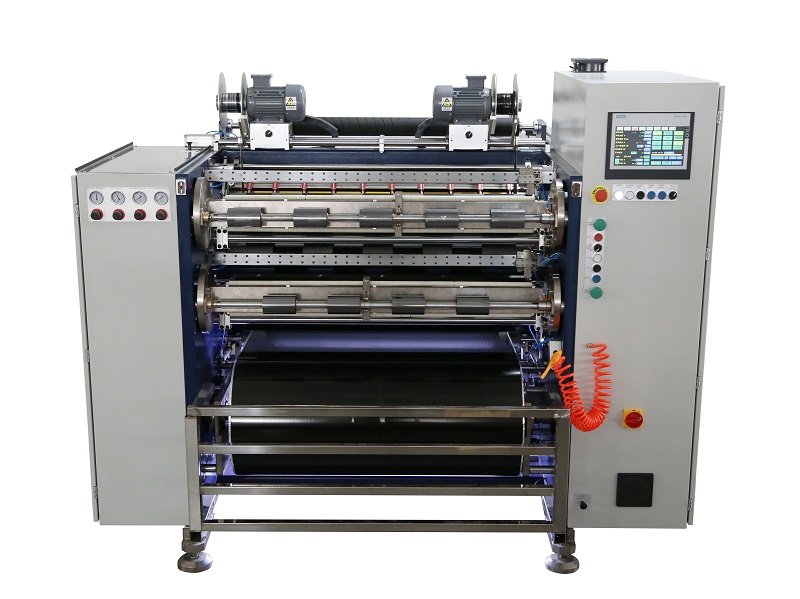 Fully Automatic TTR Slitter RSDS8 Plus
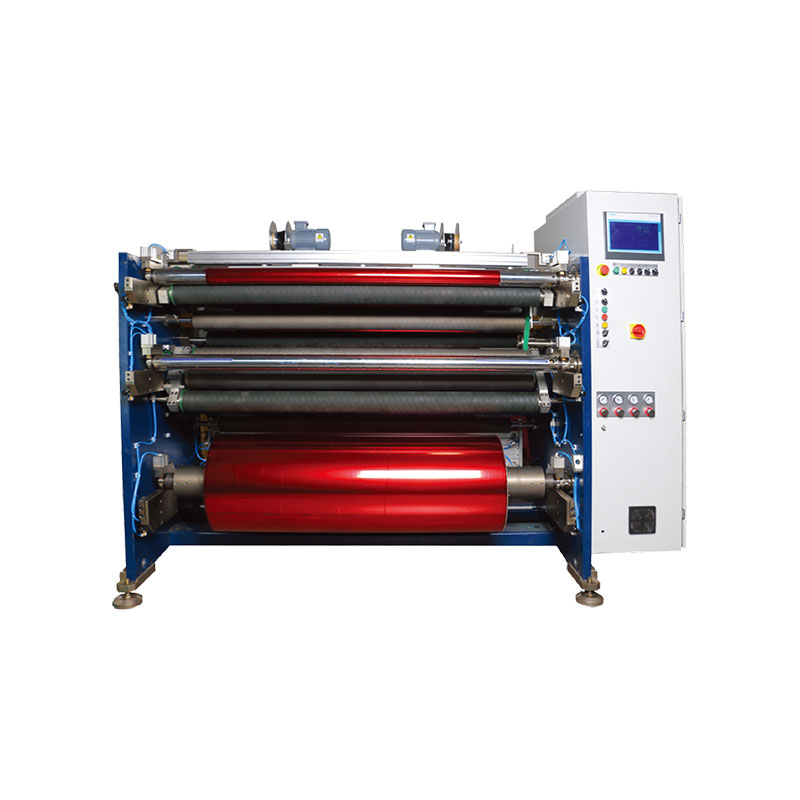 Hot Stamping Foil Slitter 1600mm
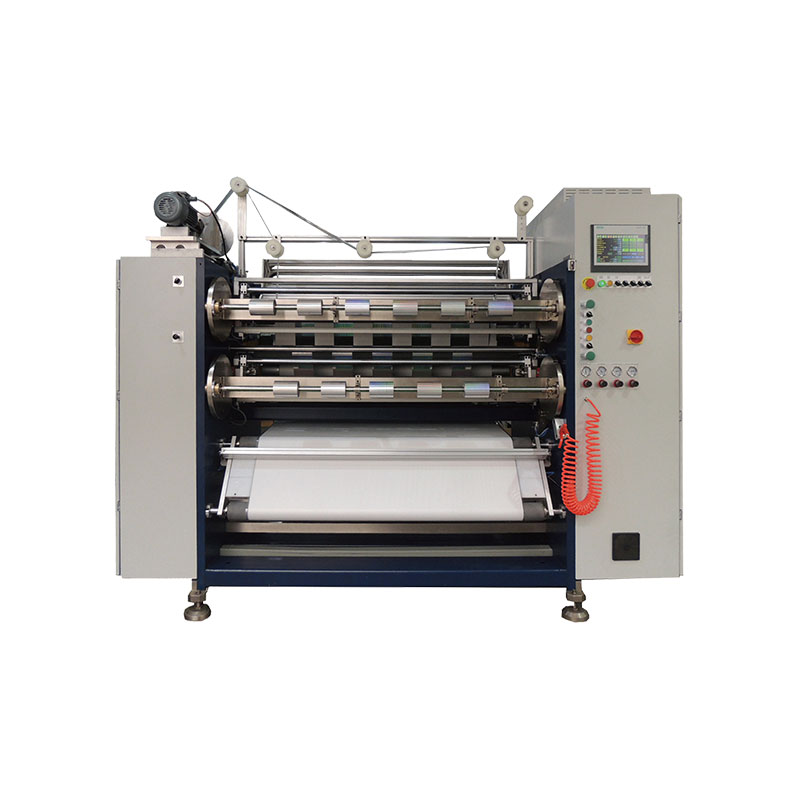 Hot Stamping Foil Slitter (4 Shafts)
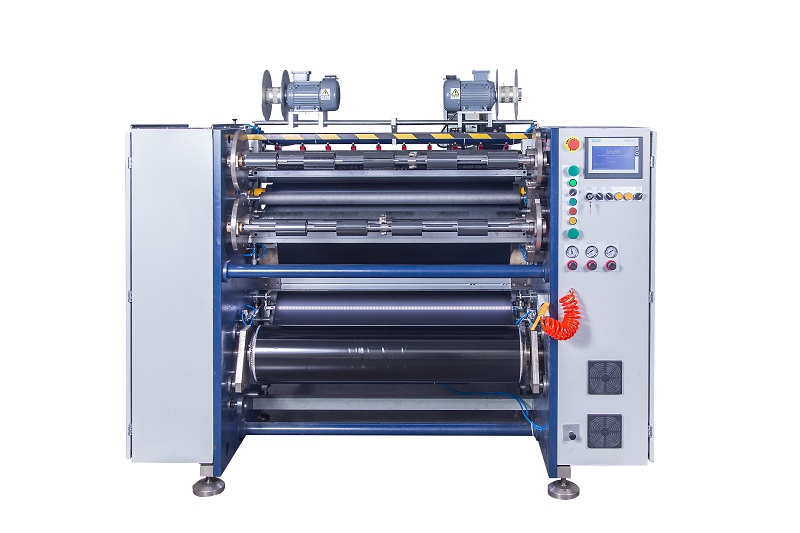 Semi-Auto TTR Slitter RSDS2 Plus
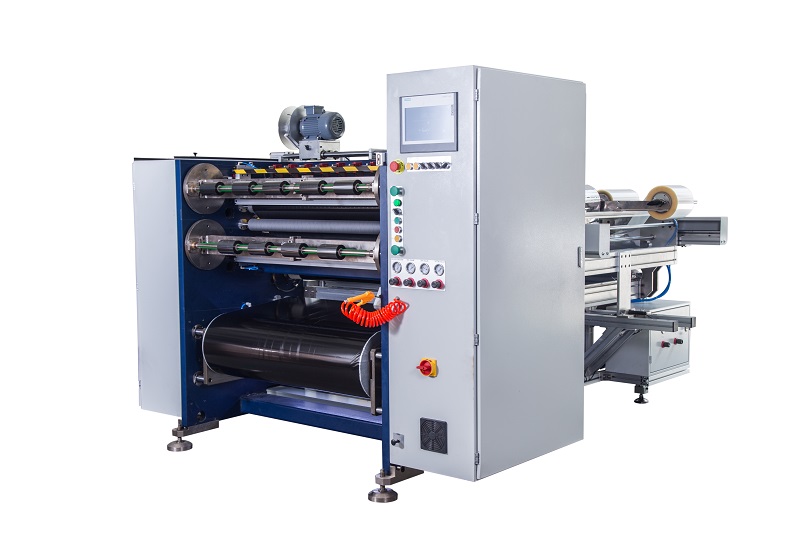 Semi Automatic TTR Slitter RSDS5 Plus
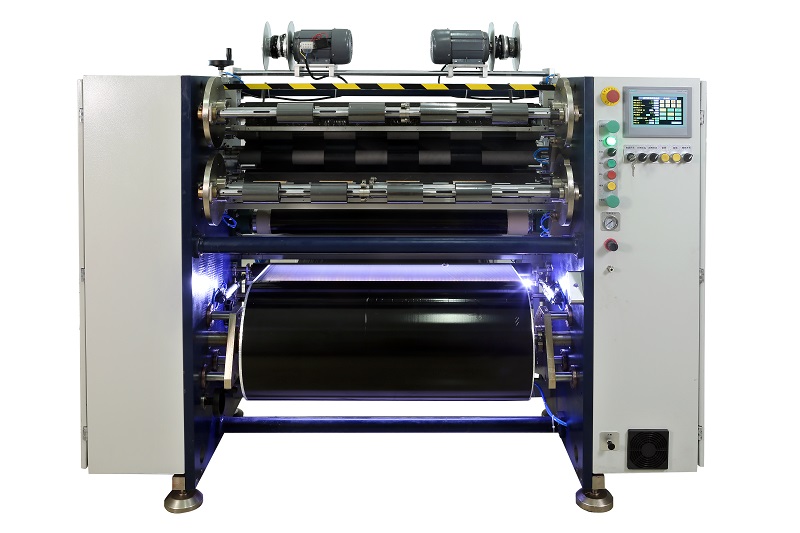 Manual TTR Slitter RSDS2
 Auto Paper Core Cutter
 Film Slitting Machine



 +86 135 9951 7291
 support@delishgroup.com
 +86 135 9951 7291