30. May, 2026delish0
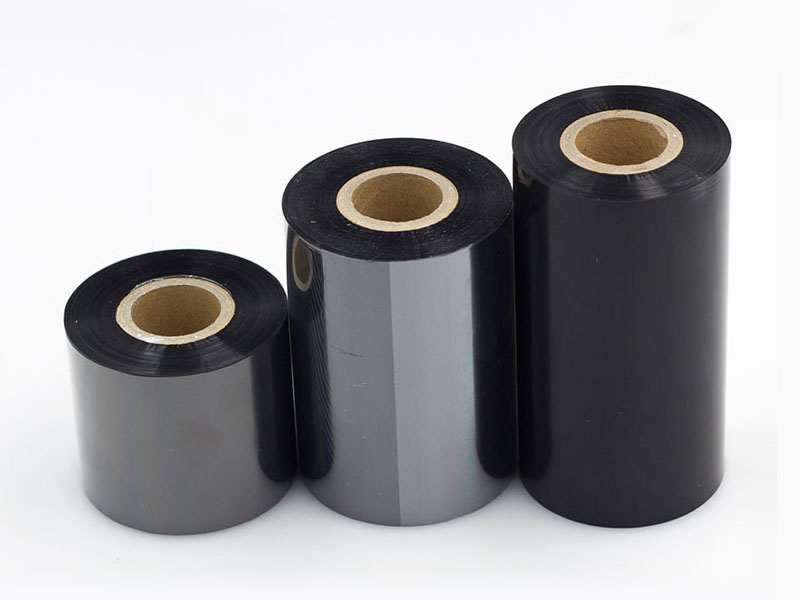
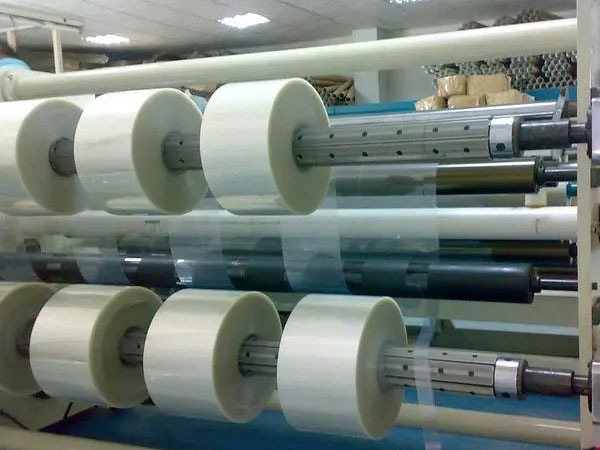
With thermal transfer printing technology continuously penetrating logistics, healthcare, retail, manufacturing, and other fields, carbon ribbons (heat transfer color ribbons), as key consumables, are facing unprecedented challenges in manufacturing precision and production efficiency. The ribbon slitting machine—this core device that cuts wide master rolls into narrow rolls adapted to different printing movement specifications—is undergoing a profound transformation from "machine-driven" to "intelligent-led." In the next five years, fully automated, flexible lines, and digital twins will become the three main engines driving technological leaps in this field, redefining the efficiency boundaries, quality standards, and response modes of ribbon production.
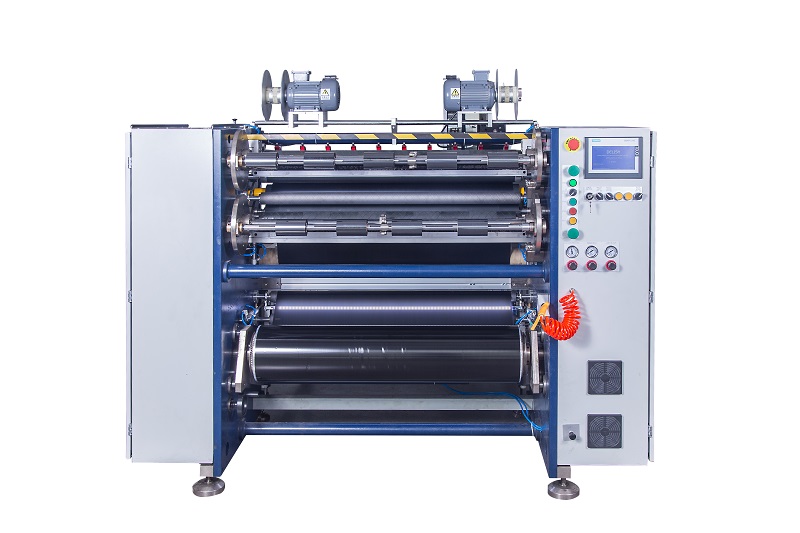
1. Fully Automated: From "Single-Machine Automation" to "Unattended Factories"
Currently, most ribbon slitting workshops still rely on manual feeding, manual tool adjustment, manual inspection, and manual recoiling. In the next five years, fully automated systems will break through the automatic cycle of individual machines and evolve into a fully unmanned closed loop covering "mother coil feeding→ parameter settings→ slitting→ winding→labeling→ packaging."
1. Intelligent Correction and Tension Control: Real-time edge detection based on machine vision and adaptive PID (Proportional-Integral-Differentiation) tension algorithms will become widespread. The slitting machine can automatically compensate for deformation of the ribbon film caused by stretching or changes in temperature and humidity during high-speed operation, keeping the neatness of the slitting end face within ±0.1mm, completely eliminating frequent manual intervention.
2. Automatic Recoil Change and Splicing: When a roll of main roll is cut or the outer ribbon has defects, the system can automatically trigger the receiving platform to achieve zero-speed tape splicing or ultrasonic lap splicing, increasing the overall equipment efficiency (OEE) from the current average of 65% to over 85%.
3. AI (Artificial Intelligence) Tool Management: Through spindle load monitoring and vibration spectrum analysis, the system can predict wear trends of circular or razor blades and automatically issue tool change commands to the central tool magazine. The robotic arm completes tool replacement and parameter calibration during workstation gaps, avoiding filament or white edge defects caused by tool passivation.
The ultimate form of full automation will be a "black-lit production line": a single main control and scheduling system manages multiple slitting machines, automatically matching orders, routes, and consumables, and workers only need to remotely confirm production reports.
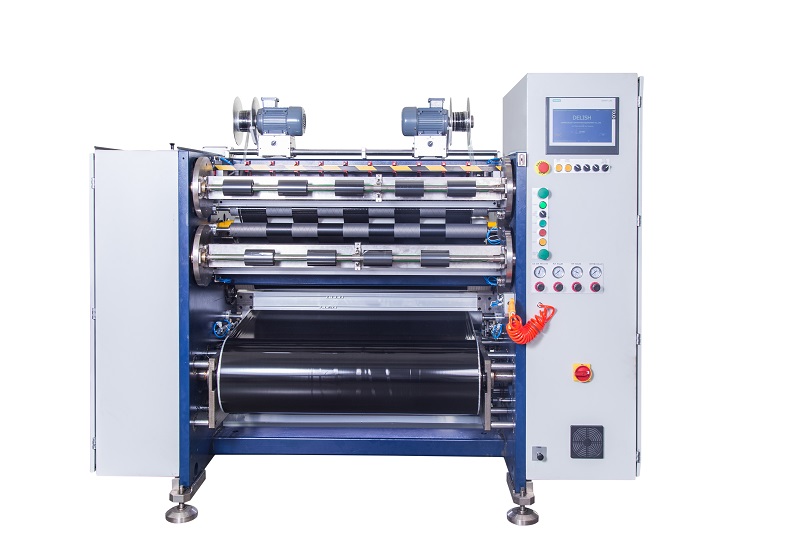
2. Flexible Line: Agile manufacturing capability for small batches and multiple varieties
The ribbon market is shifting from "standard wide width, large volume" to a "customized, short delivery time" model—with explosive demand for e-commerce small rolls, medical-grade alcohol-resistant coils, and high-temperature resistant industrial coils. Traditional slitting machines require 1-2 hours to change models and are difficult to respond. Over the next five years, flexible cables will achieve minute-level switching through modular and quick-change designs.
1. Modular slitting unit: A single slitting machine is no longer fixed to one slitting method (for example, it can only slitting with flat blades). The flexible wire uses a tool holder module that can be quickly locked, allowing replacement of flat blades, round blades, dotted blades, or half-cut cutter units on the same base. Change time has been reduced from hourly to within 15 minutes.
2. Servo Independent Drive Rewinding Shaft: Each winding station is driven by an independent servo motor and equipped with a rapid clamping expansion shaft. Operators or robots only need to input the width, roll length, and tension curves of the new order, and the system automatically calculates the matching values of rotational speed and acceleration for each axis, without the need for mechanical positioning.
3. Dynamic scheduling and path optimization: Flexible lines integrate MES (Manufacturing Execution System) scheduling algorithms. When multiple small orders are received simultaneously, the system can automatically plan "co-roll slitting"—sequentially cutting different specifications of finished products on the same mother roll, minimizing residual waste from the main roll. For example, a single shaft female roll can sequentially cut small rolls of 110mm, 80mm, and 60mm widths, and automatically generate an isolation strip during slitting to facilitate subsequent roll separation.
This flexibility enables ribbon manufacturers to take on multi-variety, small-batch, and even single-piece custom orders at costs close to mass production, thereby establishing a differentiated advantage in price wars.
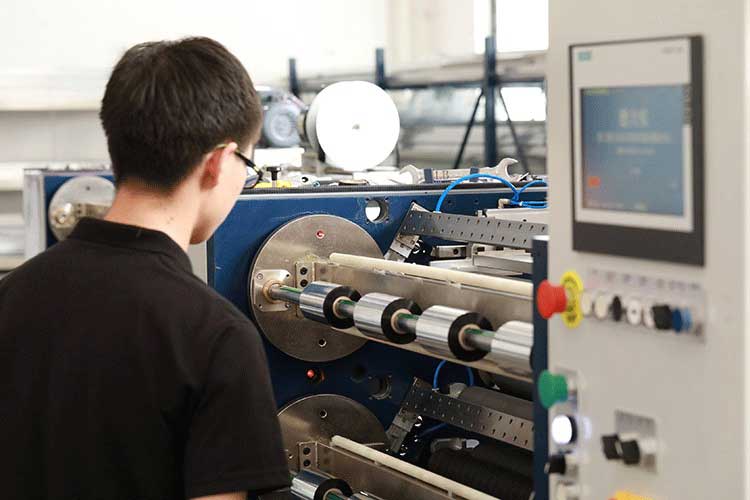
3. Digital Twin: From "Trial and Error Debugging" to "Virtual Verification and Predictive Operations"
Digital twins are the most disruptive technology for the next five years. By building virtual models that fully correspond to physical slitting machines and synchronizing data in real time, the entire equipment lifecycle becomes simulable, predictable, and optimizeable.
1. Virtual debugging of process parameters: Before new ribbon materials (such as ultra-thin polyester films or highly sensitive heat transfer coatings) are put into production, engineers do not need to stop for trial cutting. By simply inputting material properties (thickness, coefficient of friction, tensile modulus) into the digital twin system, the system can simulate stress distribution and winding hardness during slitting, and automatically recommend the optimal combination of tension, pressure, and speed. Trial cutting consumables can be reduced by more than 80%.
2. Real-time Mirroring and Fault Simulation: The digital twin maps the status of physical equipment with millisecond-level delay—spindle temperature, vibration of each winding shaft, tool clearance, and more. When a parameter deviates from a health threshold, the corresponding component in the virtual model will display a highlighted warning and provide possible causes (such as "Third station rewinding shaft bearing wear is intensifying, estimated remaining service life is 72 hours"), prompting planned maintenance rather than passive emergency repairs.
3. Full product lifecycle traceability: Each roll of slitting ribbon will have a digital twin file, recording the tension fluctuation curve at the slitting moment, ambient temperature and humidity, tool ID, and wear values. When end users encounter printed wire breaks or scratches on the back coating, they can scan the code to trace back and precisely locate the slitting station and current status, greatly improving quality improvement efficiency.
The deep value of digital twins lies in constructing a "slitting knowledge graph": as operational data accumulates, the system can autonomously learn nonlinear relationships between different batches of master rolls, different tools, and different environments, and reverse-optimize slitting strategies, forming a continuously evolving process brain.

Paths and Challenges
Despite the clear prospects, the path for ribbon slitting machines toward fully automated, flexible lines, and digital twins is not easy.
• Cost pressure: Integrating vision systems, independent servo modules, and digital twin software platforms will significantly increase the initial investment per machine. For small and medium-sized ribbon manufacturers, a "phased transformation" approach may be needed—first upgrading automatic tension control and MES interfaces, then gradually expanding.
• Material compatibility: Ribbon is divided into wax-based, mixed, and resin-based types, with significant differences in coating brittleness and base film thickness. Flexible wires require smarter material recognition sensors and adaptive algorithms to avoid coating cracking or base film stretching caused by one-size-fits-all parameters.
• Data Security and Standardization: Digital twins rely on cloud-edge collaboration and vast amounts of real-time data. The industry needs to establish unified data interface standards (such as mechanical communication protocols similar to OPC UA) while also preventing the risk of production parameter leaks.
Conclusion
In the next five years, ribbon slitting machines will no longer be isolated cutting devices, but intelligent nodes integrating fully automated logistics execution systems, flexible manufacturing units, and digital twin process brains. Companies that embrace these three waves first will achieve the ideal production state of "zero switching waiting, zero trial cutting waste, and zero unplanned downtime," ultimately gaining the triple moat of speed, cost, and quality in the heat transfer consumables market. For the entire industrial printing ecosystem, more precise, stable, and traceable ribbons will directly improve the readability of barcodes and labels, becoming an indispensable part of the IoT and intelligent supply chains.
 English
 Deutsch
 Français
 Español
 Português
 日本語
日本語 русский
 한국어
한국어 عربي
عربي ภาษาไทย
 Tiếng Việt
 Italiano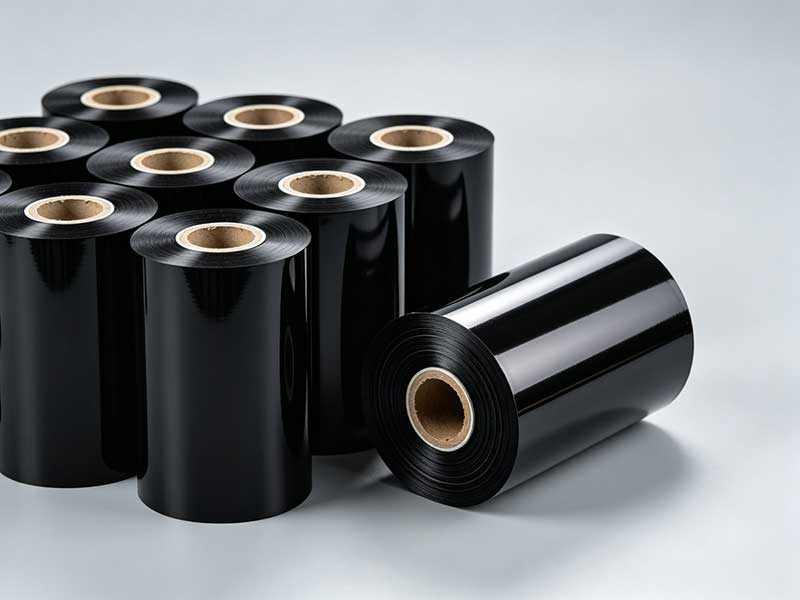
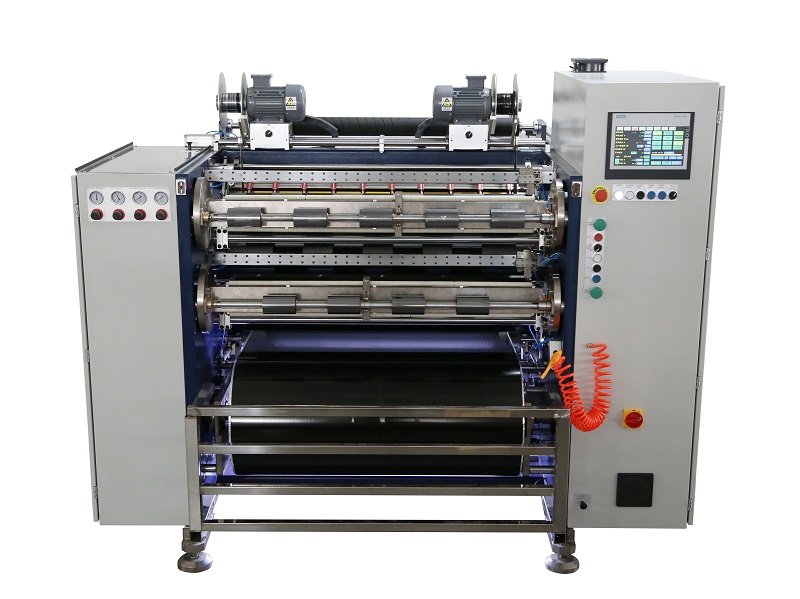 Fully Automatic TTR Slitter RSDS8 Plus
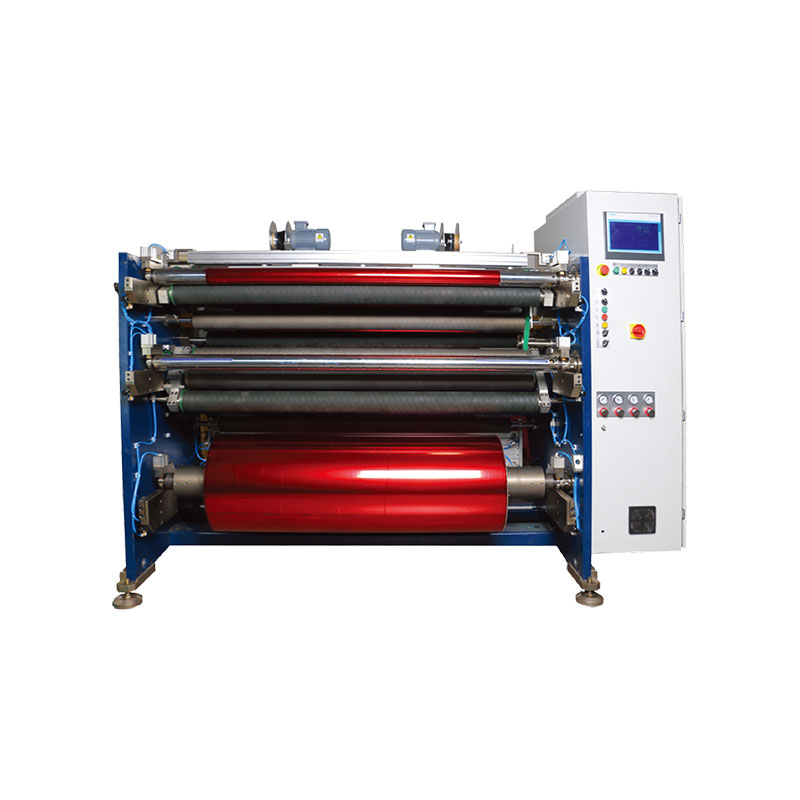 Hot Stamping Foil Slitter 1600mm
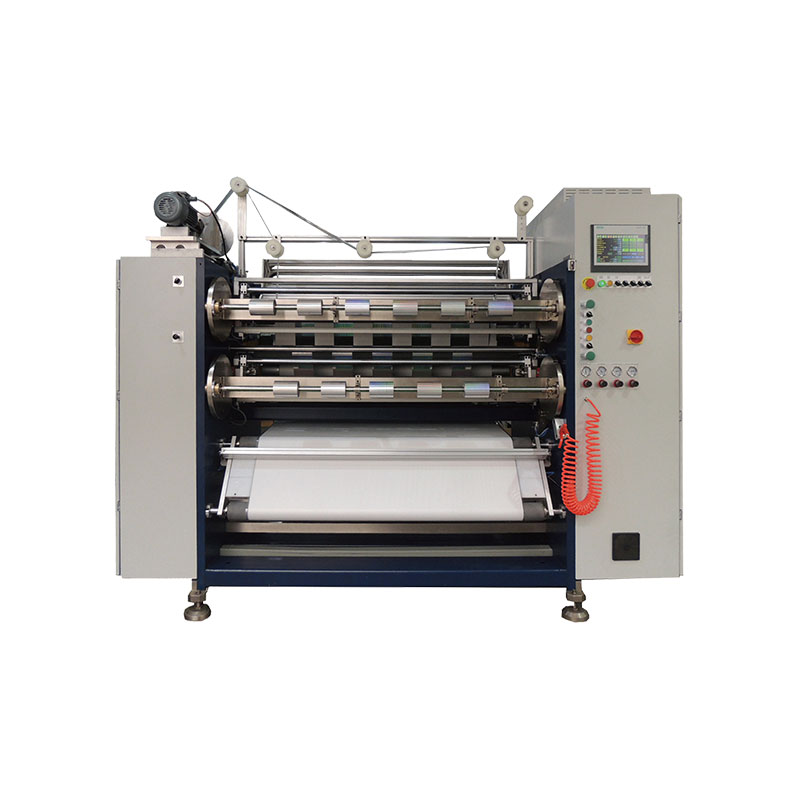 Hot Stamping Foil Slitter (4 Shafts)
 Semi-Auto TTR Slitter RSDS2 Plus
 Semi Automatic TTR Slitter RSDS5 Plus
 Manual TTR Slitter RSDS2
 Auto Paper Core Cutter
 Film Slitting Machine



 +86 135 9951 7291
 support@delishgroup.com
 +86 135 9951 7291