19. August, 2026delish0
In the production chain of heat transfer ribbons, slitting is a key step that determines the quality of the final product. Tension control is the soul of this process. Ribbons are thin composite materials composed of polyester film (PET) and an ink coating. They are highly sensitive to tension, and even slight deviations in control can cause chain problems such as stretch deformation, wrinkles, uneven rolling, and even poor printing. This article will systematically analyze all aspects of tension control in ribbon slitting machines.
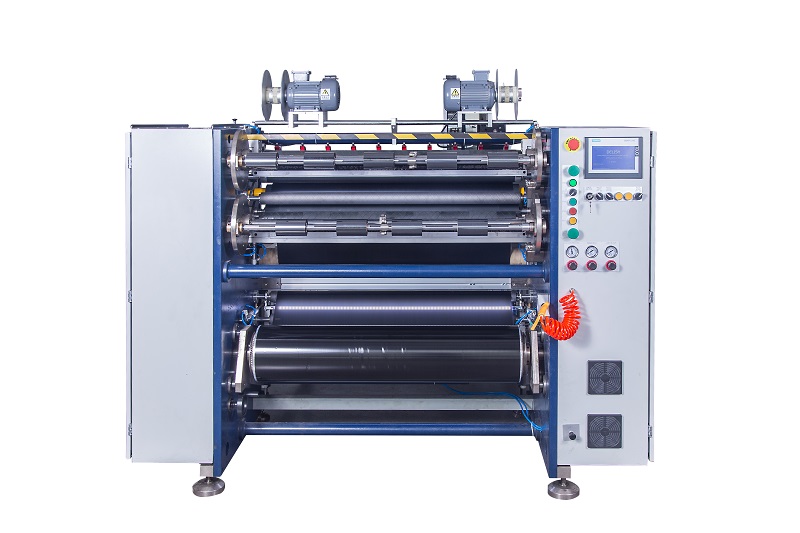
1. Tension Imbalance: A Common Quality "Trap"
Understanding the consequences of tension imbalance is the first step in paying attention to tension control. Improper tension control directly affects product quality:
• Excessive tension: The PET base film of the ribbon is overstretched, causing microcracks in the ink layer, leading to powder shedding, and white lines and uneven density during printing. More seriously, the stretching of the base film is irreversible; once this occurs, the entire roll of ribbon becomes defective.
• Insufficient tension: The ribbon becomes loose during operation and is prone to wrinkles. Cut finished products will also show defects such as white lines and indentations during printing.
• Uneven winding tension: The internal tightness of the finished roll is uneven. Too loose can cause core misalignment and ribbon sideslip; If too tight, it may crush the inner layer, forming a "daisy core" winding and affecting the normal use of downstream customers.
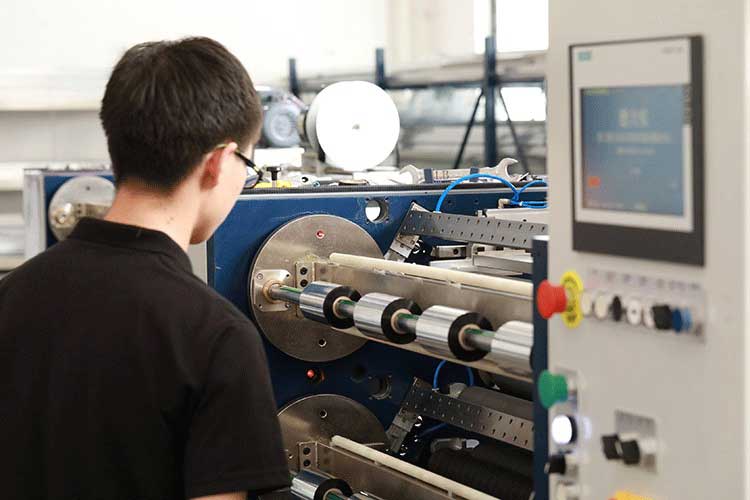
2. The "Three Horses" of Tension Control
Modern ribbon slitting machines generally adopt a closed-loop fully automatic tension control system, which works together with three core components.
1. Detection Unit (Sensory)
Responsible for real-time monitoring of tension status. There are mainly two methods:
• Tension sensor: Usually strain gauge type, directly measures the force applied by the ribbon as it passes through the guide roller, providing precise instantaneous tension feedback.
• Floating roller mechanism: The displacement of the floating rollers indirectly reflects changes in tension and converts the displacement into electrical signals to feed back to the control system.
2. Control Unit (Brain)
Typically, the PLC is the core, receiving detection signals, performing calculations, and issuing commands. Its core algorithm is PID (Proportional-Integral-Differentiation) adjustment. The system compares the actual tension with the target tension to determine the deviation, and the PID algorithm calculates the control amount to be compensated accordingly, achieving precise and stable tension control.
3. Execution Unit (Hands and Feet)
Convert control commands into actual torque adjustments. Common actuators include:
• Magnetic powder clutch/brake: By adjusting excitation current, the resistance is controlled. This is a widely used traditional solution, with lower cost but tends to heat up at high speeds and has a relatively slower response speed.
• Servo motor: Uses torque control mode, fast response and high precision, perfectly meeting high-speed slitting requirements, and is the mainstream choice for modern high-end equipment.
3. Segmented differentiated control strategies
An excellent slitting machine does not control tension in a one-size-fits-all way, but instead divides the entire machine into three independent control zones according to process characteristics.
• Unwinding area: Tension should be minimized, only ensuring smooth ribbon release. As the diameter of the main roll decreases, the release tension should decrease accordingly to prevent material stretching.
• Slitting zone (traction section): When passing through the slot, the ribbon experiences the greatest frictional resistance; the tension here needs to be slightly higher and kept constant to ensure a neat cut.
• Winding area: adopts a taper decreasing strategy. As the winding diameter increases, the winding tension should be automatically reduced according to a preset curve to prevent the outer layer from being overtight and crushing the inner layer, ensuring consistent hardness inside and outside the finished coil and flat end faces.

4. Calibration and Maintenance: Practical experience
When tension instability occurs, the "from simple to complex" approach can be used to check and adjust accordingly.
1. Mechanical component inspection
◦ Guide roller parallelism: If the guide rollers are not parallel, the tension on both sides will be uneven. A level should be used to check and ensure the parallelism error is within 0.05mm/m.
◦ Roller pressure: Check whether the pressure on the cylinders or springs on both sides is consistent to ensure uniform pressure.
◦ Expansion shaft pressure: Ensure stable air supply, and install a pressure stabilizing valve if necessary.
2. Electrical and parameter optimization
◦ Magnetic particle clutch activation: Magnetic powder may settle and clump after more than a year of use. Perform "magnetic particle activation": no film penetration, low-speed idling, apply 50% rated current and run for 10-15 minutes.
◦ PID parameter tuning: If tension fluctuates periodically, it may indicate excessive gain; If the response is slow, it may be that the integration time is too long. It is recommended to start with a smaller proportion (P=10-20%) and gradually debug.
◦ Acceleration/Deceleration Ramp Time: Ensure acceleration and deceleration times (e.g., acceleration 3-5 seconds, deceleration 4-6 seconds) match the controller's response speed to avoid inertial impact.
5. Conclusion
Precise tension control is an art of balance. It requires operators to deeply understand the characteristics of ribbon materials, make good use of closed-loop control technology, and continuously make fine-tuning in practice based on equipment condition and material differences. Mastering this core technology is key to ensuring the quality of carbon ribbon products, improving yield rates, and building corporate competitiveness.
 English
 Deutsch
 Français
 Español
 Português
 日本語
日本語 русский
 한국어
한국어 عربي
عربي ภาษาไทย
 Tiếng Việt
 Italiano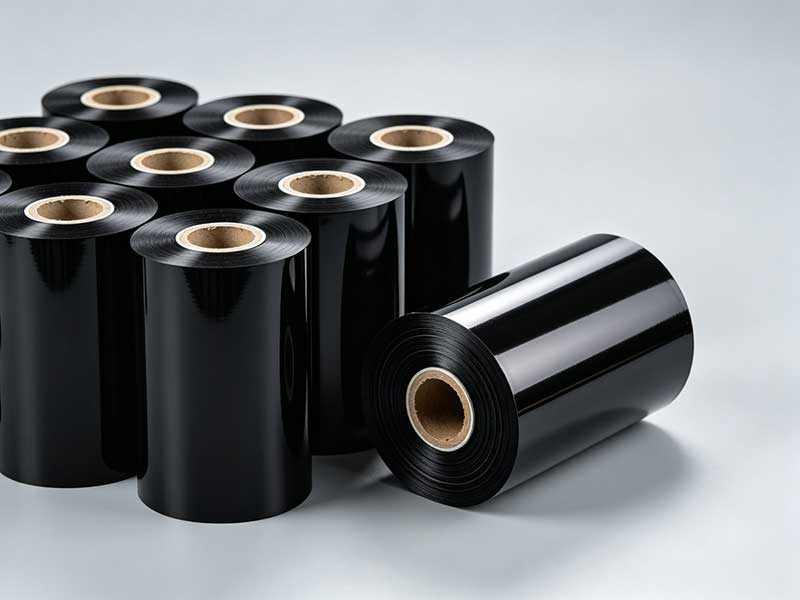
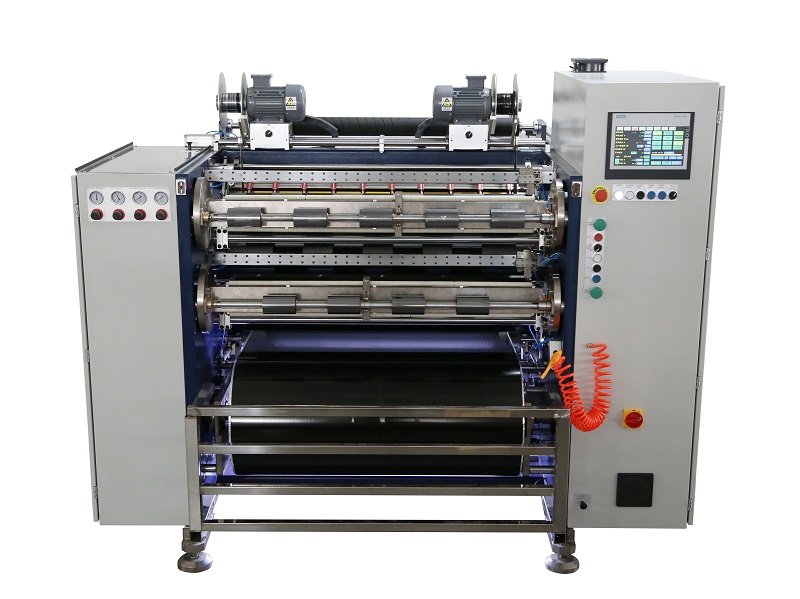 Fully Automatic TTR Slitter RSDS8 Plus
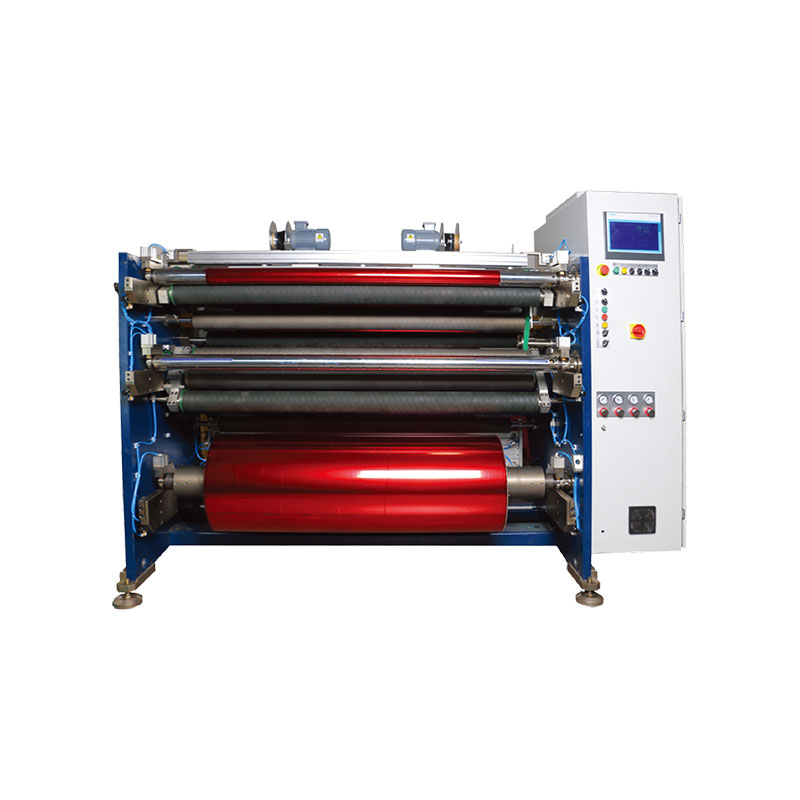 Hot Stamping Foil Slitter 1600mm
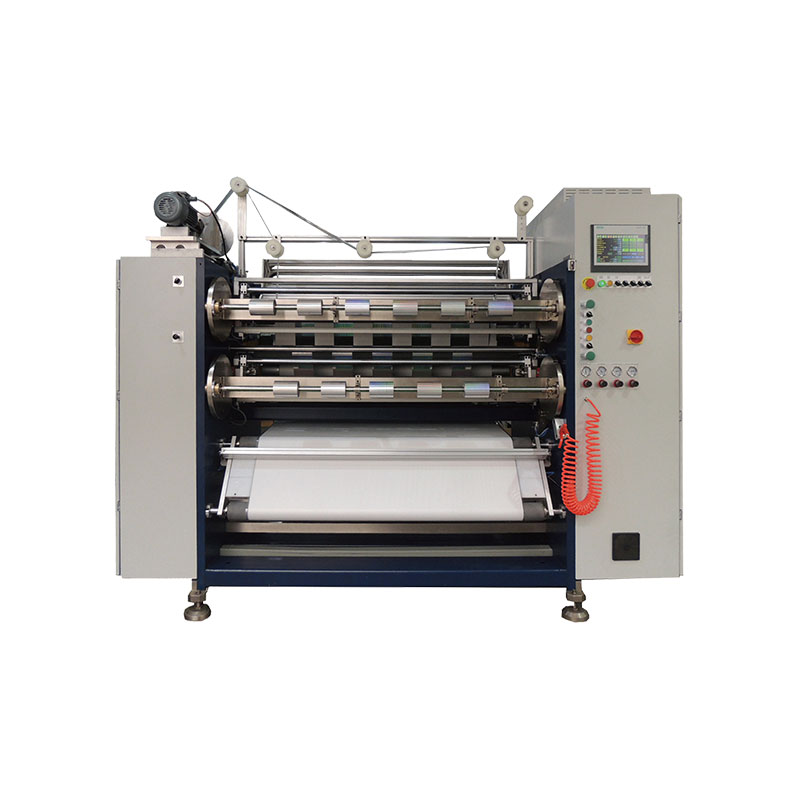 Hot Stamping Foil Slitter (4 Shafts)
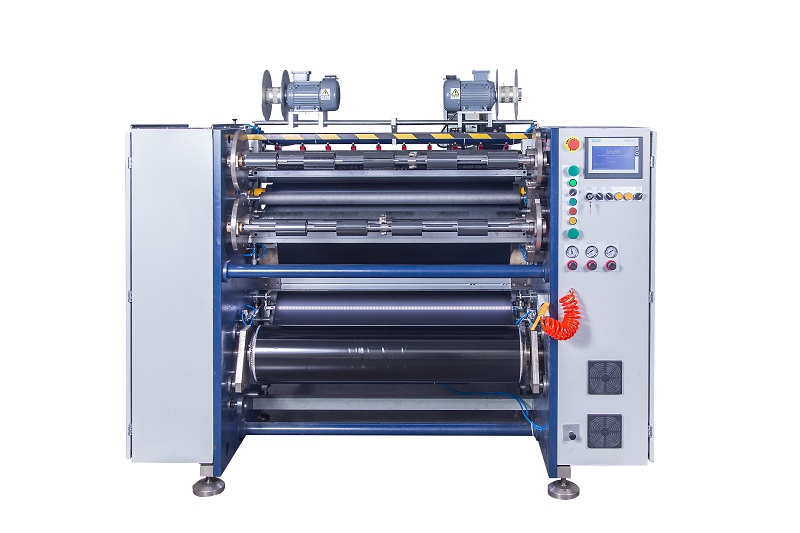 Semi-Auto TTR Slitter RSDS2 Plus
 Semi Automatic TTR Slitter RSDS5 Plus
 Manual TTR Slitter RSDS2
 Auto Paper Core Cutter
 Film Slitting Machine



 +86 135 9951 7291
 support@delishgroup.com
 +86 135 9951 7291