01. September, 2026delish0
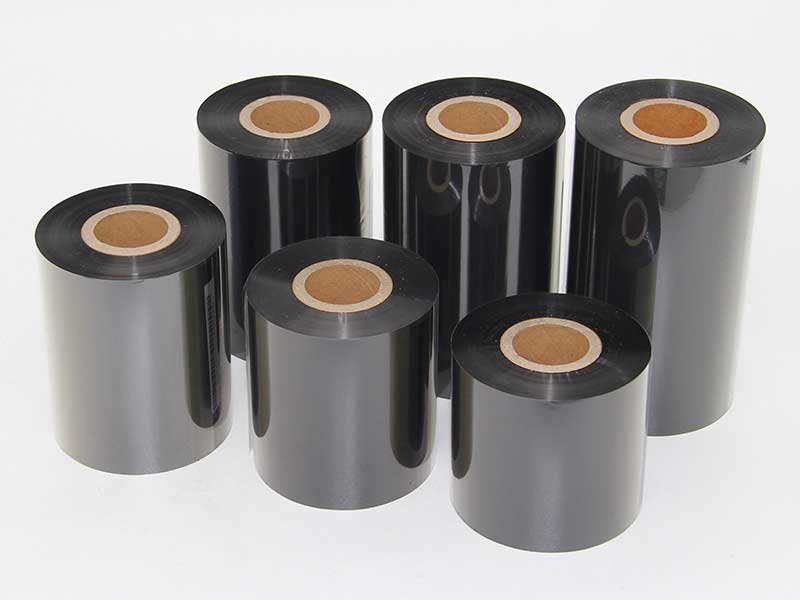
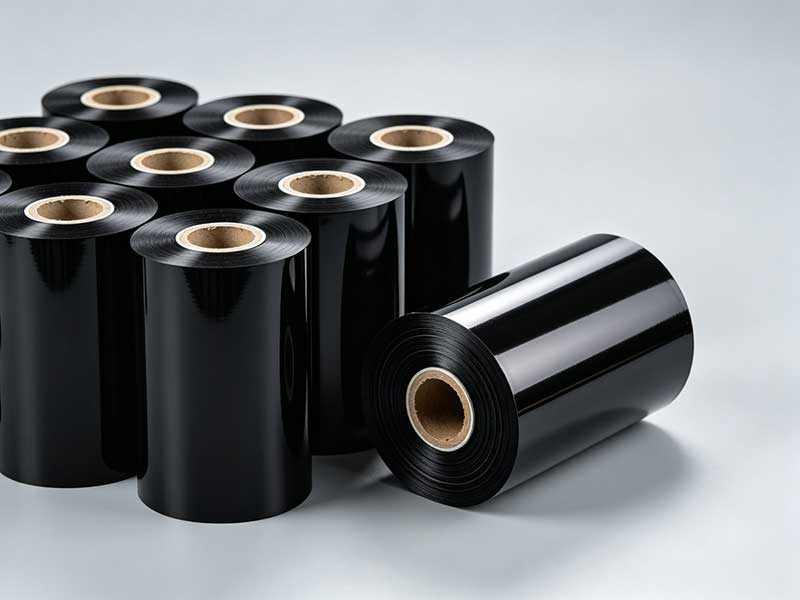
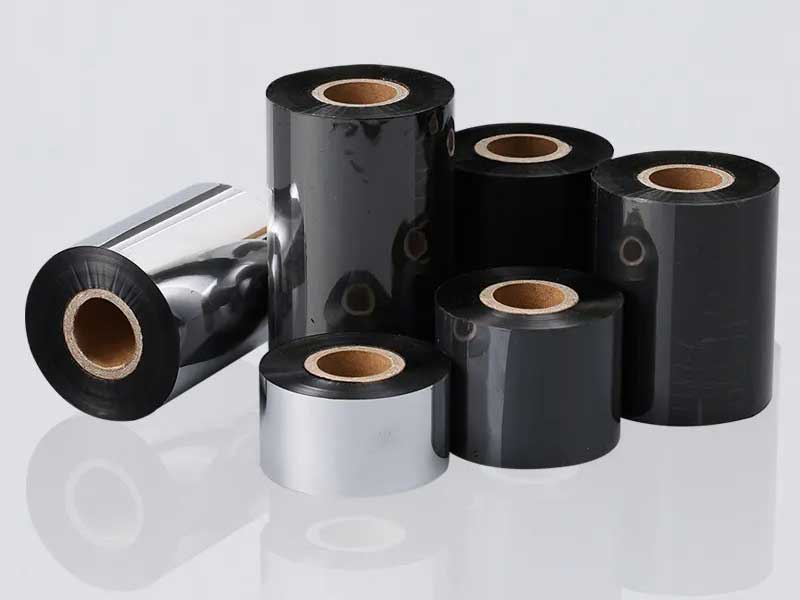
Thermal transfer ribbons consist of a PET base film only 4.5 to 20 microns thick, a heat-resistant coating, and an ink layer. The slitting stage directly determines whether the finished product can print smoothly without damaging the print head. Choosing the right equipment is the engine for stable output and profit; If you choose the wrong one, it may become a cost black hole of waste accumulation. This article reviews the core considerations in selection from dimensions such as accuracy, speed, hardware configuration, flexible production adaptation, and manufacturer evaluation.
1. Grasp three core parameters
Choosing a model doesn't need to be overwhelming; the following three core parameters serve as quick benchmarks to determine whether equipment meets production needs.
Slitting precision is the lifeline of quality. Insufficient precision can cause ribbon edges to be rough, tape misalignment during printing, or even damage to the print head. Industry reference standards are: standard grade ± 0.5mm, high-precision grade up to ±0.1mm, ultra-high precision class up to ±0.05mm. When selecting, be sure to request the manufacturer to test cut your ribbon busbar on-site, based on actual sample test data. Do not trust the theoretical values on the parameter table.
Slitting speed is a measure of efficiency, but you can't just look at the nominal maximum speed. Common speed ranges are: low-speed economy model 50–100 m/min (suitable for small batches and multiple varieties), medium-speed general-purpose type 150–250 m/min (suitable for most commercial orders), and high-speed production type 300–500 m/min (suitable for large-scale continuous production). It is important to note that resin-based ribbons, due to their harder coatings and lower toughness, usually need to operate at speeds 20%–30% lower than wax-based ribbons.
Roll neatness is a key metric that is often overlooked. Face deviation should generally be controlled within ±1mm, with high-end equipment reaching up to ±0.5mm. Common issues such as "bell-mouthed" end faces, "serrations" at edges, or internal wrinkles stem from inadequate tension control and correction devices, which easily cause ribbon breakage or jam tape during subsequent unwinding and printing.
2. Tension Control Is the "Soul" of Equipment
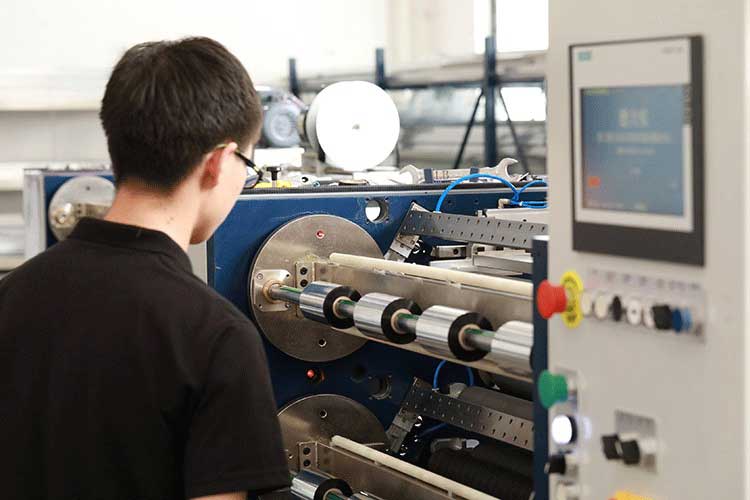
The ribbon substrate is extremely thin and highly sensitive to tension, with tension control affecting winding flatness by more than 50%. If the tension is too high, the PET base film can stretch and get damaged, making powder shedding more likely; If the tension is too low, the ribbon wrinkles, resulting in white lines and indentations during printing; If the tension is too loose, the core may shift or ribbon slip during transportation.
When selecting models, the fully automatic closed-loop tension control system should be prioritized, as it can monitor and adjust tension in real time at each stage of unwinding, traction, and rewinding. For ultra-thin ribbons (<5μm), attention must also be paid to whether the minimum stable tension of the equipment meets the requirements.
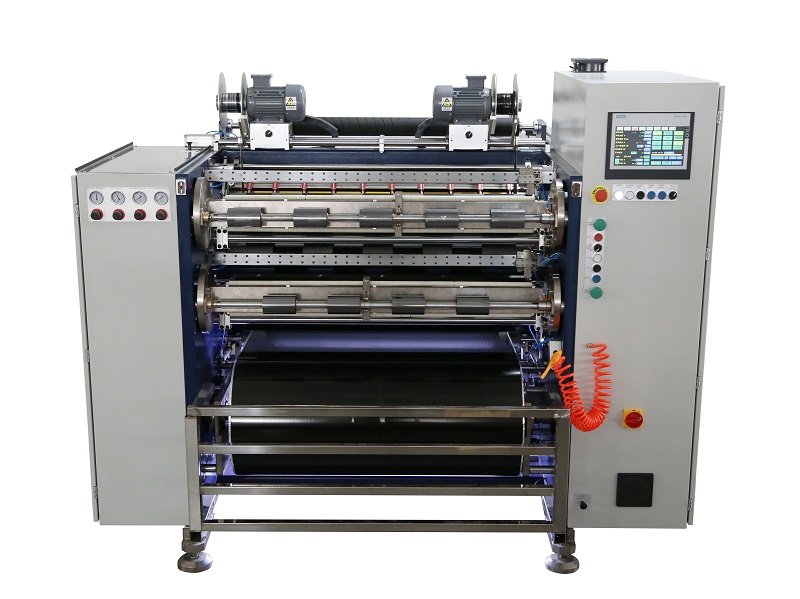
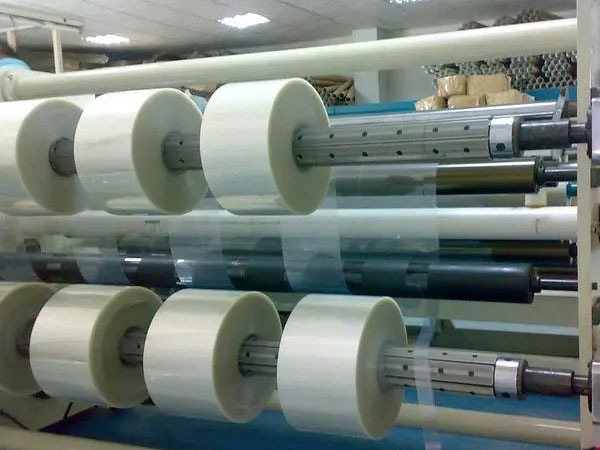
In terms of rewinding shaft configuration, slip shafts are a must-have for high-end ribbon production. It can independently control torque for each winding unit, adjusting in real time according to changes in roll diameter, effectively solving the issues of "loose inside, tight outside" or "core inside." Pneumatic slip shafts offer higher control accuracy and a wider adjustment range than mechanical ones, making them especially suitable for production scenarios where specifications are frequently switched.

3. Tool Type Selection and Hardware Configuration
The choice of cutter type should be determined based on the thickness of the material. Square blade (razor type) is suitable for slitting thin ribbons below 70μm, with high edge uniformity; Round blades (scissor type) are more suitable for thick materials over 100μm and ribbons with paper backing, offering greater durability.
The rack and core components determine the long-term durability of the equipment. Heavy, high-strength cast iron or steel frames can effectively absorb vibrations, ensuring long-term accuracy retention. The brands of drivetrain bearings, guides (such as THK, NSK, INA), and motors (such as Mitsubishi, Panasonic, Siemens) reflect manufacturers' commitment to quality.
4. Focus on adaptability to flexible production
Faced with the trend of "small batches, multiple specifications" and fragmented orders, the problems of traditional slitting machine changeover taking long and small order costs becoming increasingly prominent. When selecting models, rapid changeover capability should be prioritized. Equipped with an independent tool holder and formulation management system driven by servo motors, operators only need to input new order specifications on the touchscreen, and the system can automatically perform blade positioning and tension parameter matching, reducing traditional changeover time from tens of minutes to just a few minutes or even tens of seconds. The equipment should also be able to store hundreds or thousands of process parameters (formulas) for different products, allowing direct recall when producing the same order again, eliminating human error.
5. Trial cutting is more important than parameters
Final reminder: No matter how beautiful the parameter sheet is, be sure to perform an on-site test cut with your own ribbon roller before purchasing. Focus on observing edge quality at different widths (narrowest and widest specifications), winding stability during high-speed starts and emergency stops, and changes in winding uniformity after extended continuous operation. At the same time, equipment inevitably requires maintenance and commissioning. Whether suppliers can provide timely technical support, spare parts supply, and on-site service is also an indispensable "insurance" when selecting models.
 English
 Deutsch
 Français
 Español
 Português
 日本語
日本語 русский
 한국어
한국어 عربي
عربي ภาษาไทย
 Tiếng Việt
 Italiano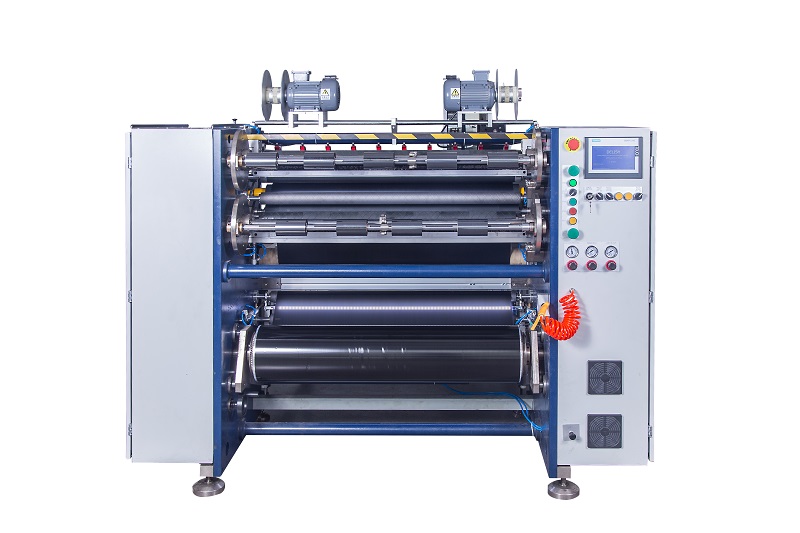
 Fully Automatic TTR Slitter RSDS8 Plus
 Hot Stamping Foil Slitter 1600mm
 Hot Stamping Foil Slitter (4 Shafts)
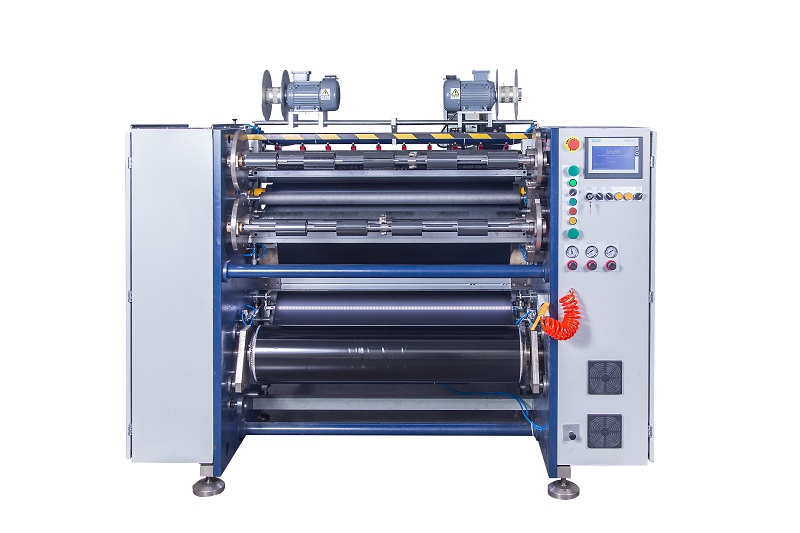 Semi-Auto TTR Slitter RSDS2 Plus
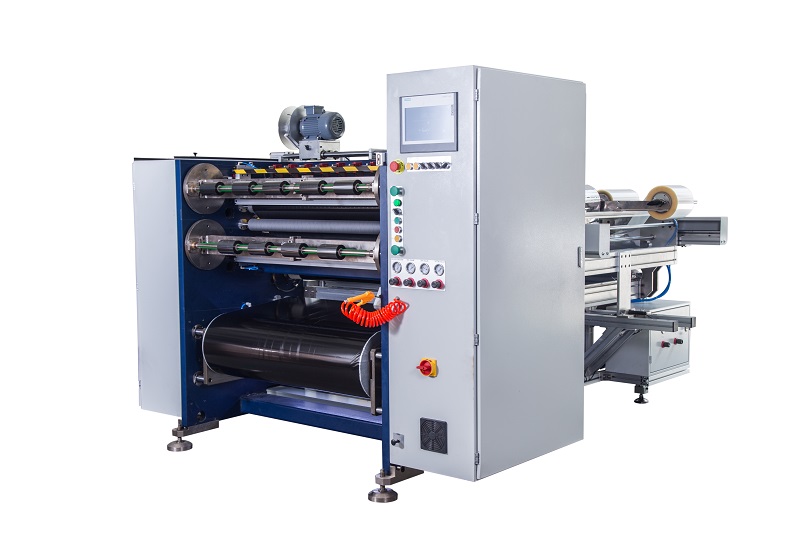 Semi Automatic TTR Slitter RSDS5 Plus
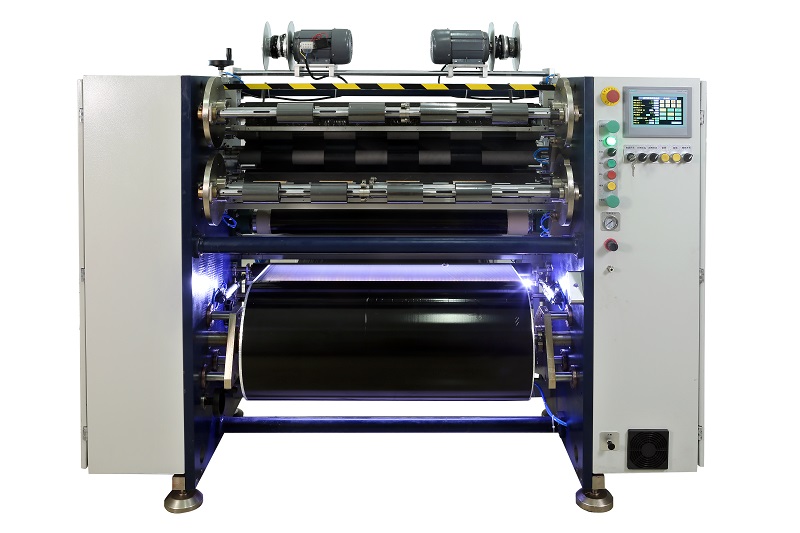 Manual TTR Slitter RSDS2
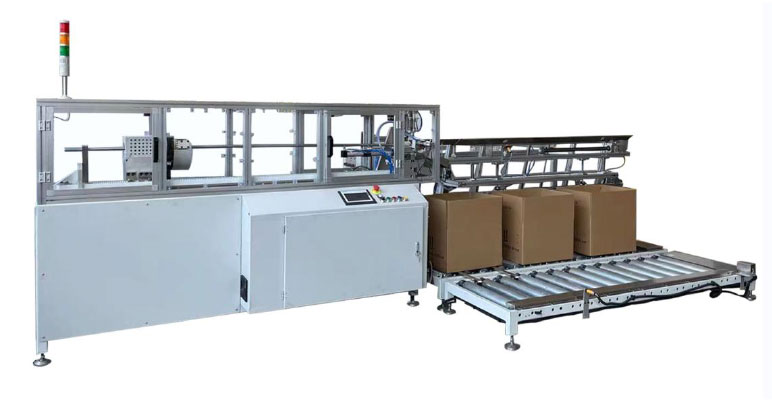 Auto Paper Core Cutter
 Film Slitting Machine



 +86 135 9951 7291
 support@delishgroup.com
 +86 135 9951 7291